

Enhancing understanding and awareness of prehistoric rock art through community co-production and research
by Dr Tertia Barnett and Dr Joana Valdez-Tullett
Prehistoric rock art is a distinctive and abundant part of Scotland’s historic environment. It offers unique insights into the past, and has immense potential for inspiring public interest, creativity, and well-being. However, it presents significant challenges for research, appreciation, and conservation, and is currently poorly understood, undervalued and at risk.
Scotland’s Rock Art Project (ScRAP) tackled these challenges by placing community co-production at the heart of its strategy and activities (Barnett et al 2021a). By working with local communities to record, share and celebrate rock art, ScRAP aimed to enhance social value and understanding of rock art. The five-year programme (2017-2021) was funded by the Arts and Humanities Research Council (AHRC) and hosted by Historic Environment Scotland (HES) in collaboration with the University of Edinburgh and Glasgow School of Art.
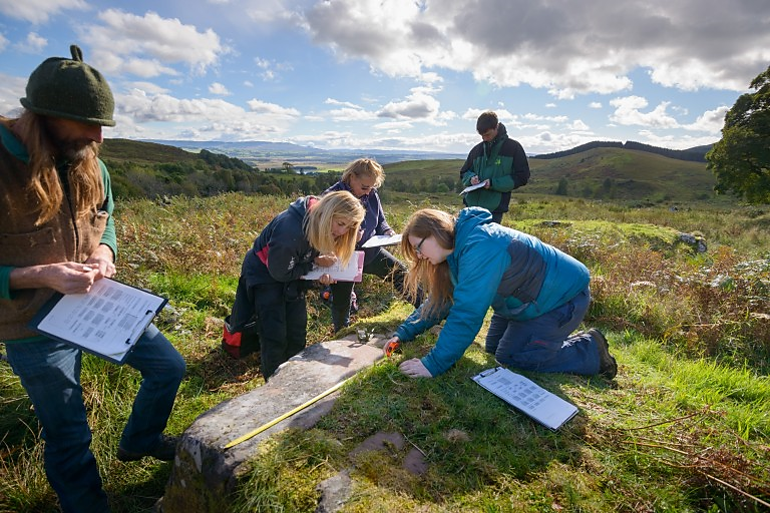
A principal rationale for ScRAP was the need for a comprehensive research database. The 2800 existing rock art records in Canmore (now Trove) at the start of the project had been gathered over two centuries by many different authors using different methods. As a result, the records were inconsistent, often inaccurate, and poorly illustrated, making them problematic and potentially misleading as a research resource. The ScRAP team trained and supported 200 people from local communities across Scotland to collect detailed information about the motifs, the carved rocks (panels), and their contexts using a standardised recording methodology.
The methodology, which was developed from previous work in England and Europe (Blaze O’Connor 2006, Sharpe et al 2008, Valdez-Tullett 2019), comprised a suite of quantitative, qualitative and image-based approaches (see Case Study 29 NADRAP). Participants were also trained to create 3D models using Structure from Motion (SfM) photogrammetry and Agisoft Metashape processing software. This is a user-friendly technique that involves taking multiple overlapping photographs of the rock art panel from different positions. The processing software then identifies and connects matching points in the photographs to produce a 3D model, which digitally replicates the topography of the carved panels. The agility of this technique was ideal for digital documentation by communities at a national scale. It has enormous benefits for research and public engagement as it captures fine detail of the carvings and their relationship to the rock surface, and the models can be made publicly accessible on virtual platforms such as Sketchfab (see Section 3.3.2).
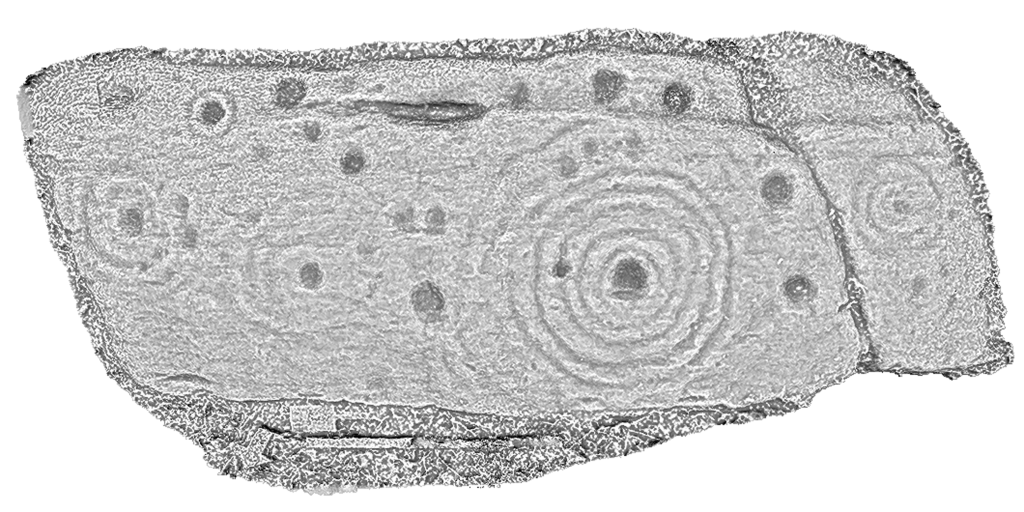
Working in partnership with local communities enabled ScRAP to document 1600 of the 3000+ known and previously unrecorded panels – around half of all the rock art in Scotland – and create around 1000 3D models. Among the 260 new discoveries were several unexpected finds, including prehistoric animal engravings in the Early Bronze Age burial cairn at Dunchraigaig in Kilmartin (see Dunchraigaig Case Study). Panels were also discovered in intensively farmed areas, such as the elaborately carved Whitelaw Hill stone in East Lothian, and in places where relatively little rock art was known previously, such as north-east Scotland (see Highland Distribution Case Study).
Fieldwork also identified and corrected anomalies in over 70% of the existing records. These included revising a high number of inaccurate grid references, sometimes hundreds of metres from the actual location, and re-classifying over 15% of the records as natural features that had been mistakenly recorded as cupmarked stones. The degree of irregularities in the rock art data has significant implications for management and research, and highlights the urgent need to investigate and amend errors in all the remaining records.
All the data co-produced with community teams were made publicly accessible on the ScRAP website (www.rockart.scot) and deposited in the Trove (www.trove.scot) database and regional HERs at the end of the project. The ScRAP website provides an invaluable resource for people to find out more about rock art in Scotland, and browse or search for specific rock art sites online using the map and search tools.
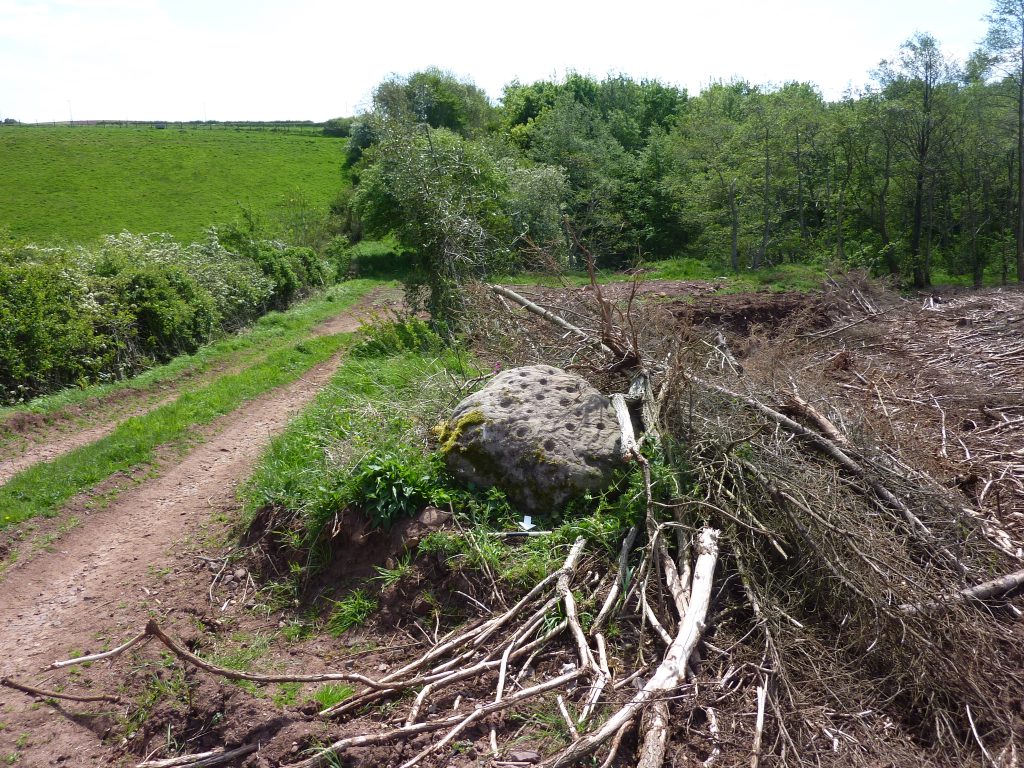
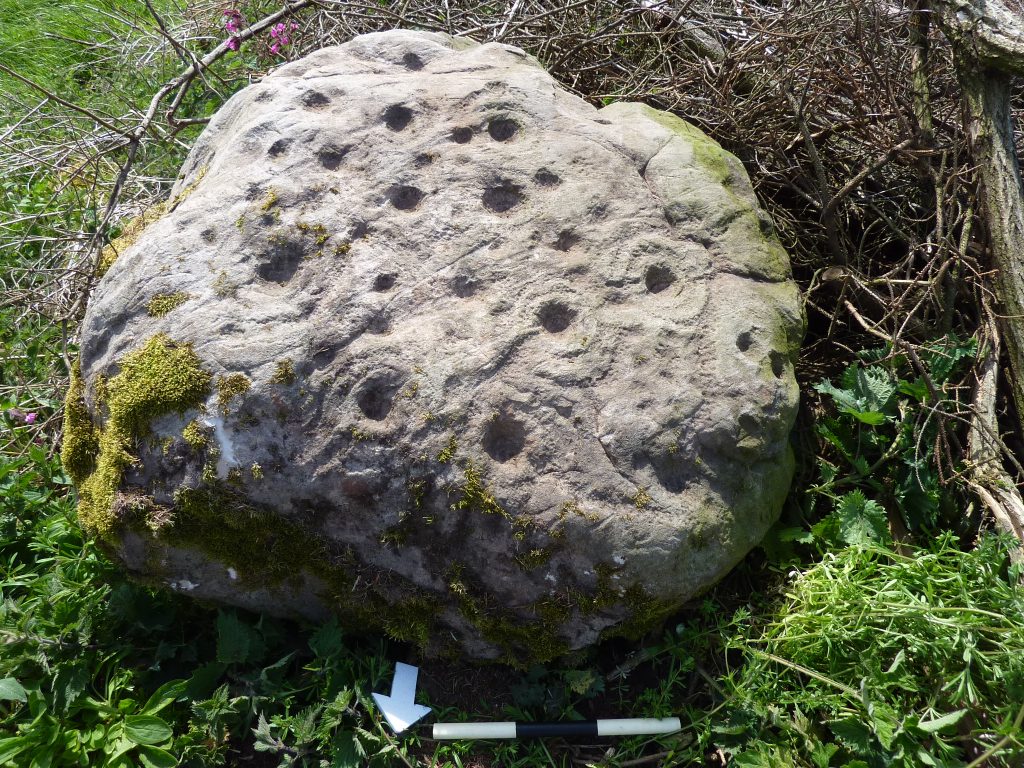
The large volume of detailed information in the ScRAP database was used by the ScRAP team to examine the character and purpose of Scotland’s rock art, and to situate the carvings within the wider Atlantic Rock Art tradition. A multiscalar approach, focusing on the motifs, the rocks on which they were carved, and their landscape contexts, enabled comparative analysis of rock art across the country (see Section 2.1). This study provided fresh insights into the shared themes and regional adaptations of this carving tradition, allowing a new understanding of the decision-making processes and connectivity that shaped Scotland’s rock art (Barnett et al 2024).
Aside from its contribution to knowledge8 and understanding, a key achievement of ScRAP was its impact on contemporary social value and awareness (see Contemporary Social Significance Case Study). Co-production both embedded new skills and perspectives within local communities, and captured public and professional imagination. A range of outputs, events, and social media posts delivered8 during the project significantly widened appreciation of Scotland’s rock art at home and abroad. Spin-off projects, such as the learning resources produced by Forestry and Land Scotland in collaboration with ScRAP and Kilmartin Museum, served to engage a more diverse audience with rock art (Barnett et al 2021b). The project has left a valuable legacy which continues to raise the profile of Scotland’s rock art nationally and internationally.
References
Barnett, T, Ritchie, M and Sharpe, K 2021b A Song in Stone: Exploring Scotland’s Neolithic rock art, Forestry and Land Scotland.
Barnett, T, Valdez-Tullett, J, Bjerketvedt, L M, Alexander-Reid, F, Jeffrey, S, Robin, G and Hoole, M 2021a Prehistoric Rock Art in Scotland: Archaeology, meaning and engagement, Historic Environment Scotland.
Barnett, T, Valdez-Tullett, J, Bjerketvedt, L M, Alexander-Reid, F, Hoole, M, Jeffrey, S and Robin, G 2024 ‘A multiscalar methodology for holistic analysis of prehistoric rock carvings in Scotland’, Heritage Science 12 (86). doi.org/10.1186/s40494-024-01183-8
O’Connor, B 2006 Inscribed Landscapes: Contextualising prehistoric rock art in Ireland, PhD Thesis submitted to University College Dublin.
Sharpe K, Barnett T and Rushton S 2008 The Prehistoric Rock Art of England: Recording, managing and enjoying our carved heritage, English Heritage, Northumberland County Council and Durham County Council.
Valdez-Tullett, J 2019 Design and Connectivity: The case of Atlantic Rock Art. BAR International Series 2932, Archaeology of Prehistoric Art 1, Oxford: BAR Publishing.