
by Dr Joana Valdez-Tullett and Dr Tertia Barnett
Prehistoric rock art in Scotland, and across Britain and Ireland, is largely known for its abstract and geometric symbols, contrasting with other parts of Europe. Figurative art is extremely rare, and includes a handful of examples such as axeheads carved on Early Bronze Age monuments in Kilmartin Glen (Watson and Bradley 2021). Recently, this assumption has been challenged due to the use of digital recording methods. These tools enable digital reproduction and enhancement of the carved surfaces, revealing details of the rock art that are often invisible to the naked eye due to weathering.
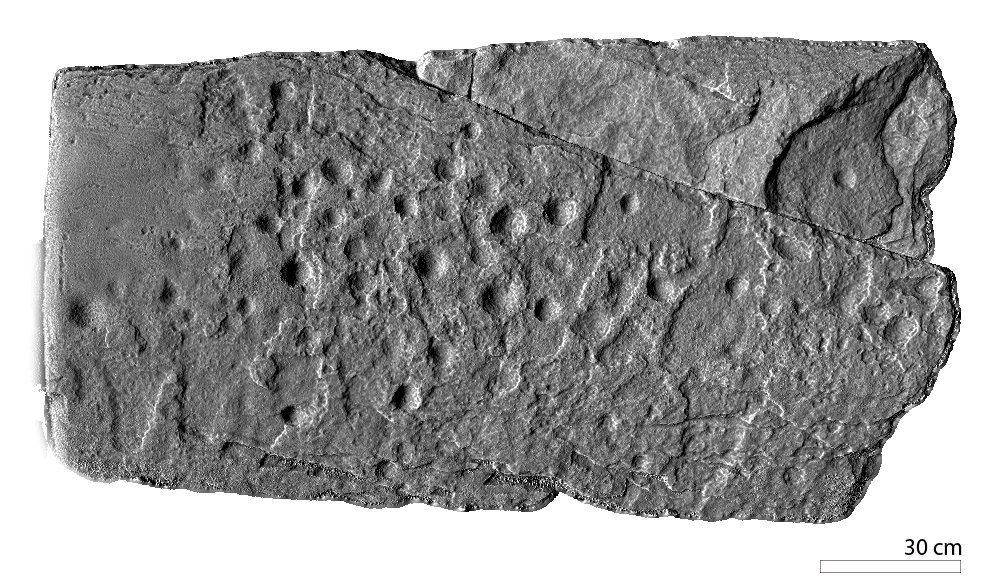
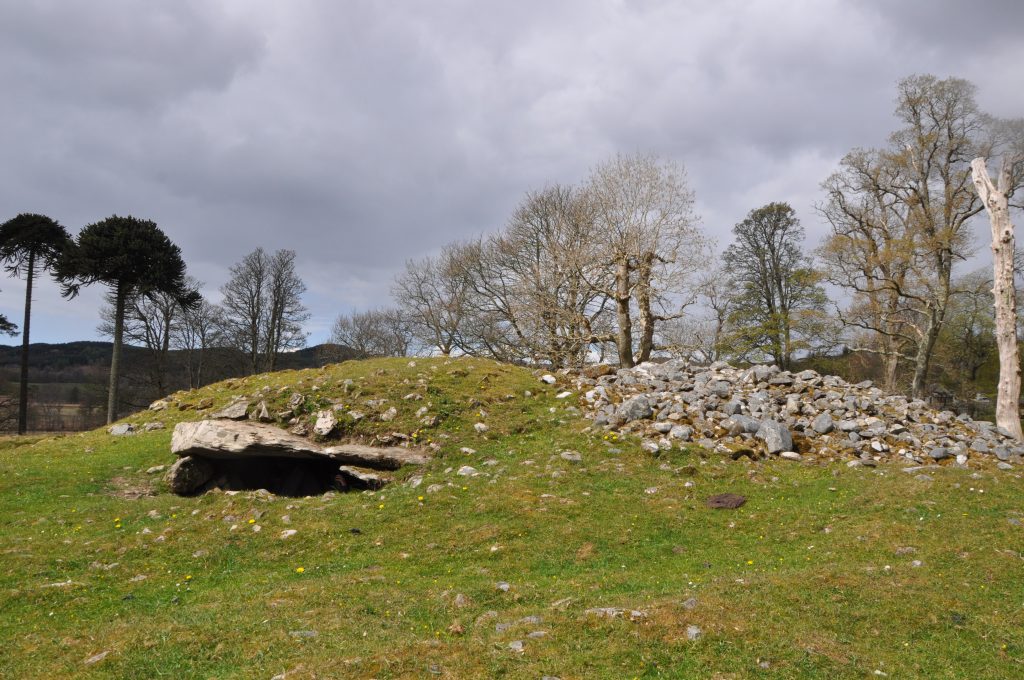
In 2020, independent researcher Hamish Fenton contacted the ScRAP team to inform them of his discovery of animal carvings on the underside of the capstone of the largest cist of Dunchraigaig Cairn in Kilmartin. The cairn was constructed no later than the earliest Bronze Age (circa 2,100 BC), based on artefacts recovered from other burial cists within the same monument (Alison Sheridan pers comm). Although the site has been known in archaeological literature for over a hundred years, and excavated in the 19th century, it was only when Fenton created a 3D digital model of the underside of the capstone that the zoomorphs were revealed.
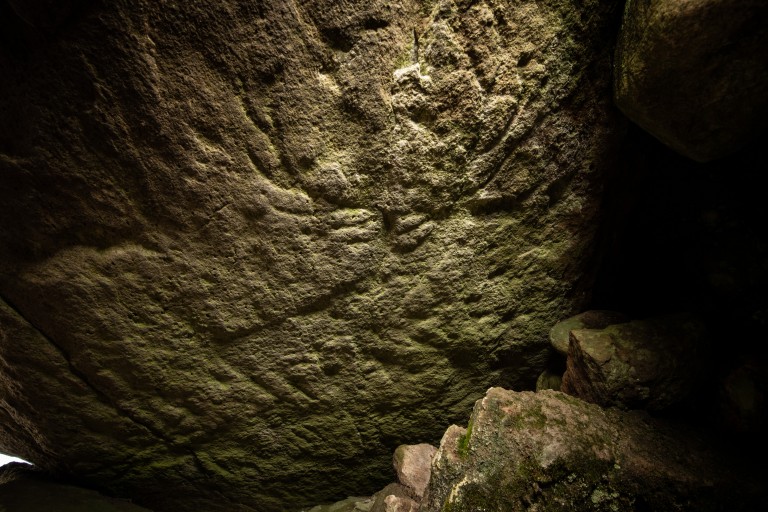
All the animal carvings are considerably weathered or difficult to visualize given their position near the edge of the capstone, where it sits on the walls of the cist. However, the production of a high-resolution 3D model captured with an Artec-Leo structured light scanner by Historic Environment Scotland’s Digital Documentation and Innovation Team, and further investigations by ScRAP including detailed analysis of these digital models, enabled the identification and authentication of five carved animals on the underside of the metabasalt capstone (HES 3D model on Sketchfab), Valdez-Tullett et al 2023).
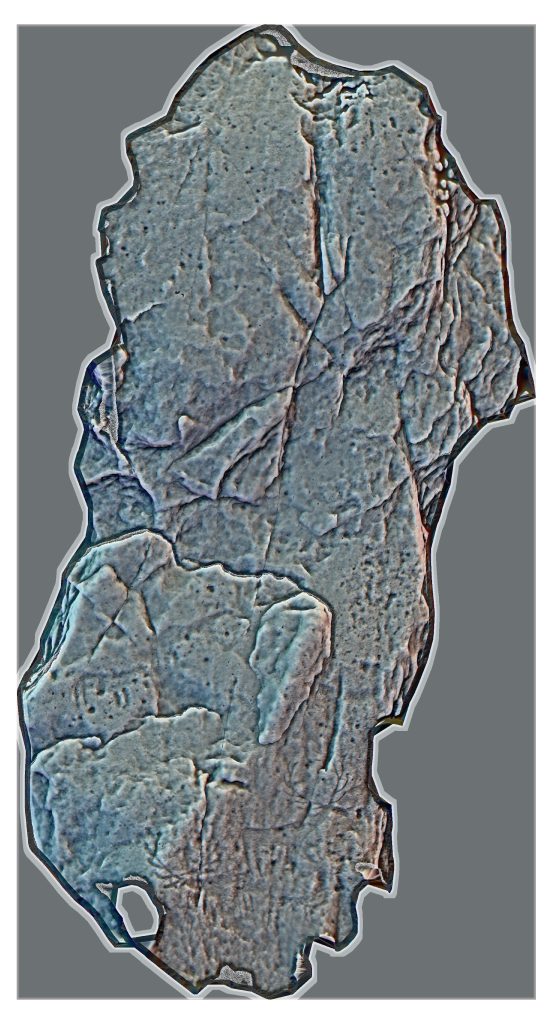
The most distinct figures of this composition are two large stags depicted in a semi-naturalistic fashion with some anatomical detail, enabling the identification of the species as red deer. The largest of these measures 45cm from muzzle to tail, 18cm high and topped with 21cm of antlers. One of the deer is the eye catcher of the group, depicted with a prominent and well-developed set of branching antlers, a long neck, pronounced rump and a short tail. To its side and very close to this animal, another stag also bears a large set of antlers and similar characteristics, albeit more weathered.
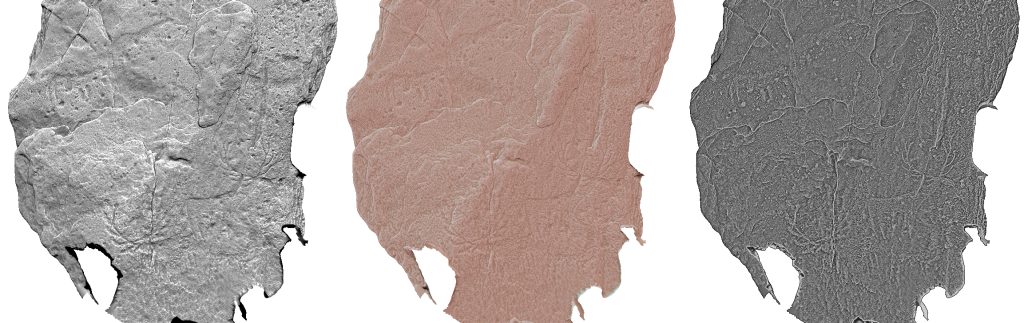
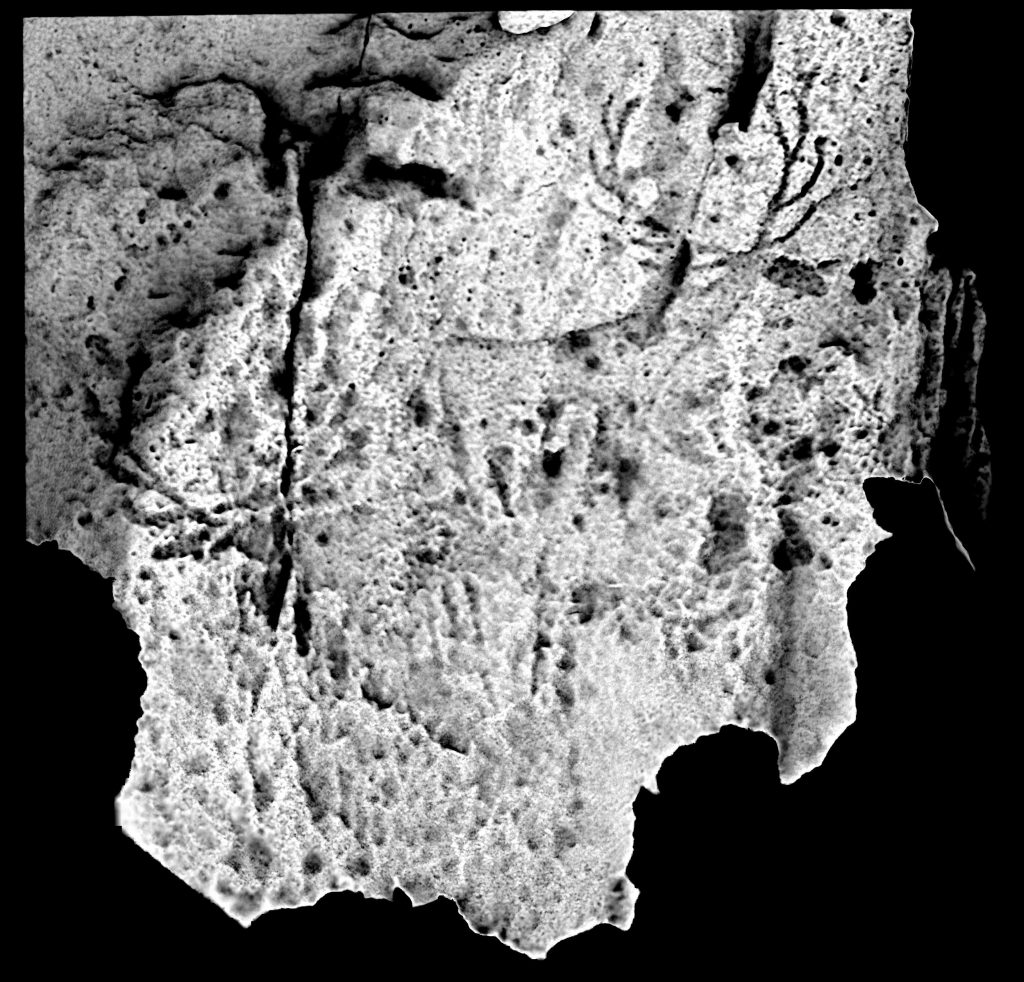
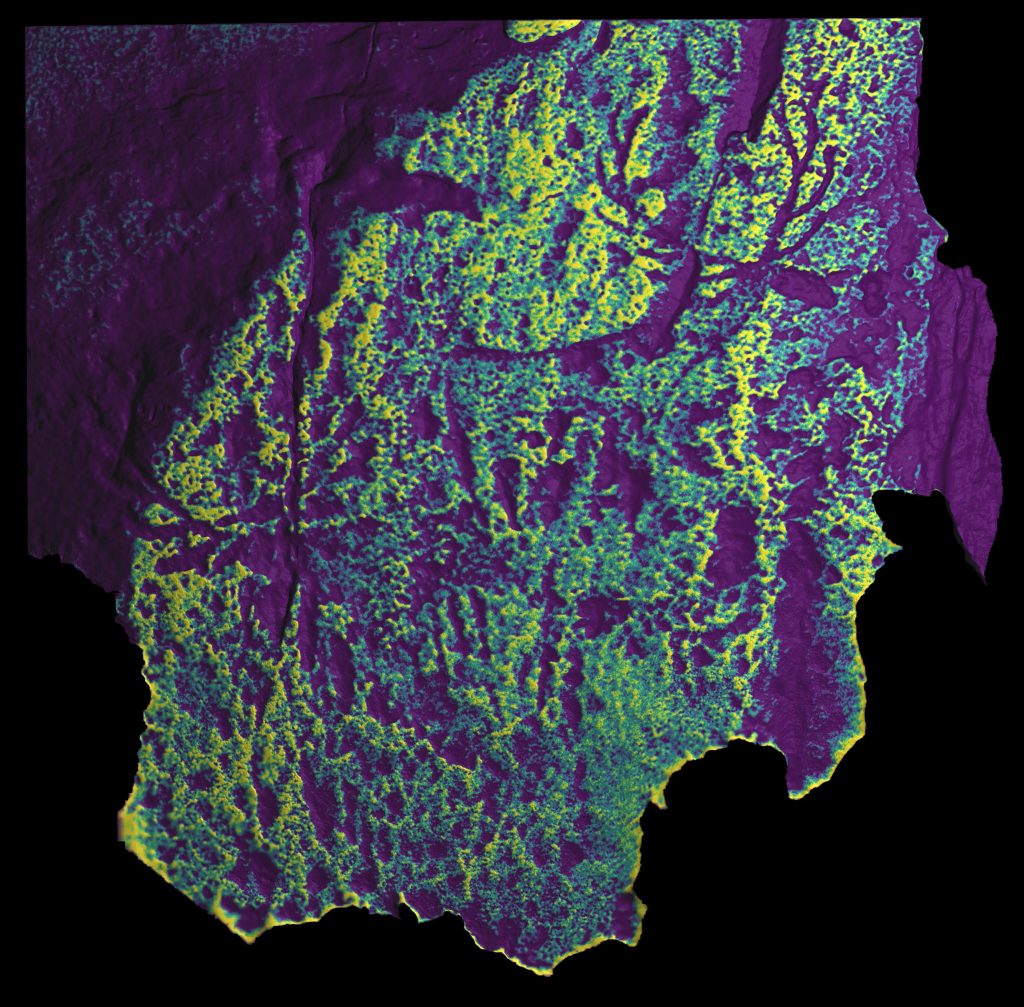
In a more central position of the capstone, two smaller animals are barely visible to the naked eye. While the stone is very eroded and these carved figures have fewer anatomical details, the exploration of the 3D models enabled the identification of a smaller pair of antlers on one of these animals, suggesting that they are likely to be juvenile deer.
A fifth animal figure is located underneath the larger stags but damage to the rock, which probably occurred during its quarrying and transportation to this site, has likely removed detail. As such, it is only possible to tentatively identify it as a male deer, due to the presence of a short tail.
In addition to the antlers, all animals portrayed in this panel have their sex marked with cupmarks, indicating that the composition refers to male individuals.
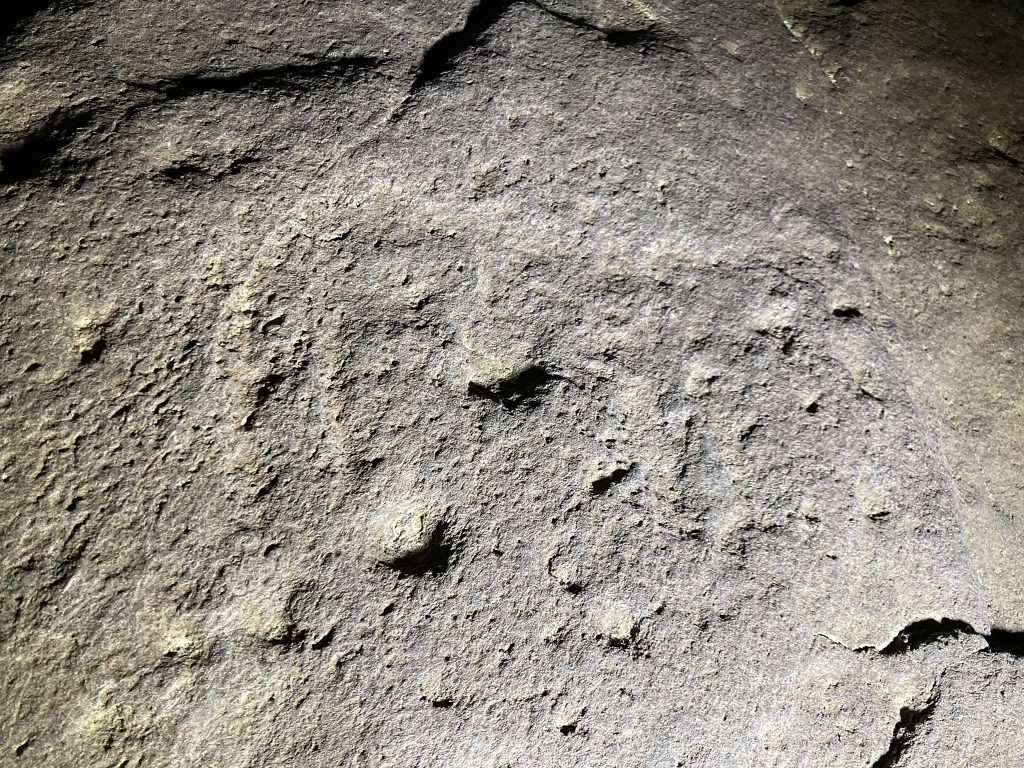
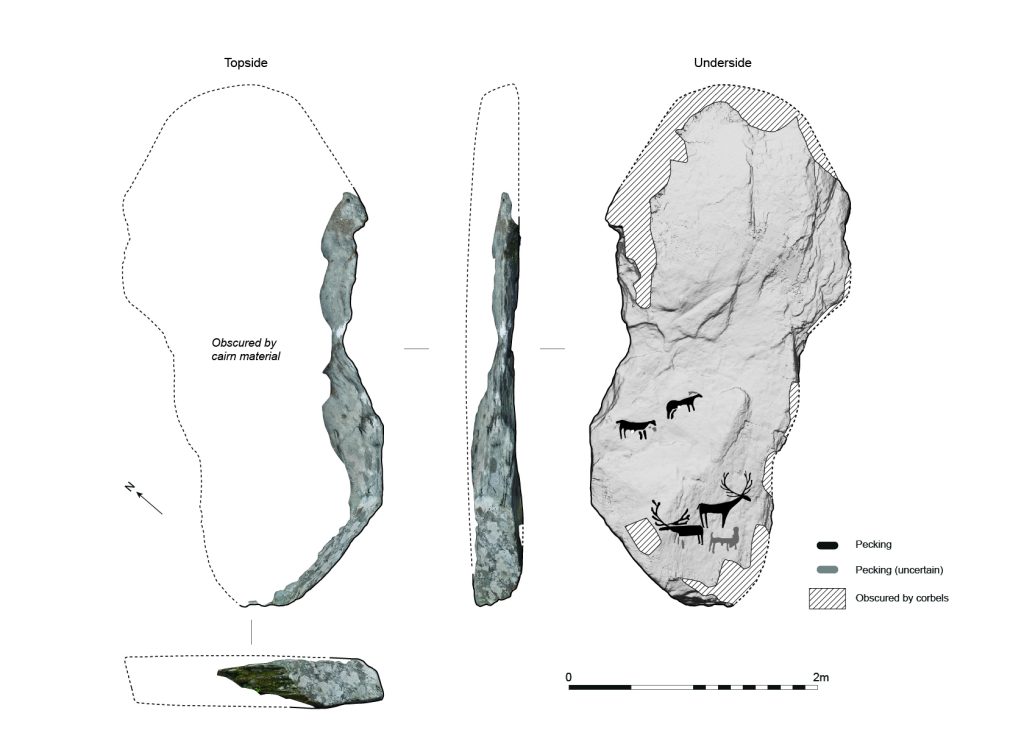
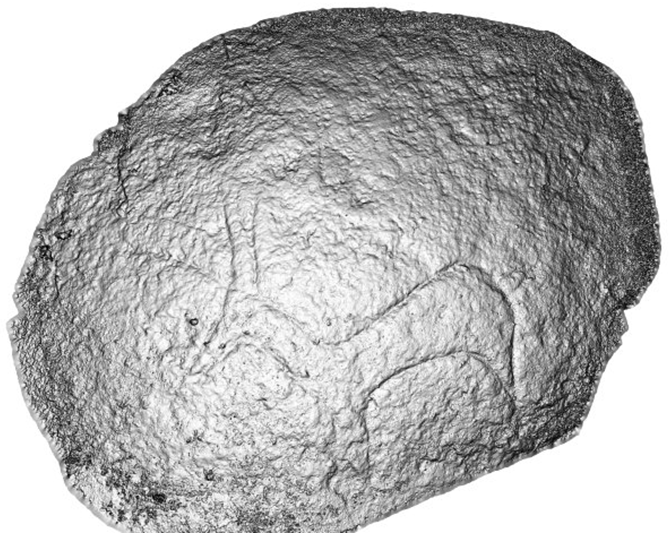
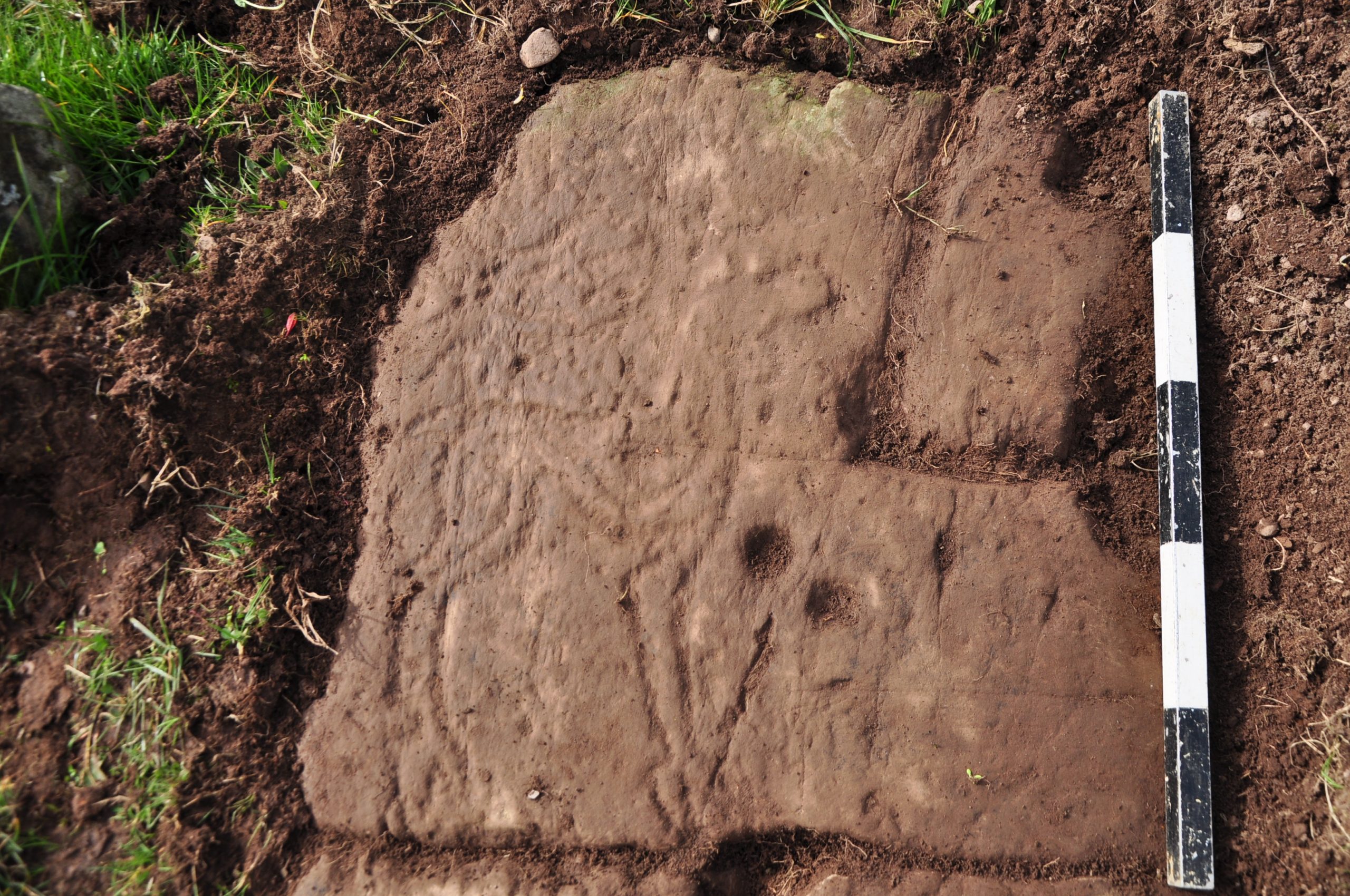
Although there are a few other examples of carved animals in Scotland, notably the deer of Eggerness and Kilmartin, or the potential but less clear deer at Ballochmyle (Ayrshire), this was the first time that carved animal motifs have been securely dated within the Neolithic and/or Early Bronze Age. This remarkable discovery raises a number of questions concerning our current knowledge of rock art and carving practices during these periods. It challenges everything we knew until now, when it was believed that prehistoric rock art in Britain and Ireland was exclusively geometric. This extraordinary find is unlikely to be unique, prompting us to ask if there are more animal carvings and, if so, where should we be looking for them?
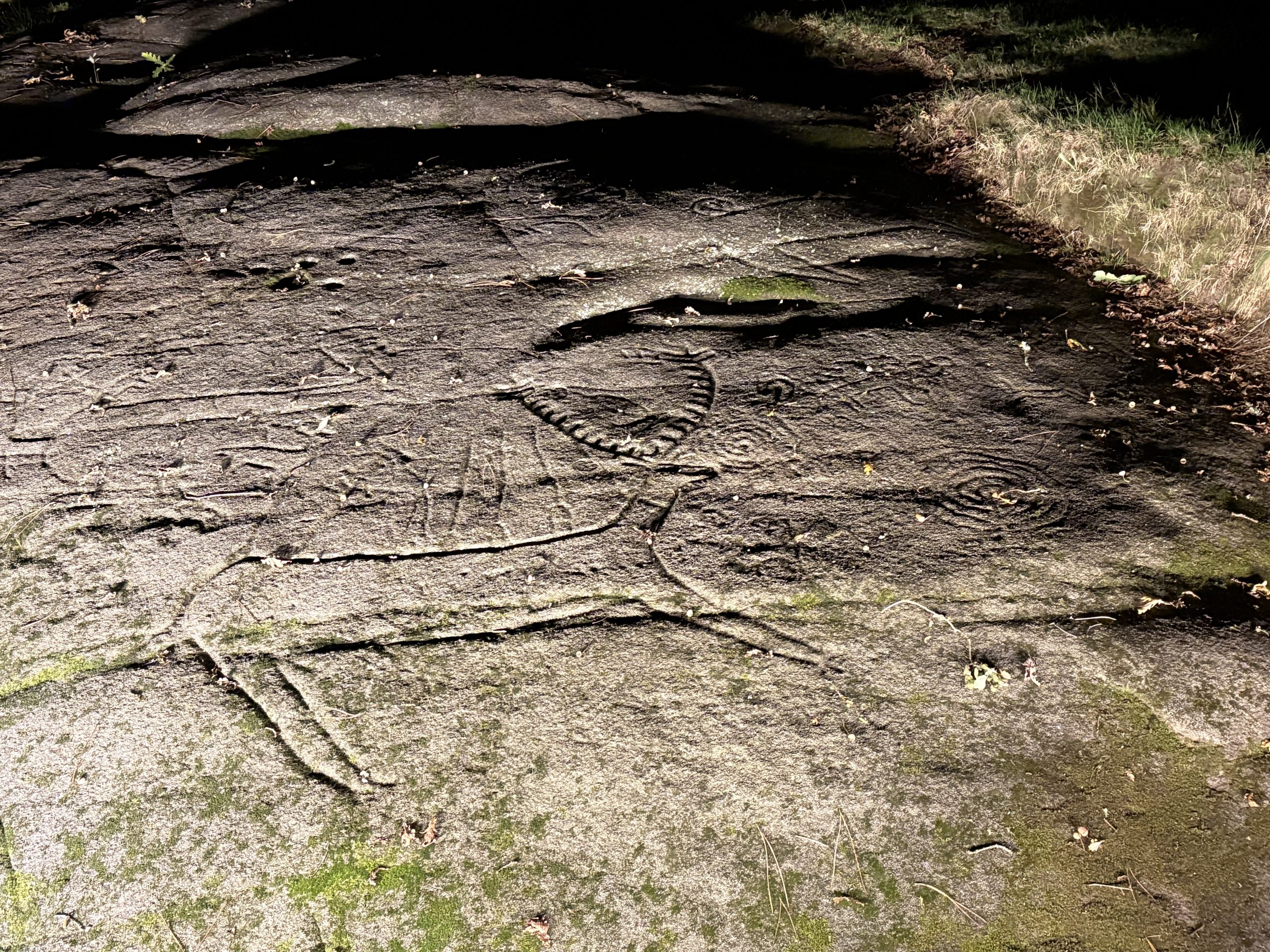
Furthermore, we must also question what this find tells us about Kilmartin during the Neolithic and Early Bronze Age and its relationship with other regions where animal carvings of this period are common, such as Iberia and Scandinavia. The Dunchraigaig Cairn find is particularly interesting in allowing us to think about the connections between Scotland and Iberia, where Atlantic Rock Art is accompanied by depictions of animals. What may have led to the creation of these exceptional carvings? Are they indigenous practices or are they the result of cultural exchange with people from other places?
References
Abbot, M and Anderson-Whymark, H 2012 Stonehenge Laser Scan Archaeological Report, English Heritage 32, 1–71.
Fenton, H, 2021 ‘Dunchraigaig Cairn’, Discovery and Excavation Scotland 21.
Valdez-Tullett, J, Barnett, T, Robin, G and Jeffrey, S 2023 ‘Revealing the Earliest Animal Engravings in Scotland: the Dunchraigaig Deer, Kilmartin’, Cambridge Archaeological Journal 33 (2), 281-307.
Watson, A and Bradley, R 2021 ‘A new study of the decorated cist cover at Nether Largie North cairn, Argyll’, Proceedings of the Society of Antiquaries of Scotland 87, 219–230.