

by Dr Tertia Barnett and Dr Joana Valdez-Tullett
Prehistoric rock art holds significance today for many reasons – archaeological, aesthetic, spiritual, and cultural, to name a few. Everyone who is aware of rock art has a different sense and understanding of its social value, based on their own unique experiences, memories, and associations with it.
It is well-established that a sense of social value is integral to the cycle of enjoying, understanding, and caring for our heritage, so the way we value rock art affects how we safeguard it now and in the future. Rock art has been notoriously under-valued, however, and perhaps for good reason. Challenges to understanding its purpose and chronology, low public awareness, limited promotion and opportunities for active engagement all conspire to suppress social value and relevance.
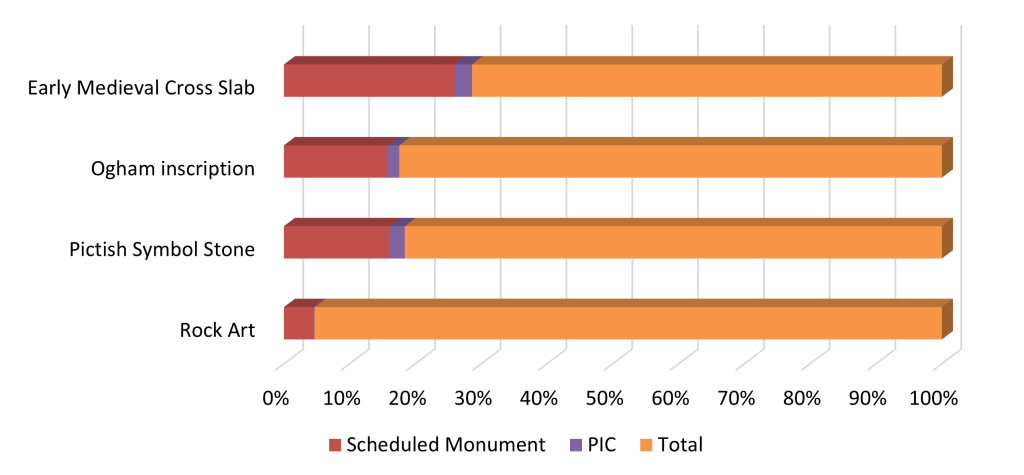
Social value is difficult to quantify, but we can get an idea of how significant rock art is to people today by comparing how it is treated relative to other types of carved stone monuments. One measure is the proportion of rock art sites formally protected through designation as Scheduled Monuments and managed by Historic Environment Scotland as Properties in Care (PIC). This demonstrates a notable discrepancy in the protection and care of rock art compared to early medieval Cross Slabs, Pictish Symbol Stones and Ogham Inscriptions.
Less than 5% of the 3,100 known rock art sites in Scotland are designated as Scheduled Monuments, including those incorporated into other monument types, while around 20% of Ogham Inscriptions and Pictish Symbol Stones, and over 36% of early medieval Cross Slabs are scheduled. Similarly, there are numerous publications devoted to these types of carved stones, but very few focussing entirely on rock art.
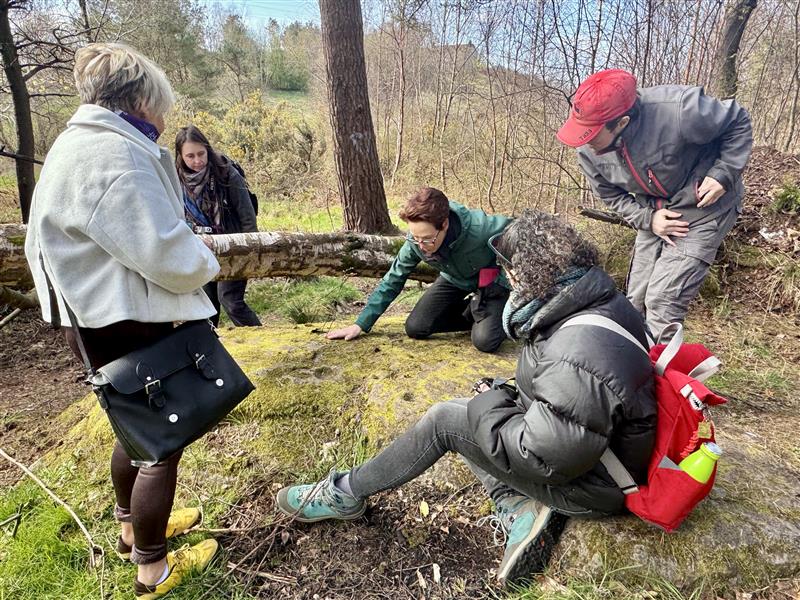
There has been very little research to explore the importance of rock art for people today, and what underpins this. During Scotland’s Rock Art Project (ScRAP), Professor Stuart Jeffrey (Glasgow School of Art) worked closely with project participants and other communities in Scotland to better understand how and why people value rock art. Interviews, focus groups and observation in the field produced a picture of the social values for those involved in ScRAP, and the impact of active engagement with these sites on these values. The profile of participants included a range of backgrounds, ages and experiences, from university students to retirees.
Although a small number of participants had a strong interest in rock art before their involvement with ScRAP, the majority had surprisingly low initial awareness. For many, the excitement of discovering rock art, engaging with it through fieldwork, and wide-ranging discussions and personal reflections on its purposes and meanings enhanced their sense of its significance and place in the wider historic environment. Values were not specifically local as many participants worked across a wider area. Instead, most people appreciated engaging with the landscape through the sense of well-being generated by outdoor exercise in good company.
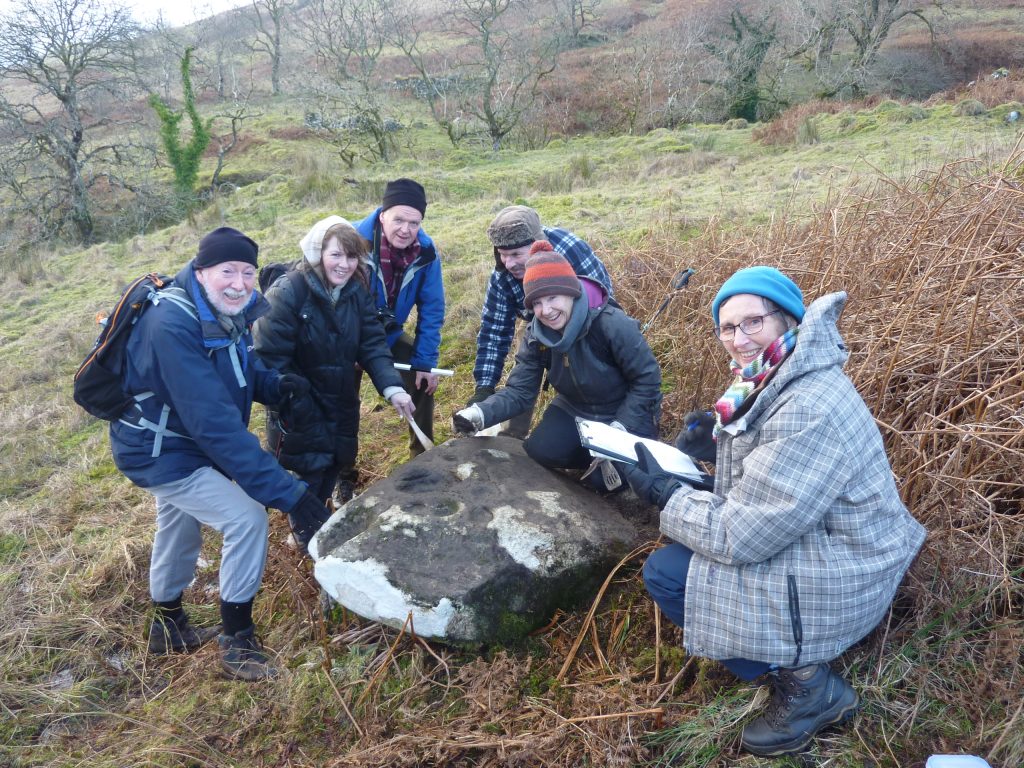
Active participation frequently altered people’s perceptions of rock art across the whole range of social values, including spiritual and aesthetic. Critically, this inspired ScRAP participants with a new enthusiasm for protecting, caring for and sharing their ideas about rock art as widely as possible.
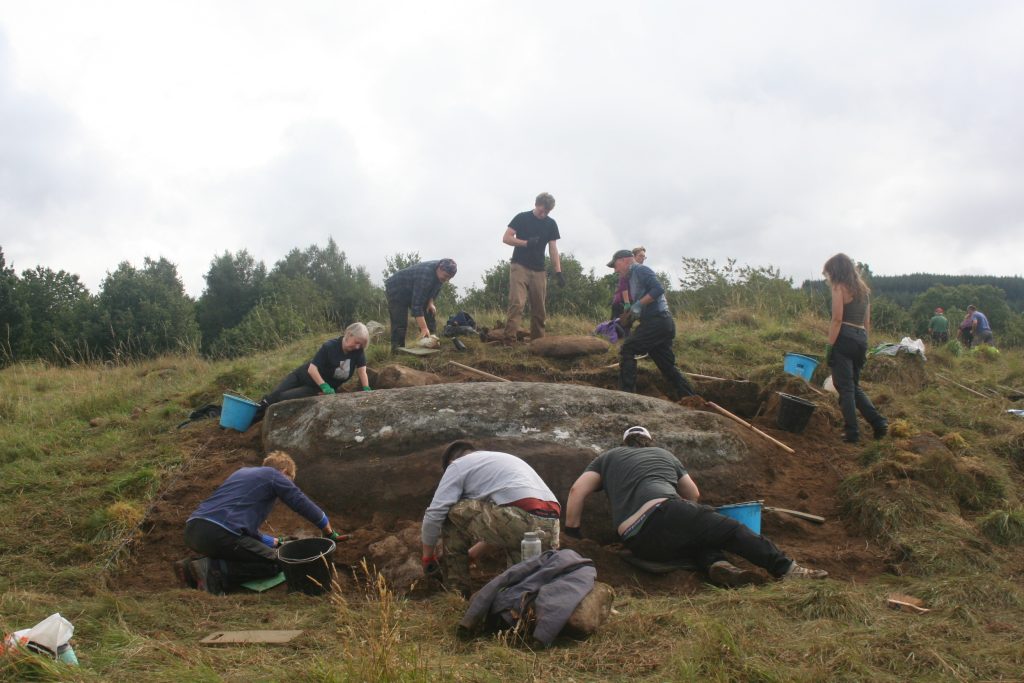
A similar pattern of response was noted during community excavation of rock art near Aberfeldy as part of the Lost Stones of Strath Tay Project in 2025. A large proportion of the participants had limited awareness of rock art and joined the excavation to learn more about it. In this case, people’s growing sense of value of rock art was entangled with their experiences of taking part in a collective endeavour to achieve a joint aim. Working alongside people of different ages and backgrounds, sharing knowledge and ideas, were as equally important to participants as their engagement with the rock art.
These examples clearly show that wider awareness and meaningful engagement with rock art are essential for enhancing its contemporary social value and altering attitudes towards safeguarding it now and in the long-term. There are also many other effective ways of enhancing its social significance besides fieldwork and excavation. Rock art has immense potential for inspiring creativity and imagination in all ages, such as through artistic outputs, writing, poetry, and performance, which can heighten enjoyment, relevance and sense of ‘ownership’, as demonstrated by some excellent creative initiatives in recent years (highlighted in Section 2.1). Similarly, developing opportunities for tourism and public access serves to raise awareness and bring economic benefits to communities, which can forge a new sense of social value.