

by Dr Joana Valdez-Tullett and Dr Tertia Barnett
Prehistoric rock art is known across large parts of Scotland, with some areas displaying higher concentrations of panels (see Highland Distribution Case Study). This is the case for South West Scotland, namely the regions of Argyll and Bute and Dumfries and Galloway, where hundreds of panels are known. These regions became a particular focus of attraction for antiquarians and rock art enthusiasts, who identified and recorded many of the panels known today between the 1960s and the 1980s (eg Campbell and Sandeman 1962, Morris 1968, van Hoek 1995, Beckensall 2005).
Most of the rock art in these regions is located in gently sloping and undulating landscapes, often near the coast. In Dumfries and Galloway, the main concentrations of panels are focused around Kirkcudbright, the environs of Cairnholy chambered cairn, and the Machars peninsula. In Argyll, Kilmartin Glen is particularly well known for its rock art. The majority of panels are relatively small and bear a limited number of motifs, but some extend over several meters and are densely decorated with a diversity of designs, as is the case of Drumtroddan and High Banks (Dumfries and Galloway) or Cairnbaan and Achnabreck (Argyll and Bute). In most cases the panels are horizontal and flush with the ground. This makes them difficult to find, particularly due to turf growth, raising questions as to whether they were supposed to be found or resulted from more private practices (eg Valdez-Tullett 2019, Barnett et al 2022, Barnett et al 2024).
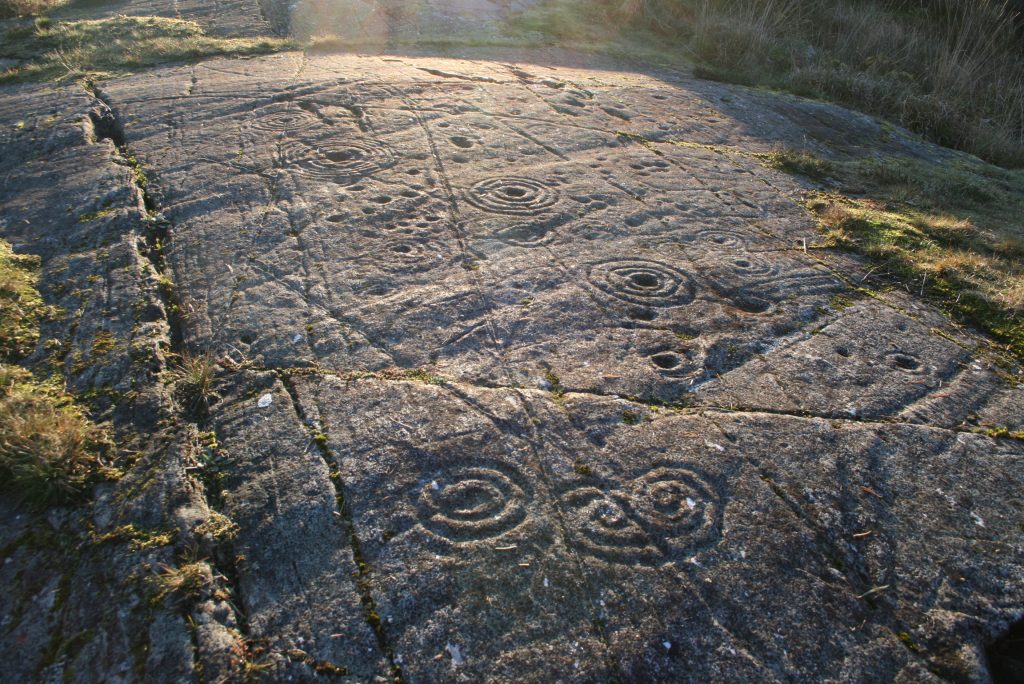
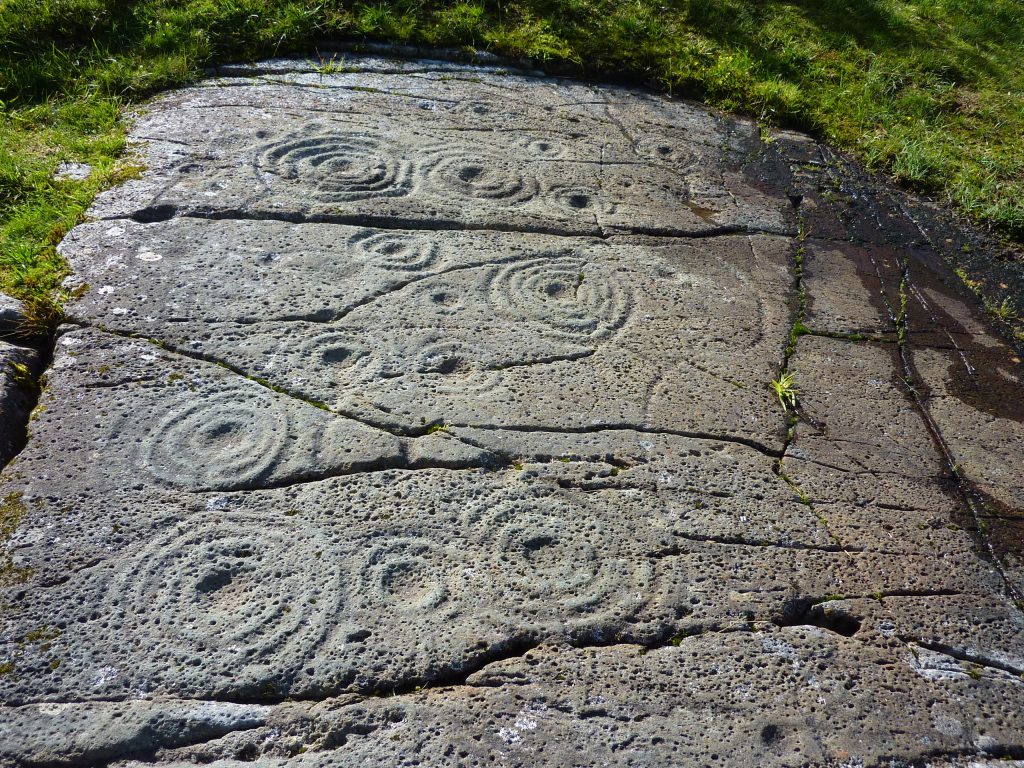
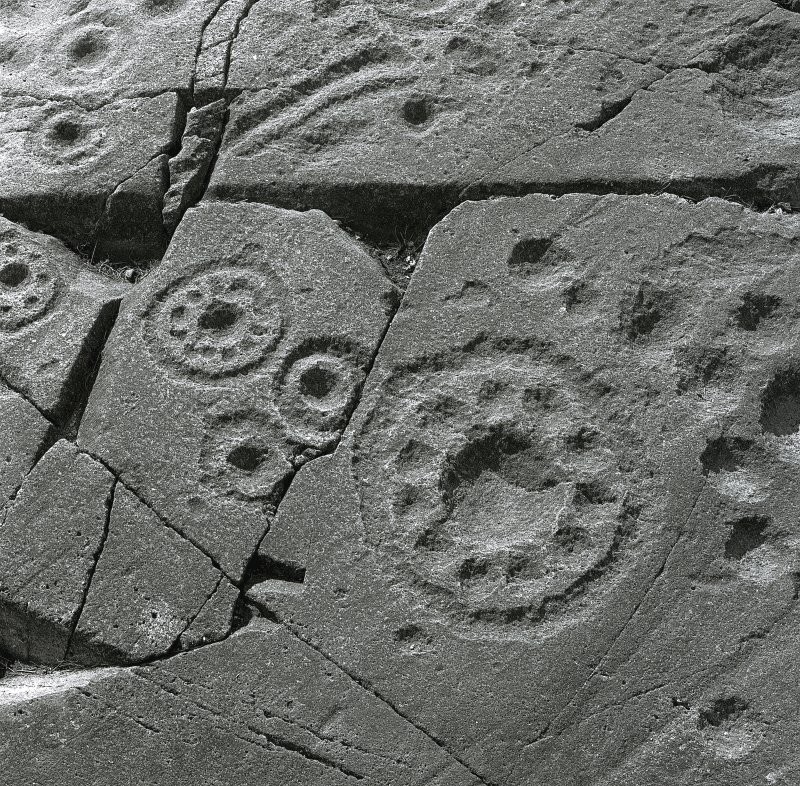
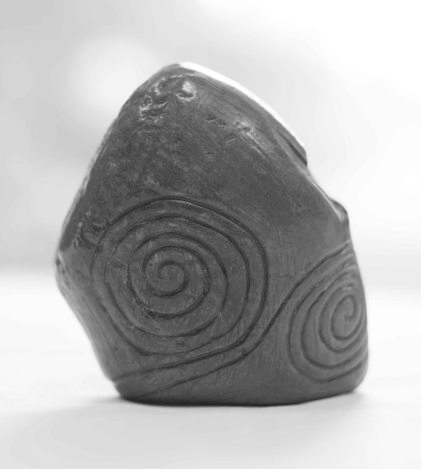
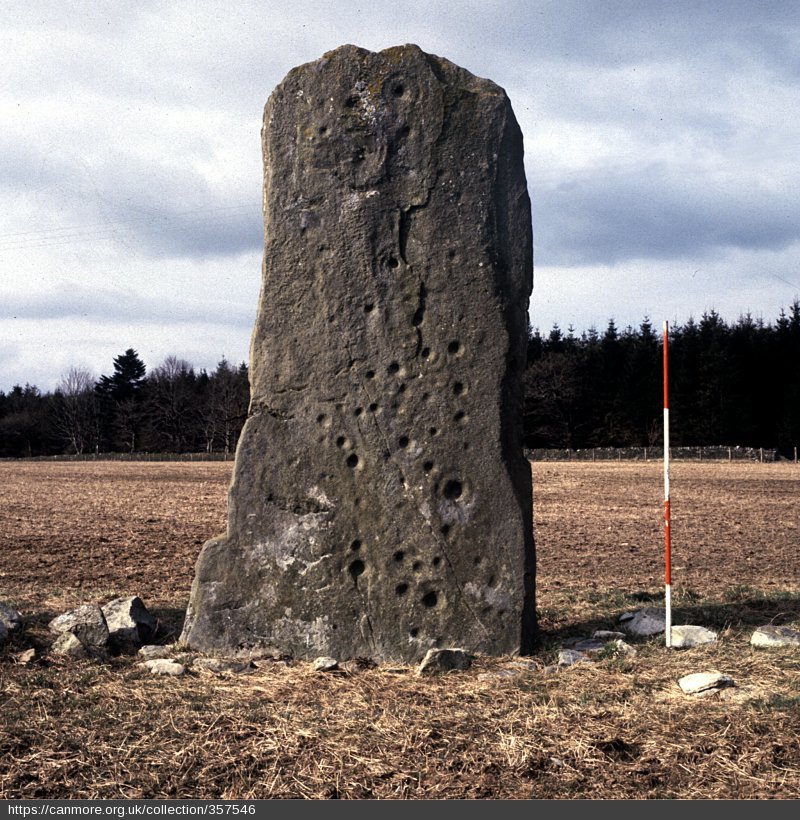
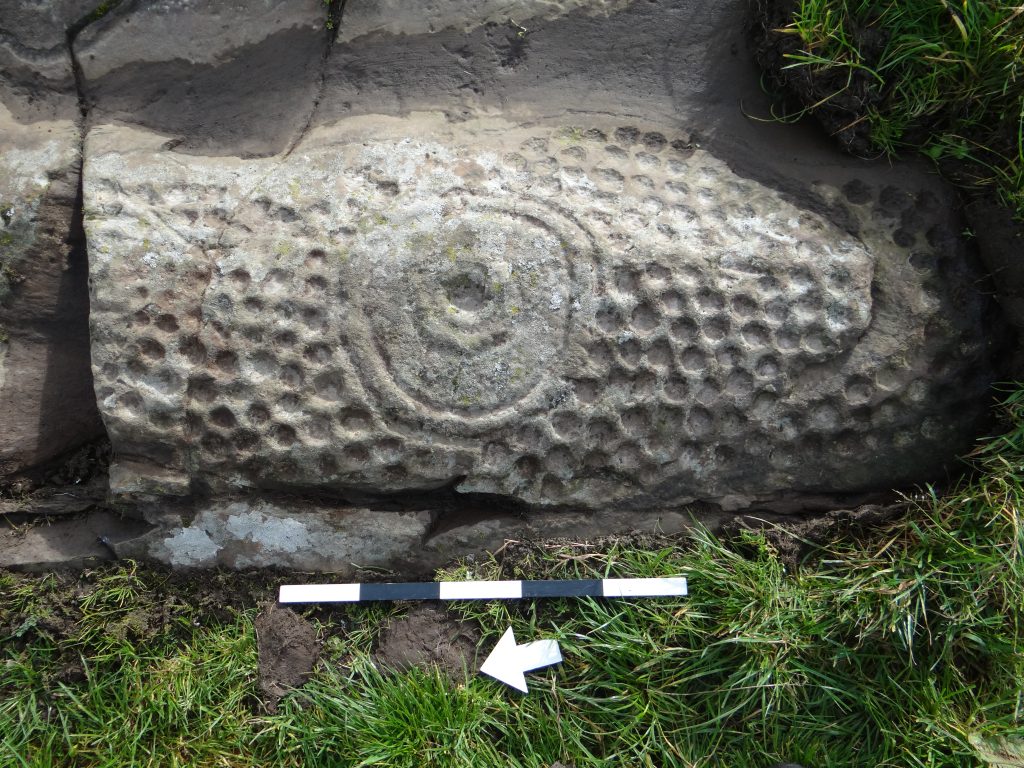
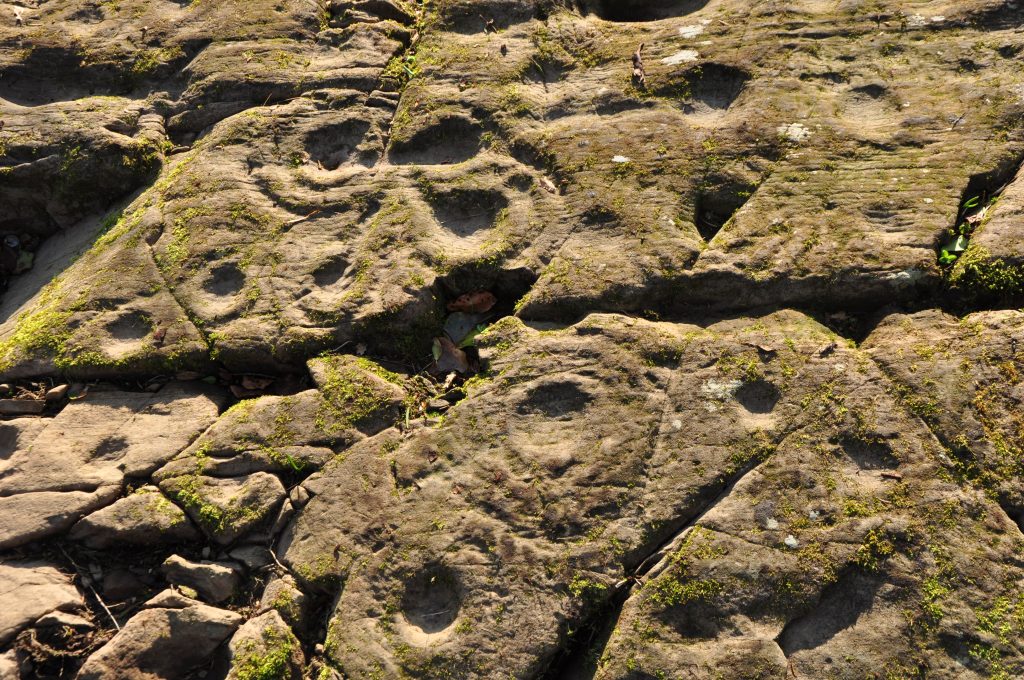
The rock art of West and South West Scotland is notable, not only for its density, but also for the complexity of some of its compositions. Unlike other regions where carvings can be relatively simpler and often limited to arrangements of cupmarks (especially in the Highland region), this area displays an unusual diversity of motifs and far more intricate designs. Although cupmarks remain a constant motif, there are many examples of less common types of iconography such as cup-and-rings with more than four concentric circles, oval penannulars, rosettes and spirals. These motifs allow for detailed comparisons and the establishment of relationships with other regions within Scotland, as well as further away areas where similar rock art can be found, namely Ireland and Iberia (Valdez-Tullett 2019). In both cases, the rock art, alongside a range of other archaeological materials, had provided good evidence of extensive prehistoric connectivity with Ireland.
In Kilmartin, there are also several examples of standing stones carved with similar motifs to those common to open-air rock art, such as those at Ballymeanoch and Nether Largie. These are typically not too far from the decorated boulders and outcrops. It has been suggested that these could have been created specifically for the standing stones, but also that carved outcrops could have been quarried and re-purposed into standing stones. A particularly unusual motif is that of an interconnected double spiral spread across two faces of a standing stone in Temple Wood Stone Circle, which has been compared to a motif applied in a similar manner decorating the Garboldisham macehead, dated to the Neolithic, which was found in Norfolk in the 1960s (Jones and Díaz-Guardamino 2017). This motif is also reminiscent of Passage Tomb Art, raising questions about relationships between these two forms of decorated monuments.
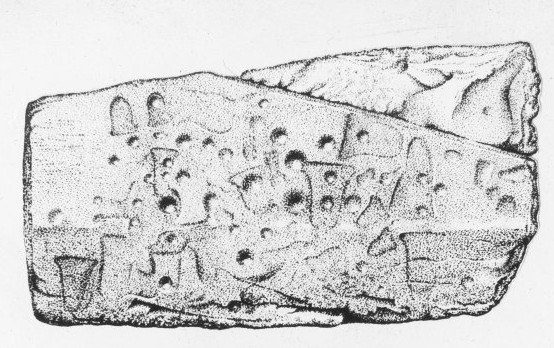
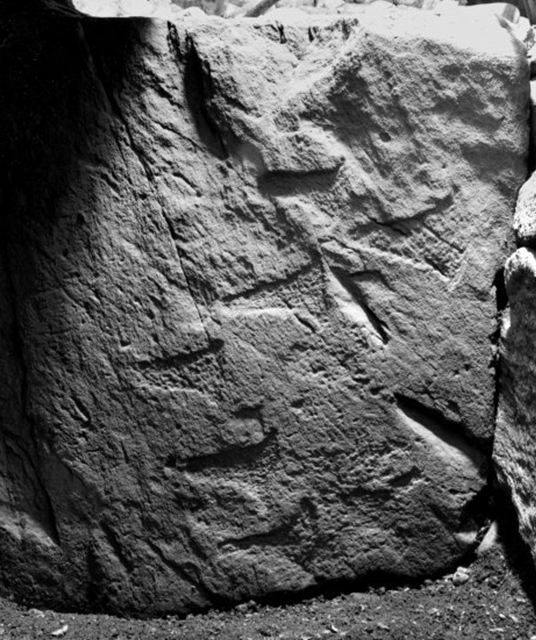
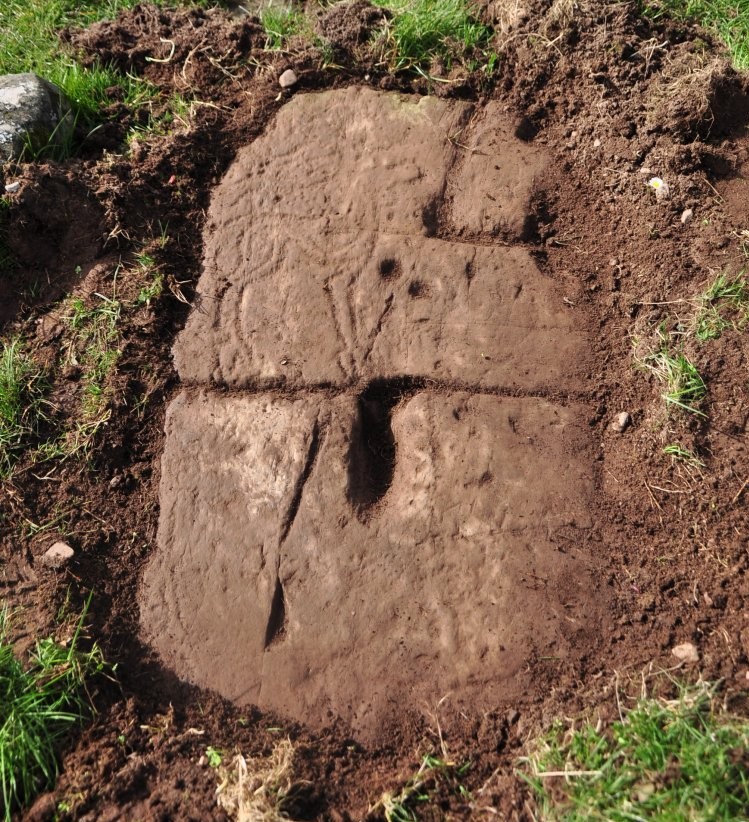
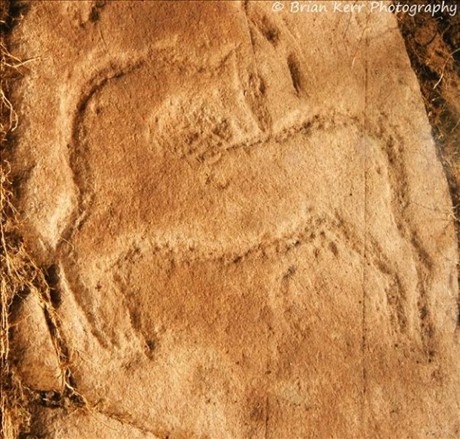
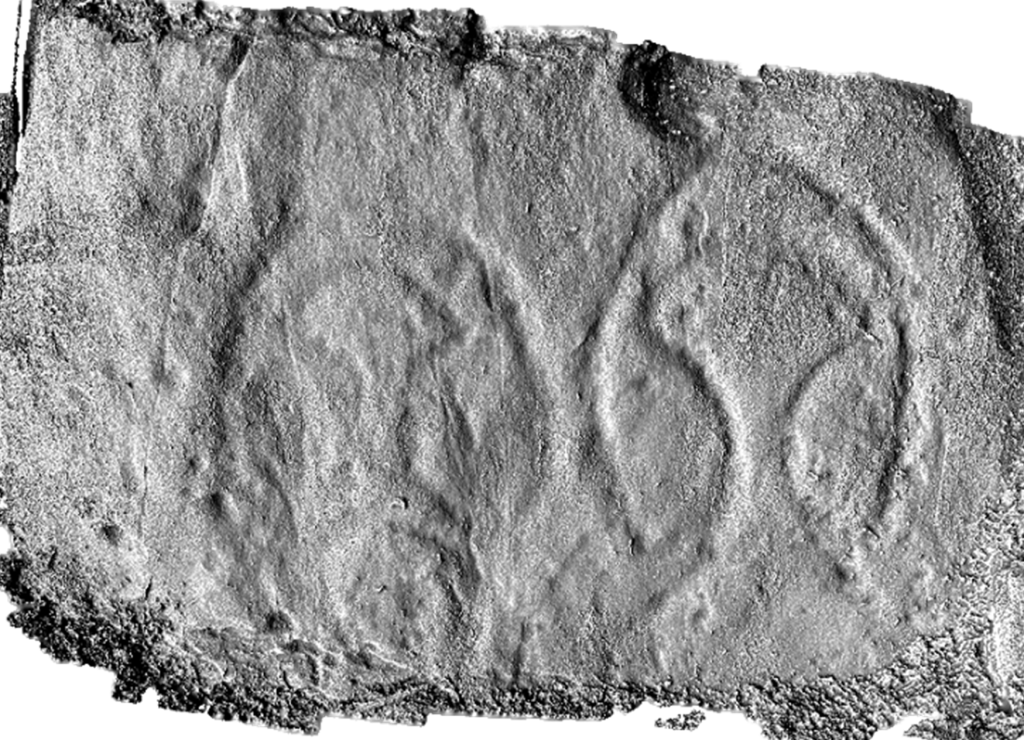
Furthermore, the distinctiveness of rock art in these regions is also obvious in the examples of figurative art known from funerary monuments in Kilmartin. Several examples of carved Bronze Age axeheads are known depicted on the cist slab of Nether Largie North cist slab, Nether Largie Mid and Ri Cruin (Watson and Bradley 2021). Deer carvings were recently found on the capstone of the largest cist at Dunchraigaig Cairn (Valdez-Tullett et al 2023, see Dunchraigaig Case Study). In Dumfries and Galloway, there are also unique examples of horses and a deer carving at Eggerness, and possible shield or axe moulds at Knock, although these are likely to have later chronologies.
While it is not possible to identify with certainty a function or meaning for rock art, the study of its context and wider relationships provides clues as to how it was being used by people in the past.
Particularly in Dumfries and Galloway, the presence of cup-and-ring motifs associated with the well-known monument of Cairnholy raises questions about its relationship with funerary contexts, but also Early Bronze Age re-use. Similarly, the recently found and unique carvings of deer on the large capstone of Dunchraigaig Cairn in Kilmartin also suggests that large carved stones were quarried to be used in later funerary monuments.
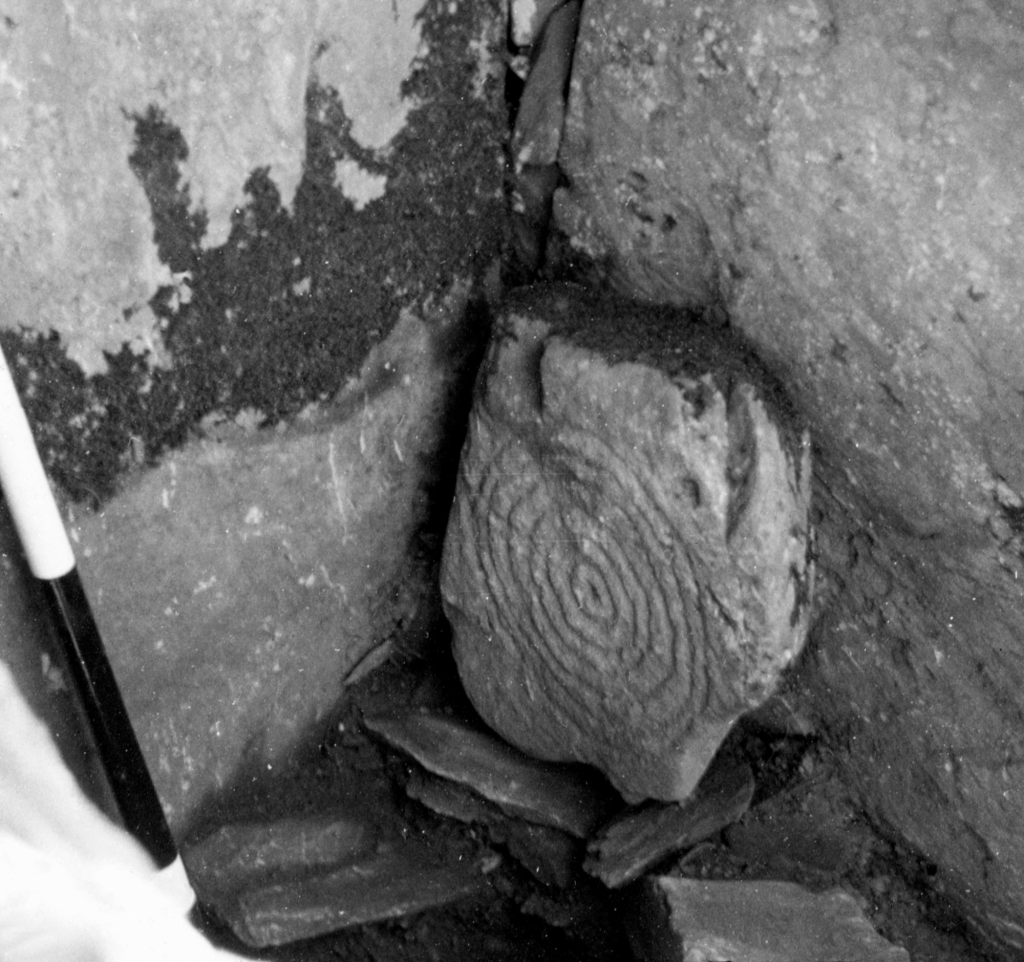
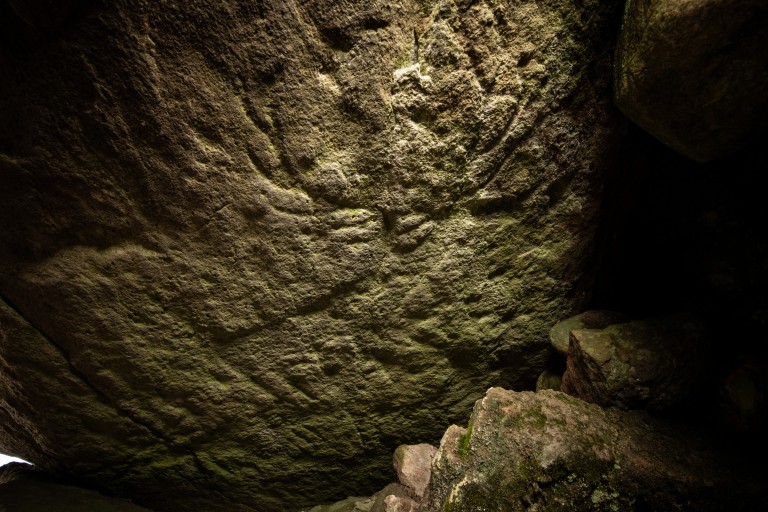
There are other suggestions that rock art may have had a variety of roles and purposes for different groups of people. Recent studies have looked at the contexts in which rock art is found and possible associations with other archaeological site types. There are several examples of panels in the vicinity of burnt mounds, roundhouses and prehistoric hut circles, which may provide clues as to how the carvings were integrated into the daily lives of these societies. In other cases, the rock art was placed in areas with no evident archaeological remains nearby, or close to groups of funerary monuments and routeways (Barnett et al 2024). Crucially, more excavations and dating strategies are necessary to establish tighter chronologies, which will allow for a better understanding of the relationships between the different types of sites and activities.
References
Barnett, T, Valdez-Tullett, J and Bjerketvedt, L M 2022 ‘Close encounters: Vsibility and accesibility of Atlantic Rock Art in Scotland’, in Frodsham, P and Sharpe, K (eds) Abstractions Based on Circles: Papers on prehistoric rock art presented to Stan Beckensall on his 90th birthday, Oxford: Archaeopress Archaeology, 63-76.
Barnett, T, Valdez-Tullett, J, Bjerketvedt, L M, Alexander-Reid, F, Hoole, M, Jeffrey, J and Robin, G 2024 ‘A multiscalar methodology for holistic analysis of prehistoric rock carvings in Scotland’, Heritage Science 12, 86. doi.org/10.1186/s40494-024-01183-8
Beckensall, S 2005 The Prehistoric Rock Art of Kilmartin, Kilmartin: Kilmartin House Trust.
Campbell, M, Sandeman, M L S 1962 ‘Mid-Argyll: a field survey of the historic and prehistoric monuments’, Proceedings of the Society of Antiquaries of Scotland 95, 1-125.
Jones, A and Díaz-Guardamino, M 2017 ‘The Garboldisham Macehead: its Manufacture, Date, Archaeological Context and Significance’, Proceedings of The Prehistoric Society 83, 383-394.
Morris, R 1977 The Prehistoric Rock Art of Argyll, Poole, Dorset: Dolphin Press.
Morris, R 1979 The Prehistoric Rock Art of Galloway and the Isle of Man, Dorset: Blandford Press.
Valdez-Tullett, J 2019 Design and Connectivity. The case of Atlantic Rock Art, Oxford: BAR.
van Hoek, M 1995 Morris’ Prehistoric Rock Art of Galloway, privately published.