
Traditional recording methods of rock art and other carvings include direct tracing, scale drawing and rubbing. While these methods were quite successful, they depended heavily on the experience of the recorder and their ability to identify the rock art and its details. This resulted in subjective, two-dimensional, flat and static reproductions that lacked standardised conventions and contextual information (Díaz-Guardamino and Wheatley 2013; Valdez-Tullett and Figueiredo-Persson 2023). Indeed, several examples of drawings show the same panels recorded by different people, with significant differences. In the last couple of decades, these have been gradually replaced by digital recording methods, which are now firmly entrenched in the range of techniques applied by heritage professionals.
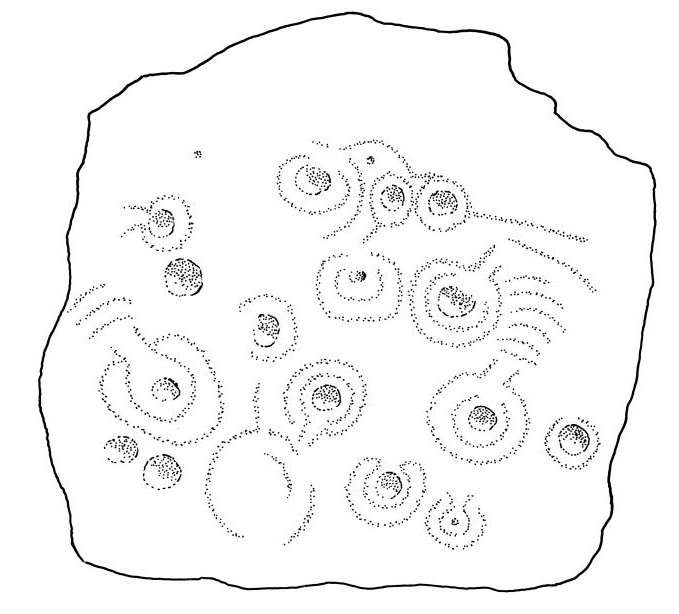
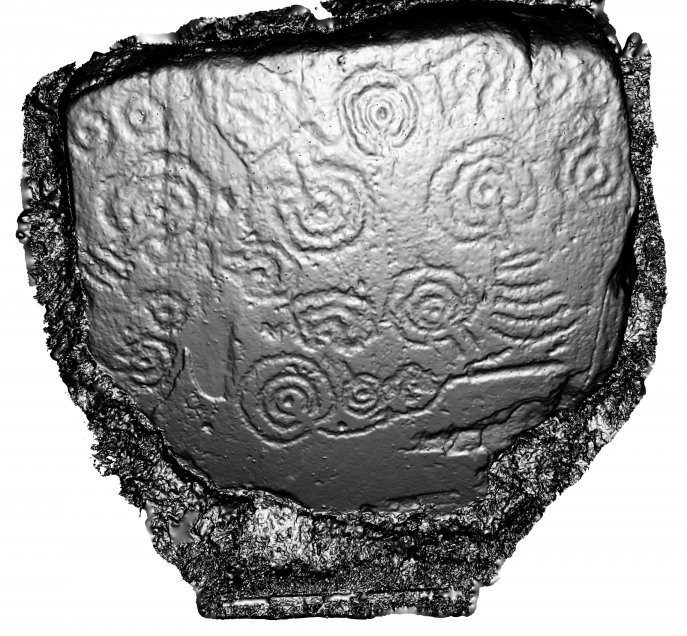
Digital recording can be seen as part of an evolving toolkit that has included traditional techniques, text, sketches, metric drawing and photography, while also raising its own unique opportunities and challenges. A key aspect of digital technologies is that they are non-contact and allow the creation of accurate three-dimensional records that replace historic contact techniques, such as the generation of plaster cast replicas. Initial digital documentation and computer methods applied to rock art were based on photographic colour enhancements (Robin 2015). The first laser scanning experiences were developed in the 1980s, but the application of such methods was infrequent and largely experimental due to high cost and highly specialized skills required (eg Delluc and Delluc 1984; Ajoulat 1987). It was not until a decade ago that the democratisation of digital techniques, promoted by more accessible and low-cost equipment and software packages, led to an increase in use of 3D modelling technology in archaeology in general.