Prehistoric rock art is a particularly vulnerable aspect of the historic environment. In Scotland, there are more than 3000 known rock art sites, the majority of which are carved on boulders and outcrops, exposed in the landscape and at risk from numerous direct and indirect threats. Fewer than 200 examples are incorporated into prehistoric monuments such as cairns, stone circles or standing stones which can afford some protection. Less than 5% of all recorded sites are designated as Scheduled Monuments, including those associated with Neolithic and Bronze Age monuments, and only six are Properties in Care (PICs) (see Contemporary Social Significance Case Study). The sheer number of known rock art sites, and their often remote rural locations, pose significant challenges for conservation and safeguarding.
Growing pressures from climate change, changes to farming practices, urban development, and infrastructure projects make the challenge of preserving thousands of vulnerable rock art panels almost insurmountable. There are few resources for systematic monitoring, and the panels are at constant risk of damage or destruction from environmental and human agents.
Human Threats
Management
Scotland’s Rock Art Project (ScRAP) documented more than 1,600 carved panels across Scotland, but a similar number of known panels remains to be checked and recorded in detail. Without a consistent record and accurate grid references, it is not possible to develop effective management systems for planning and long-term conservation strategies.
Agriculture
Many rock art panels lie within farmland where they are at risk from agricultural activity. There has been massive destruction and removal of panels for field clearance since the 18th century, and these practices are exacerbated today through agro-environmental policies that offer financial incentives for enhancing farmland. The Agriculture and Rural Communities (Scotland) Act 2024 focused on reforming and managing rural land, with an emphasis on regenerative and sustainable practices that include deep ploughing and drainage works. However, the Bill does not address heritage risks, or outline protections for archaeological sites, leaving rock art and other features potentially vulnerable.
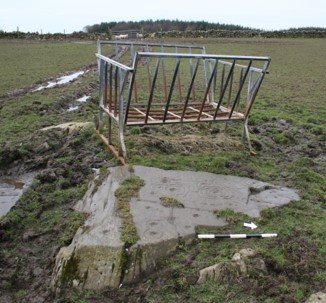
Other threats include vibrations from heavy farm machinery that can compromise the structural integrity of the rocks by enlarging existing cracks and fissures. Livestock can also accelerate deterioration through animals persistently rubbing against or trampling over panels, especially when feeder bins are placed near or on panels. In addition, as the majority of carvings are on flat rocks flush with the ground, they are can easily be overlooked and accidently damage during agricultural activities.
Land development
The current emphasis on expanding the, very necessary, renewable energy infrastructure to meet national decarbonisation targets has led to large-scale projects that can impact on extensive areas of land. As these projects are often8 located in less populated areas, they potentially affect a range of archaeological sites, including rock art. In addition to direct physical impact on above and below-ground archaeological remains during construction, ground vibration, dust, and changes in surrounding vegetation can pose threats to the rock art. Identification and assessment of rock art is notoriously challenging, and often compounded by inaccurate grid references and overgrown panels. There is currently a lack of clear, consistent guidance on rock art conservation and best practice for incorporating it into planning processes and impact assessments.
Vandalism and foot-fall
Risks from vandalism include graffiti, scratching, uncovering and leaving panels uncovered, cleaning off moss and lichen with sharp tools, and colouring in motifs. However, misuse of rock art sites can also include fires lit on or near the panels, and the deliberate removal of carved fragments. Damage is often also caused unwittingly through lack of awareness by people walking on, cycling over, or having picnics on panels. Very few sites have managed or enhanced access, and regular monitoring is rare.
Quarrying
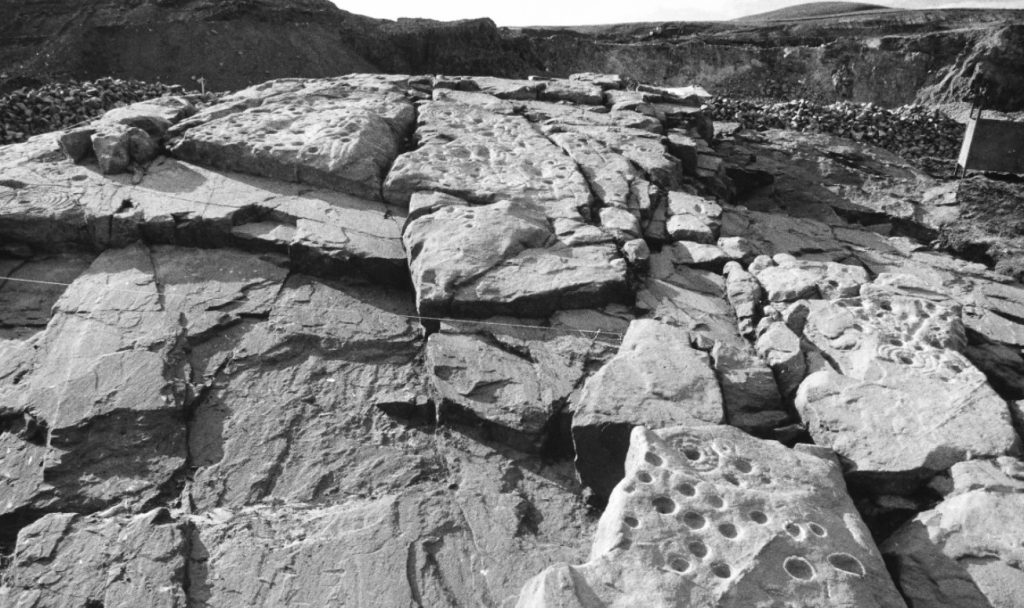
Industrial and small-scale stone quarrying, particularly for construction and road infrastructure, has had a devastating impact on rock art for hundreds of years. For example, Auchentorlie (Green Banks) in West Dunbartonshire and Traprain Law in East Lothian illustrate the extent of destruction. In these cases the carvings were recorded, but many panels have been damaged or obliterated without any appropriate documentation.
Natural Risks
Climate Change
Climate Change poses a significant threat to archaeological heritage, including prehistoric rock art. Rock art is constantly eroding from the effect of wind and rain, but climate change has enhanced this process in recent years. Increasing storm frequency, along with heavier rainfall, higher humidity and more extreme temperature fluctuations, can accelerate the deterioration of rock surfaces and the carvings. Certain rock types, such as sandstone, are at greater risk than others as rising temperatures and rainfall are destabilising their geological matrix more quickly.
Environmental shifts also drive changes in vegetation, which can impact on exposed rock art panels through root growth, plant colonisation and increased moisture retention. In Scotland, rapid periods of freeze and thaw are affecting the carvings, but higher temperatures and prolonged periods of dry weather have contributed to the growing number of wildfires, which can directly affect the rock art and enhance erosion. In regions such as NW Iberia, wildfires are already one of the most severe threats to rock art, with specialists talking about its extinction
There is an urgent need for improved resilience of rock art, but this can only be achieved through enhanced awareness, engagement, and sense of value at all levels to ensure that it is considered of similar importance as other archaeological sites. Given the volume and nature of rock art in Scotland, it is unrealistic to expect that all panels can be fully protected. More systematic studies are necessary to fully understand the threats that rock art faces and their impact, and develop best practice guidance for conservation measures, which need to be well-resourced and enforceable.
One of the main challenges lies in striking an appropriate balance between enabling development and renewable-energy projects, while safeguarding rock art and its wider landscape setting. New strategic approaches and initiatives developed through community consultation and co-production can make a big difference at national, regional and local scales. However, these need to be combined with a rigorous programme of awareness-raising, education and engagement that alters attitudes and perceptions. Projects need to have a clear and sustainable legacies and be embedded within communities. Improving training in the identification, documentation and management of rock art can strengthen understanding of its significance and help mitigate some of the risks it faces.