Since the first published account of rock art at Cairnbaan near Kilmartin, Argyll in 1830 (Currie 1830), discoveries have grown steadily through the work of antiquarians, independent specialists, professional organisations and members of the public (Barnett et al 2022). Arguably the most significant contribution in the past 80 years has been from a handful of independent specialists, including Marion Campbell, Ronald Morris, Dorothy Marshall, Maarten van Hoek, and George Currie who, together with other highly committed individuals and community groups, have helped shape our knowledge of Scotland’s rock art today (eg Morris 1981, Van Hoek 1995, 1997). However, a complete catalogue of known rock art was lacking until relatively recently (Foster 2010).
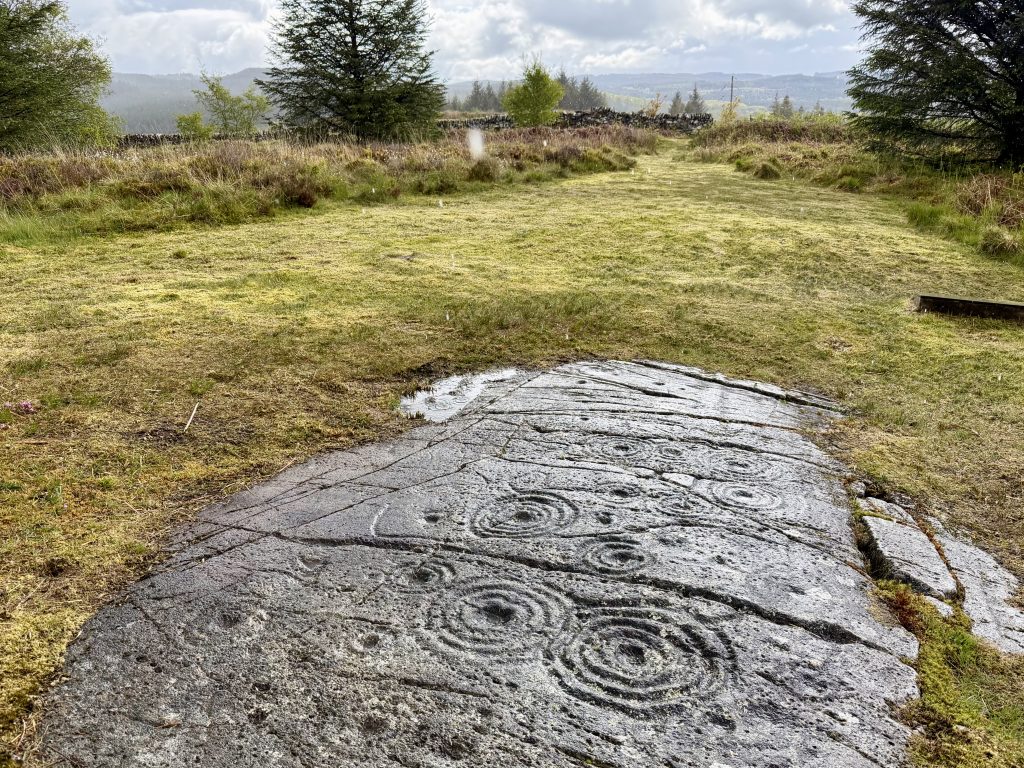
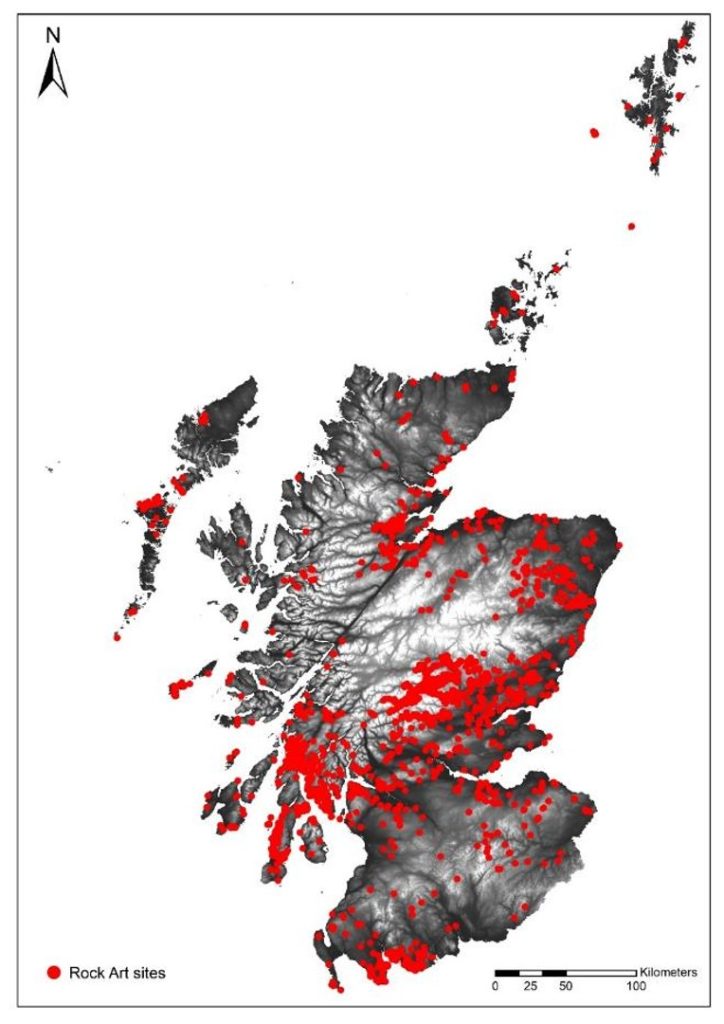
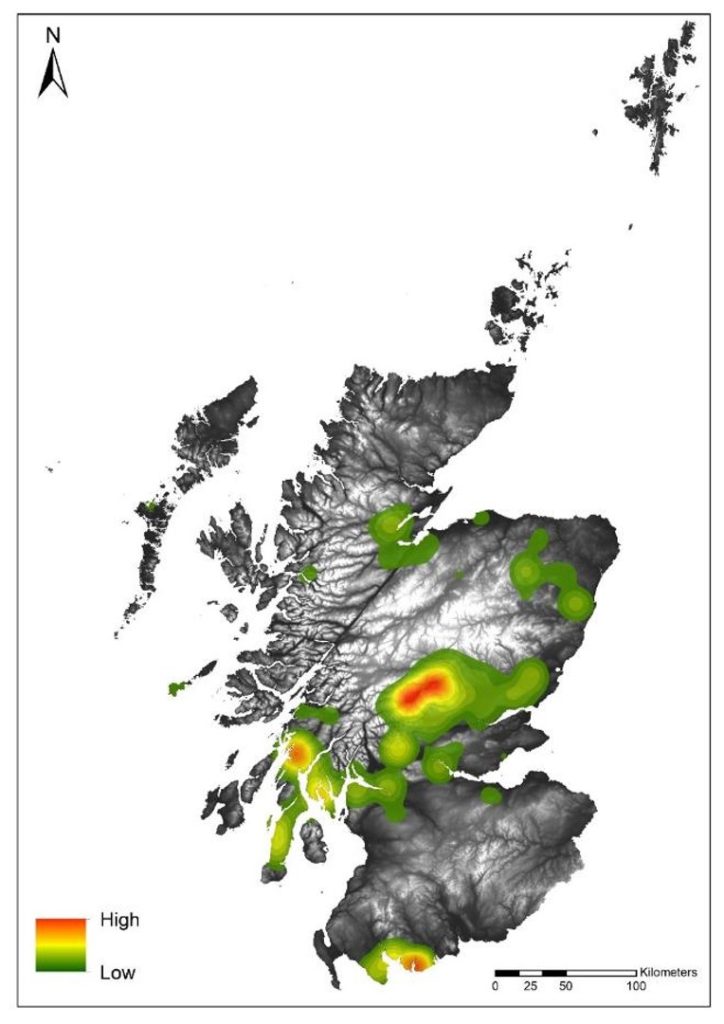
In 2017, Scotland’s Rock Art Project (ScRAP) compiled a single database containing all national and regional archives, which was enhanced over the following five years through community co-production (see ScRAP Case Study). By identifying new concentrations, removing anomalies, and creating individual records for each panel, this work has altered our understanding of rock art distribution across Scotland. The 2,450 rock art records in the National Record for the Historic Environment (now Trove) at the start of ScRAP in 2017 had risen to over 3,100 by the end of the project in 2021. Mapping the panels reveals areas of high density around Kilmartin, Loch Tay and Kirkcudbright, and apparent ‘gaps’ in areas including North West Highland and Scottish Borders (see Highland distribution Case Study).