
Annette Meakin, a British travel author, was probably the first person to notice the similarities between carvings of Iberia and those of ‘various parts of Great Britain, in the Isle of Man, and in Denmark’ (1909, 274). She also said that ‘it seems incredible that such similarity of design could possibly have arisen without there having been at some time or other a close connection between the peoples amongst whom they originated’ (Meakin 1909, 274). This account seems to have been lost in time, however, and Irish diplomat Eóin MacWhite is usually credited with highlighting these similarities in the 1950s, followed by Galician archaeologist Sobrino Lorenzo-Ruza (eg MacWhite 1951, Lorenzo-Ruza 1952).
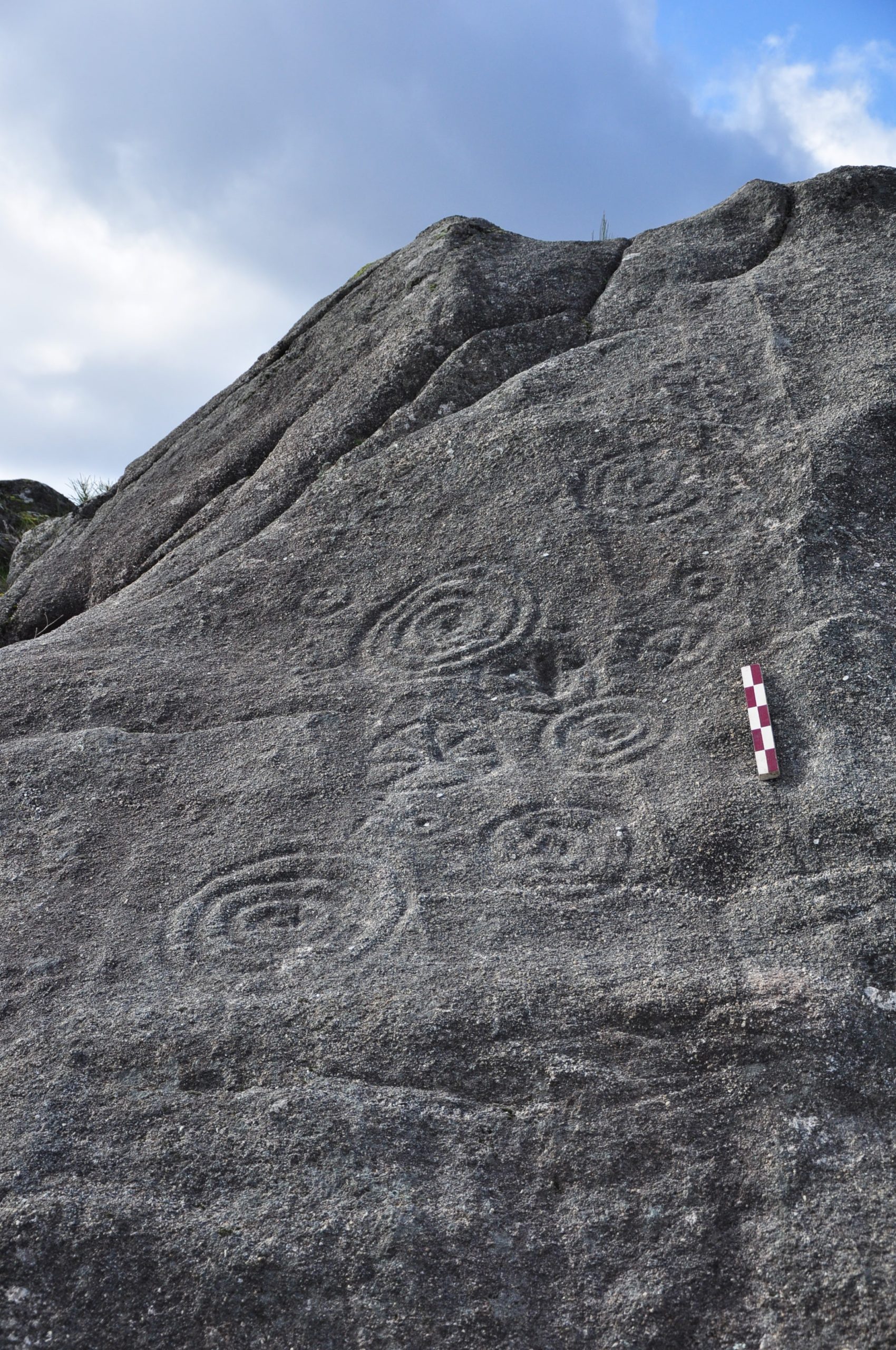
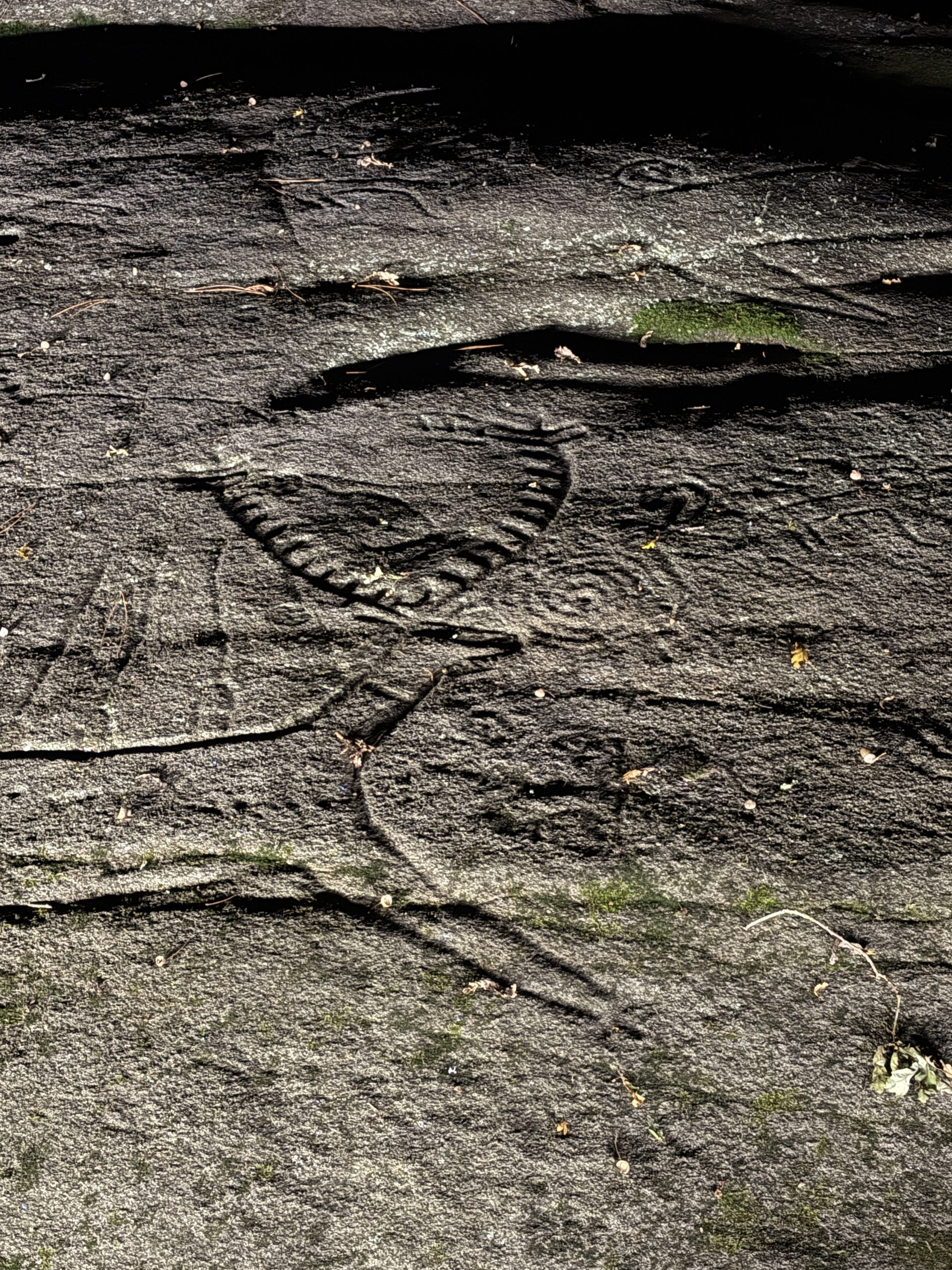
Nevertheless, this idea was not widely developed until Richard Bradley’s research on the rock art of Iberia, Britain and Ireland in the 1990s, culminating in his ground-breaking volume Rock Art and the Prehistory of Atlantic Europe in 1997. Until then, however, discussions around the similarities of rock art in these regions was largely based on stylistic grounds, which do not necessarily have chronological or contextual equivalence and can be misleading. The topic of inter-regional connectivity across the Atlantic was explored further only recently, using interdisciplinary methodologies which enabled the quantification and scientific demonstration of inter-regional relationships (Valdez-Tullett 2019, 2020, 2021, Bradley 2023).
The use of 3D imagery to document and scrutinise the carvings, combined with spatial, statistic and computational analyses, provided new insights into the design and making processes of the rock art. Various aspects of rock art evidence suggest that the rock art tradition resulted from networks of exchange and cultural transmission across this wide area. This includes the repetition of the motifs and their small details which can be found, not only across Scotland, but also in other Atlantic regions, as well as other attributes of the rock art tradition, such as the interaction with the natural features of the rock surface, the type of techniques employed, and the chosen rock media. It is likely that a process of intentional teaching was in place to enable reproduction of the main characteristics of the rock art tradition, as well as its subtle details, which are present and repeated across the Atlantic seaboard (Valdez-Tullett 2019).
When considered alongside other elements of the archaeological record, including monument architecture, distribution of particular artefacts such as Alpine jadeite axes and, more recently, ancient DNA (aDNA) and stable isotope analyses, rock art forms another component of a growing body of evidence that prehistoric people were more closely connected than we previously thought.