
Nuala C Marshall
Archaeological works as part of the SaxaVord Spaceport development at the Skaw Radar Station in Unst have revealed the remains of a complex prehistoric landscape centred around a cremation cemetery of likely Bronze Age date. Arguably, Shetland’s Bronze Age is one of the periods that archaeologists know the least about. Very few Bronze Age sites have been identified across Shetland, let alone excavated and fully investigated. Our collective knowledge and understanding of this period of Shetland’s past therefore remains patchy and inconclusive. Within this context, the discoveries at Skaw Radar Station offer an unparalleled opportunity to study rare evidence of the prehistoric inhabitants of Shetland. Furthermore, this project highlights the importance of developer-funded archaeology in Shetland and the value of the commercial sector in the wider research context.
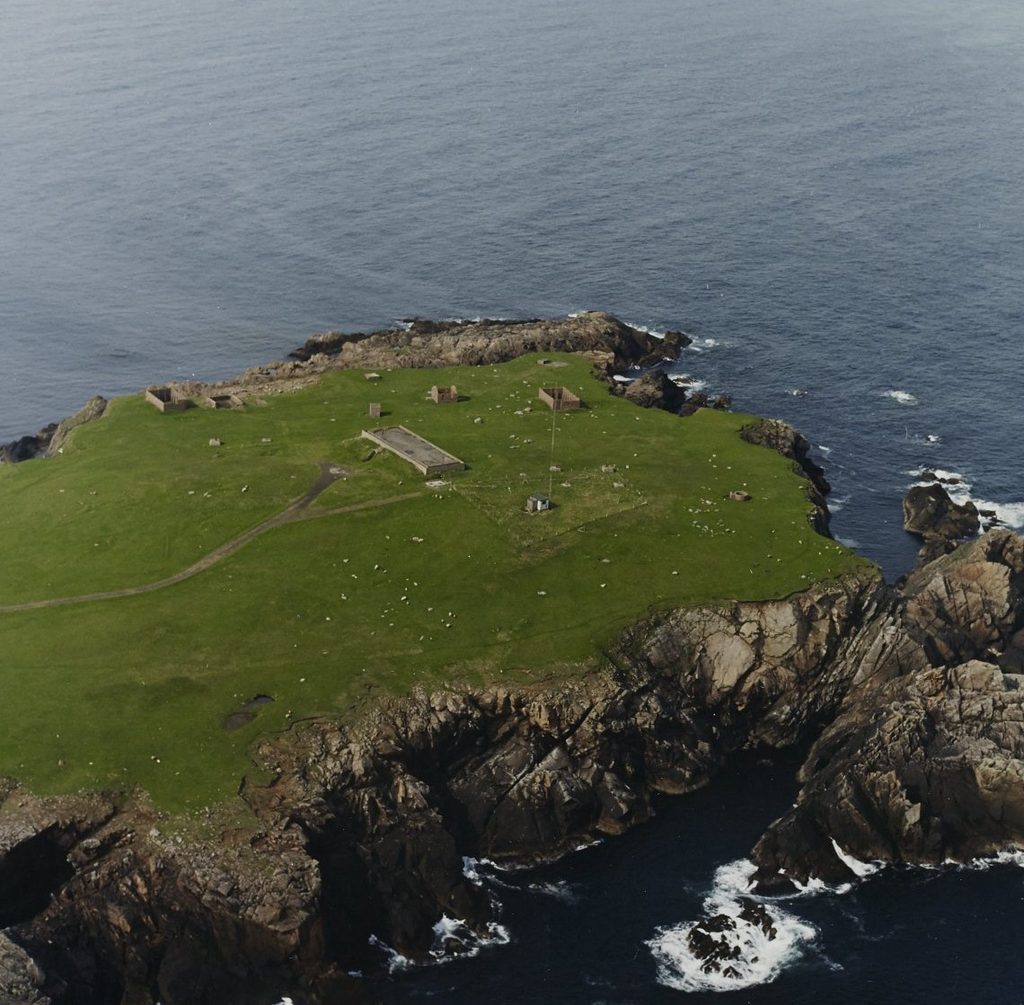
Skaw Radar Station is a Scheduled Ancient Monument located at the Lamba Ness peninsula in Unst, Shetland. As part of Scheduled Ancient Monument consent to develop the site into a Spaceport, AOC Archaeology began archaeological investigations at the site in 2022. To date, the works have involved the monitoring of a topsoil strip across all areas of development and recording of all archaeological features, including remains of the radar station itself.
Up until the summer of 2023, the archaeological work focused largely on features contemporary with the establishment and development to the Radar base in the 1940s. The majority of the features discovered during the works comprised buried footpaths, used to connect the various structures, as well as concrete anchor points for the main radar towers located at the east of the site. The artefact assemblage was further representative of this period with white ceramics recovered across the entire site. Artefacts from around the living quarters and offices were found to be more distinctive, including personal possessions such as broken combs, games pieces and a substantial collection of Brylcreem bottles. Objects such as these provide some insight into the lives of the personnel stationed here during the station’s operation.
Accounts of the local populace would refer to the men stationed there as the ‘Brylcream Boys’. At this point, three drystone dykes were the only evidence of earlier activity across the development area. These were likely relating to post-medieval agricultural field boundaries. No earlier phases of activity had been discovered during the archaeological works, and it was hypothesised that the construction of the Radar Station had removed any earlier deposits and evidence of activity. In the summer of 2023, however, during works in the satellite tracking area of the development, unexpected prehistoric remains were revealed point to complex prehistoric activity and use of the site.
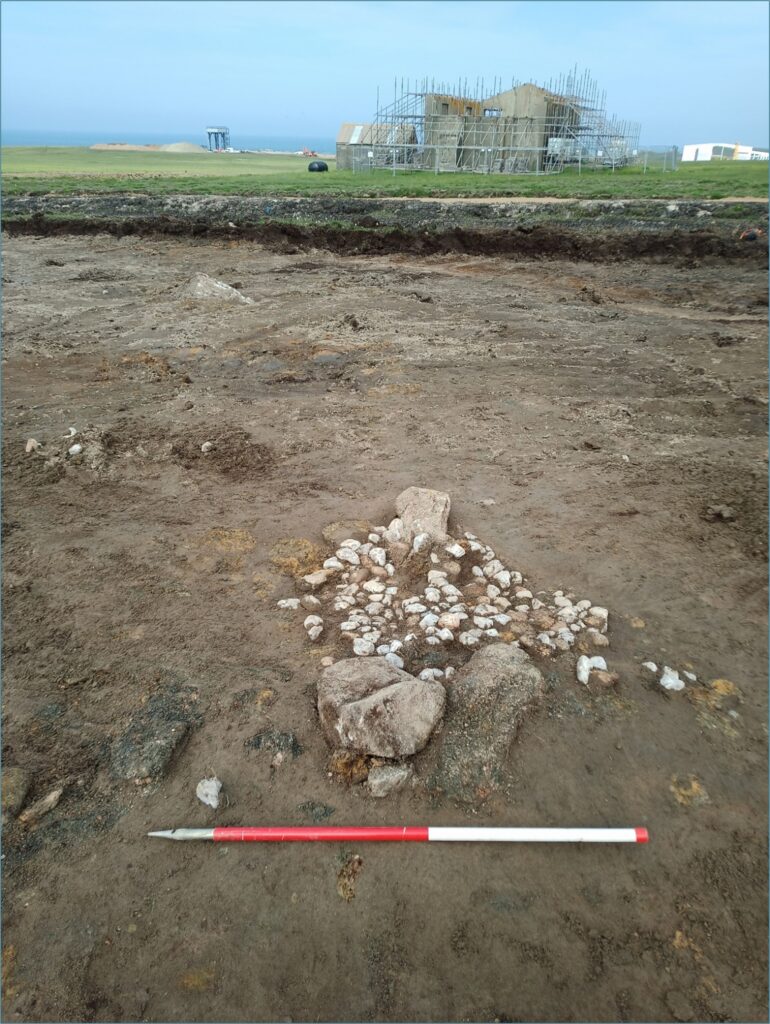
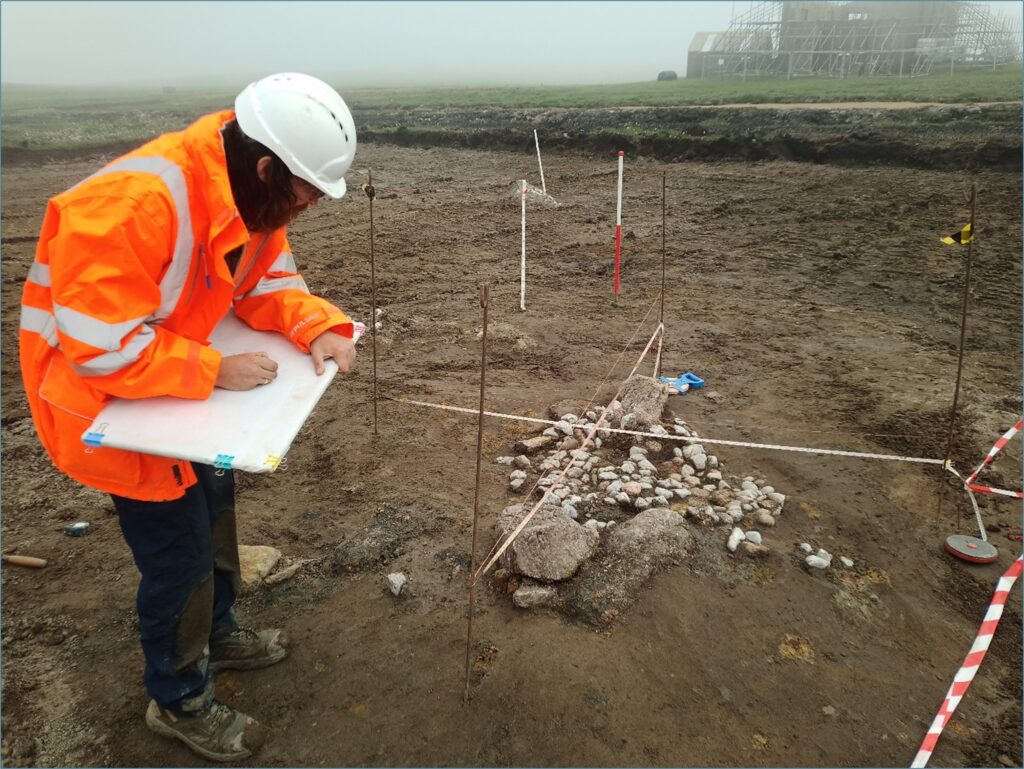
Several archaeological features, including pits, large boulders and cremations (or deposits of burnt bone) were uncovered along with a quartz setting. Dates for the cremations are as yet unconfirmed, but are likely to be Bronze Age. However, the number and density of cremations suggests that this cremation cemetery may have been in use over a considerable time period. White quartz is considered to have been significant during prehistory and is often found in association with burials and burial tombs, rock art panels, and structured deposits at domestic sites. At the Spaceport, quartz pebbles were found in a hollow, with larger stones at each end. These stones may have been selected and placed to form a bright white platform.
Large boulders of the local Skaw granite were found placed in some of the pits and aligned to form a broad arc. Large pits in between the boulders may have also once held stones that have since been removed or displaced over the intervening millennia. Further large pits are scattered across the area suggesting otheruses of the site over time.
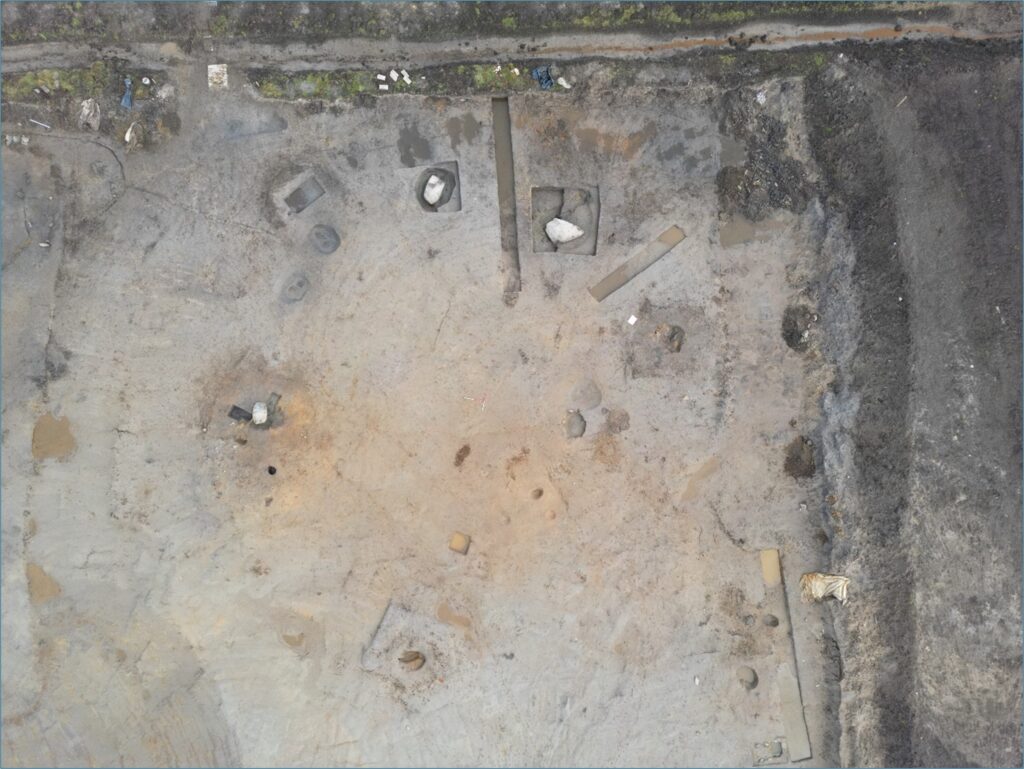
Although investigations at this are of the Spaceport are ongoing, initial interpretations have identified an interesting relationship between the large stones, alignments of pits, the quartz setting, and the cremation cemetery at the site, suggesting that together these form part of a prehistoric complex, likely Bronze Age in date. Not only will the ongoing investigations at the Spaceport continue to contribute to our understanding of WWII archaeology in Shetland, the sitewill also contribute to previously unknown, unrecorded prehistoric activity in this area.