by Indigo Reeve
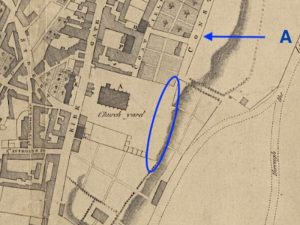
In 2008, excavations at the Whitefriars site at Riggs Road in Perth explored the remains of the Carmelite Friary of Tullilum (Hall 2014). The church of the friary was uncovered along with 120 burials containing human remains, most of which were found inside the bounds of the church aside from a few discovered to the south. The individuals included males, females and non-adults, suggesting that the church was used for the burial of benefactors and their families.
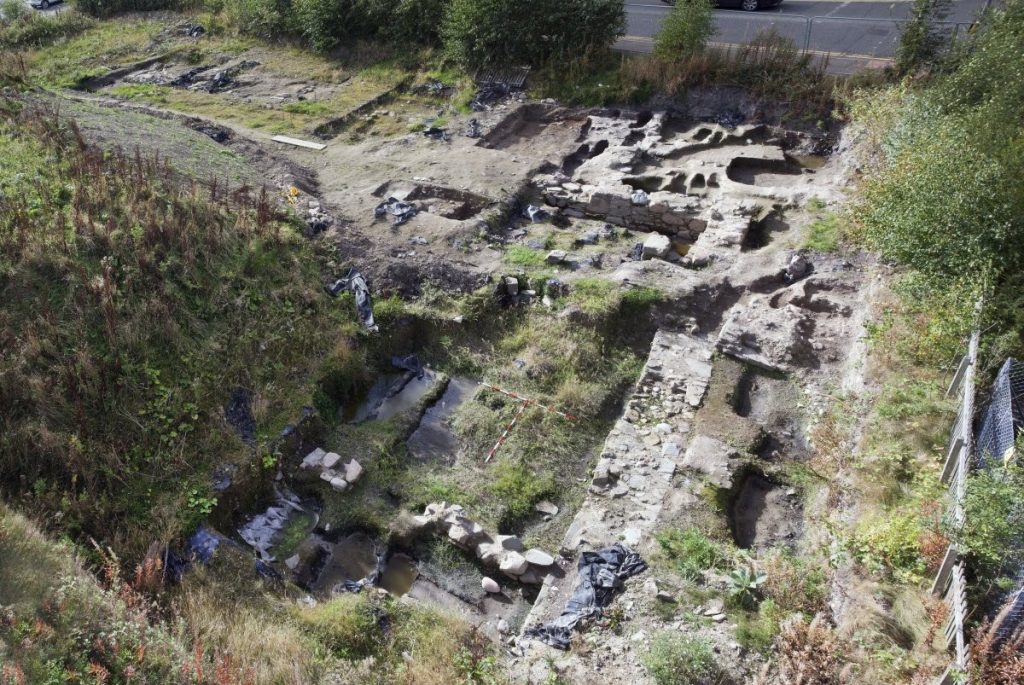
This assemblage of human remains was analysed as part of recent doctoral research examining health and frailty in medieval Scotland at the University of Edinburgh. Further seasons of excavation were conducted at Whitefriars between 2014 and 2018 but the human remains from this expanded excavation were unavailable at the time of this study. The rich urban Whitefriars assemblage was compared to the poor urban population of Constitution Street in Leith, Edinburgh and the rural population of The Hirsel from Coldstream in Berwickshire. This research revealed insights into the populations of medieval Scotland and how health varied between urban and rural populations.
The Dataset
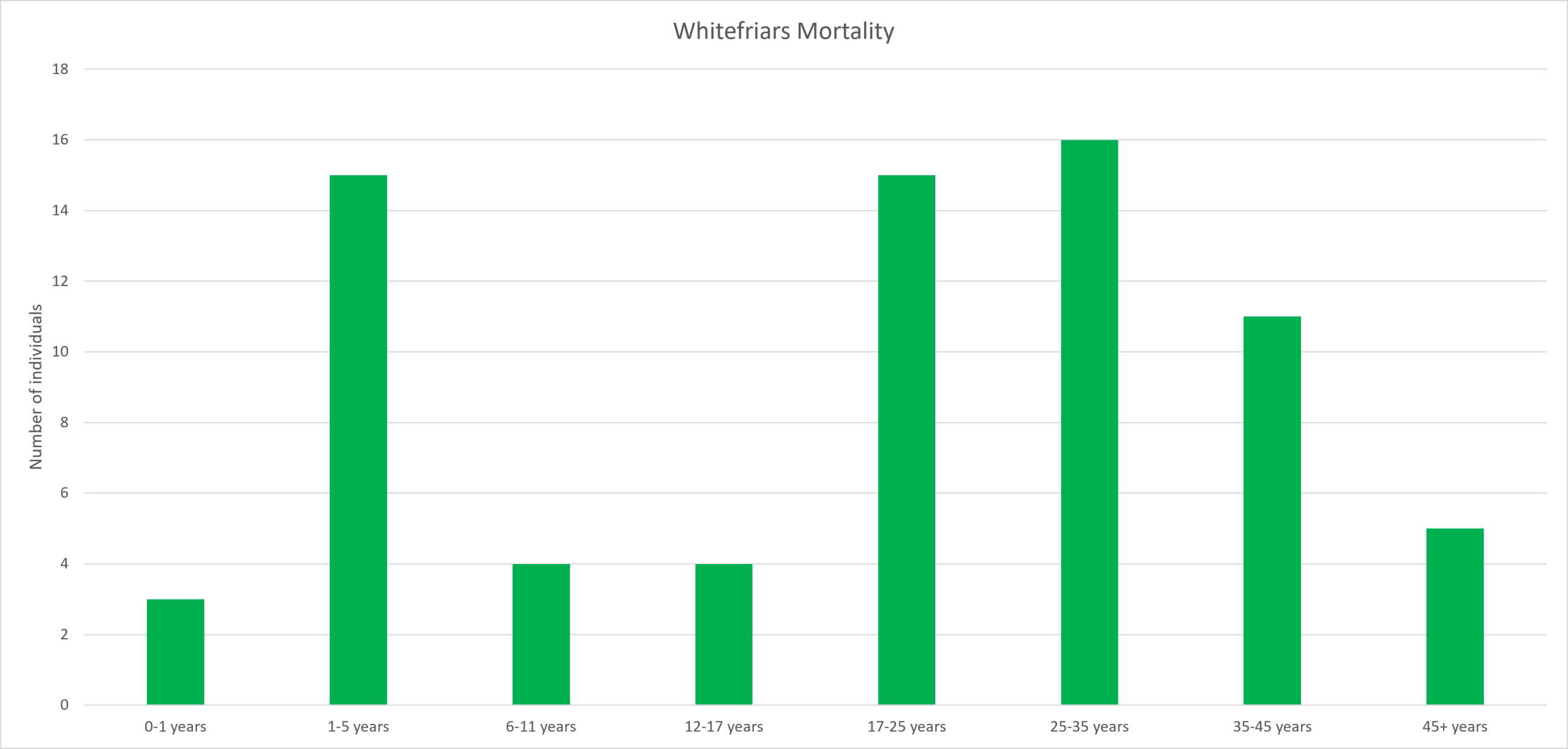
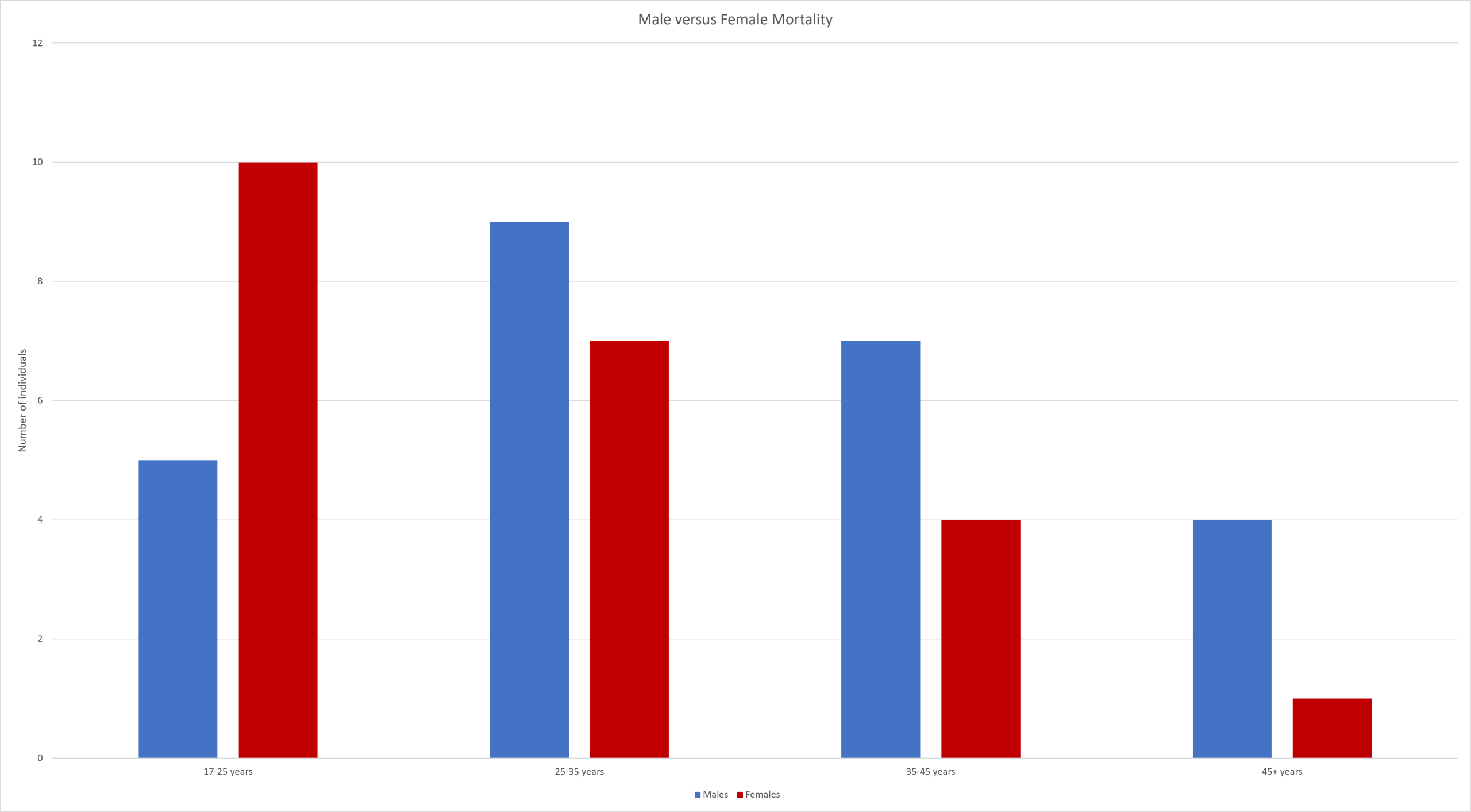
While 120 burials were identified during the excavations in 2008, a number of these were incomplete or contained disarticulated remains from more than one individual. Disarticulated and very incomplete burials were excluded from analysis, resulting in a total of 73 individuals being analysed, which is the most complete assessment of the Whitefriars assemblage to date. The quality of bone preservation at Whitefriars was relatively good but high rates of fragmentation were common and very few bones were intact across the assemblage. Of the 73 individuals analysed, just over a third were non-adults (35.6%), the majority of whom were under 5 years old. Among adults there were slightly more males (34.3%) than females (30.1%) present. Females were more likely to die in early adulthood and 45.5% of females were estimated to be 17-25 years old compared to just 20% of males.
| Pathology | Site | Group | N | n | % | p-value |
| LEH | Whitefriars | All | 64 | 46 | 71.9 | – |
| Non-adults | 19 | 10 | 52.6 | – | ||
| Adults | 45 | 36 | 80 | – | ||
| Caries | Whitefriars | All | 69 | 42 | 60.9 | – |
| Whitefriars | Adults | 23 | 6 | 26.1 | – | |
| The Hirsel | 45 | 36 | 80 | – | ||
| Antemortem Tooth Loss | Whitefriars | Adults | 1213 | 108 | 8.9 | 0.002 |
| The Hirsel | 2139 | 124 | 5.8 | |||
| Periodontal | Whitefriars | Adults | 46 | 17 | 36.9 | – |
| Males | 25 | 13 | 52 | 0.021 | ||
| Females | 21 | 4 | 19.1 | |||
| Sinusitis | Whitefriars | Adults | 24 | 4 | 16.7 | – |
| Males | 13 | 1 | 7.8 | – | ||
| Females | 11 | 3 | 27.3 | – | ||
| Trauma | Whitefriars | All | 73 | 21 | 28.8 | – |
| Males | 25 | 14 | 56 | – | ||
| Females | 22 | 6 | 27.3 | – |
Results
The pathology observed in the Whitefriars assemblage provided insights into the health of the population. Linear Enamel Hypoplasias (LEH) are horizontal defects in tooth enamel that form during dental development. These defects indicate that stress of some kind, usually poor nutrition or illness, was experienced during childhood. LEH was observed in 71.9% of the Whitefriars population: 80% of adults and 52.6% of non-adults.
Dental caries were relatively common at Whitefriars, affecting 60.9% of the full population and 80% of adults. Prevalence of caries among adults was significantly higher (p = 0.009) at Whitefriars compared to the rural population of The Hirsel. Antemortem tooth loss was significantly higher (p = 0.002) at Whitefriars (8.9%) compared to The Hirsel (5.8%). Periodontal disease affected just over a third of adults at Whitefriars and was significantly more common (p = 0.02) in males (52%) than females (19.1%).
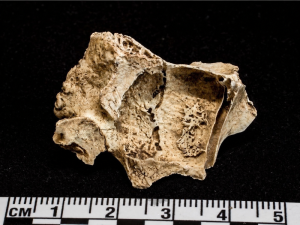
Periosteal new bone formation (PNBF) can indicate infections or mechanical stress on the bone (e.g. shin splints). Many PNBF lesions are non-specific but the location and severity of some lesions can indicate a specific cause. PNBF on the interior face of the ribs can indicate respiratory disease. PNBF on the ribs affected 4.1% of individuals and all of these cases were active lesions at the time of death. PNBF in the maxillary sinus cavity indicates an individual suffered from sinusitis. This can only be observed when the bone around the sinus cavity is broken, allowing the interior to be seen. At Whitefriars 16.7% of adults with an observable sinus cavity had evidence of sinusitis and it was more common in females than males.
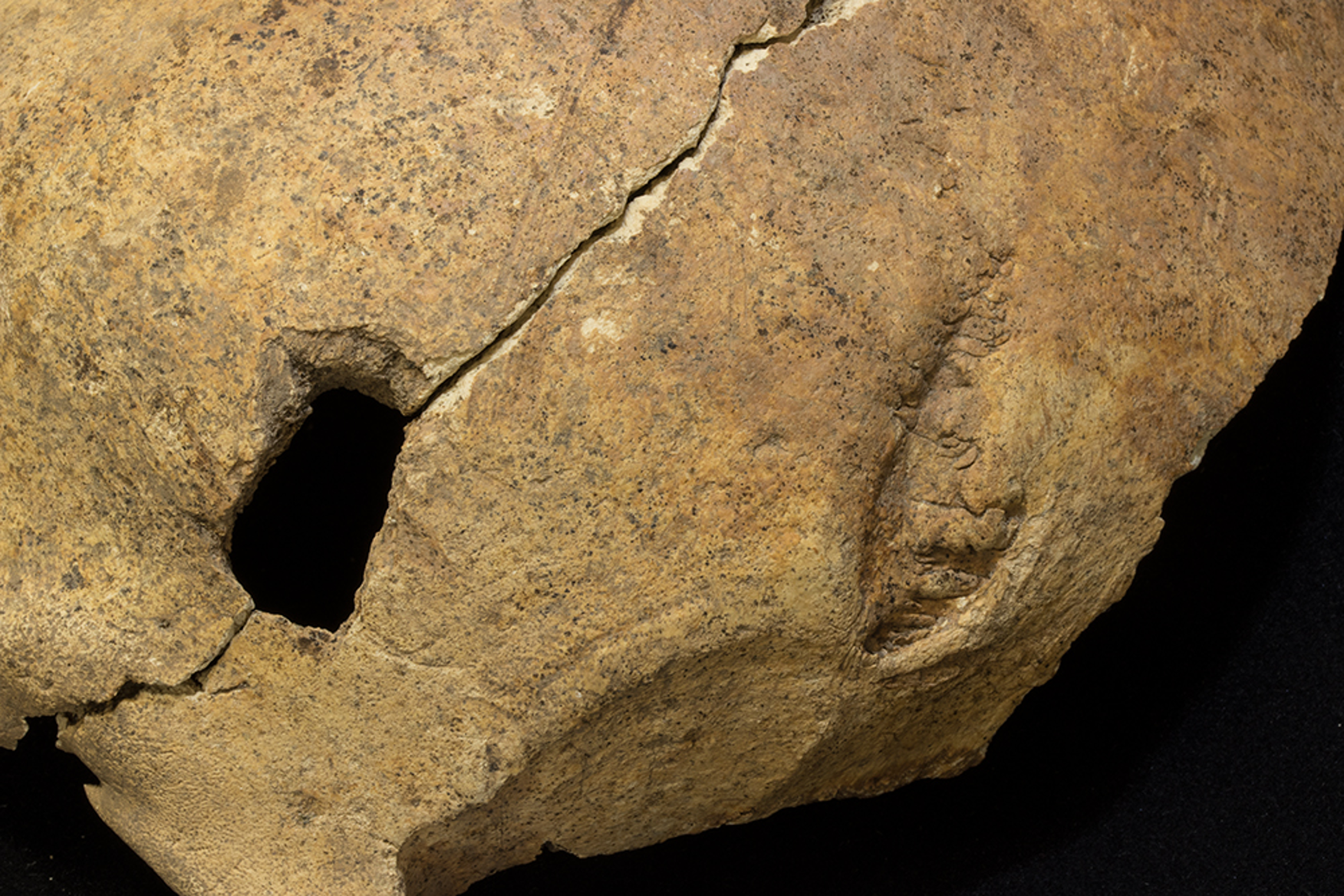
Trauma was observed in 42.6% of adults and was significantly more common (p = 0.047) in males (56%) than females (27.3%). Injuries to the skull and ribs were most commonly observed. Two males, SK310 and SK 347, aged 35-45 years had perimortem sharp force injuries to the skull. SK 310 had a thin cut that began above the left orbit (eye socket) and extended down onto the left zygomatic (cheek bone). In the case of SK 347, an object with a rectangular cross section had pierced the skull above the left eye with enough force to cause fractures to radiate from the corner of the injury to the back of the skull.
Discussion
The demography of the Whitefriars assemblage gives some insight into the population. The majority of the Whitefriars non-adults being under five years of age suggests that infancy and early childhood were particularly stressful periods of life in medieval Perth, a common pattern in past populations (Lewis 2007). The higher early adulthood mortality seen in females also suggests that the women of medieval Perth were at a disadvantage in terms of maintaining health compared to the men. Overall, adults, particularly females, were more likely to survive into older adulthood at The Hirsel, suggesting that urban life was more hazardous than rural life.
The high prevalence of LEH also suggests that early childhood was a difficult period of development. However, rates of LEH of 50-90% are often seen in medieval populations (DeWitte 2018, Hawks et al 2022, Miszkiewicz 2015, Novak et al 2017, Yaussy et al 2016). Shortages and famines were common occurrences in medieval Scotland (Ditchburn 2001, Ljungqvist et al 2024, McCleery 2016) and most generations would have experienced at least one period of scarcity. Infectious diseases were also likely to affected most medieval Scots. Diseases like tuberculosis were endemic and epidemic outbreaks of plague, respiratory diseases such as influenza, or gastrointestinal diseases such as dysentery are recorded as occurring at least once every twenty years (Gordon 1984, Jillings 2003, MacLennan 2001, Mullay 1996, Oram 2015, Shrewsbury 2005). Sanitation in towns would have provided a further risk of infection from gastrointestinal parasites and parasite eggs are often found in medieval latrines (Mitchell 2015).
The prevalence of sinusitis may also point to conditions within towns as air pollution can irritate the airway and trigger chronic sinusitis. Complaints of filth and smoke in medieval towns are common complaints in historical records (Ewan 2011) Sinusitis being more common in females is consistent with the pattern seen both at other medieval sites and in modern medical data (Roberts 2007, Sedaghat et al 2022). The causes for this are likely multifactorial but may also indicate that females spent more time indoors exposed to airborne irritants in the form of smoke from heat and light sources (Leland et al 2022).
The significant difference in the prevalence of caries between Whitefriars and The Hirsel suggests differences in typical diet between urban and rural populations, with urban groups consuming more sugars and other carbohydrates. The significant difference in antemortem tooth loss between the two populations also suggests differences in diet and oral health. Archaeological evidence and historical records suggest that wealthier urban groups had access to a richer diet, including eating a larger amount of meat. The international trade conducted through the port at Perth would also have given the Whitefriars population access to imported luxuries like figs and dates.
Sharp force injuries to the left of the skull are consistent with an attack from the front by a right-handed individual. In the case of SK 347, the dimensions of the injury are consistent with the rear facing spike of some medieval war axes, though other items such as chisels or similar tools cannot be ruled out. A fragment of tomb effigy depicting the chainmail clad leg of a knight was found during excavations at Whitefriars, suggesting that at least one person buried there held that occupation. It is impossible to confirm if SK 347 was a warrior but the injury is consistent with that possibility. Perth was the target of multiple attacks during conflicts with England as its proximity to Scone Abbey resulted in royal favour and business and Perth becoming one of the four wealthiest towns in medieval Scotland (Bowler et al 1996, Hall 2005).
There were significant differences in the health of the Whitefriars population compared to the rural population of The Hirsel. Despite the Whitefriars assemblage representing wealthier urban individuals, their life expectancy was lower and childhood stress higher, suggesting that urban life was more stressful than rural life. The Hirsel lies nearly 100 miles south of Perth and it would be interesting to compare Whitefriars to rural populations from Perth and Kinross.
Bibliography
Bowler, D, Cox, A, Smith, C, Brann, M, McGavin, N, Clark, P, Blanchard, L, Hall, D, Ford, B, Underwood, C, Cameron, N, Hodgson, I, Bruce, M, Bennett, H, Thomas, C, Walsh, A and Moran, F 1996 ‘Four excavations in Perth, 1979-84’, Proceedings of the Society of Antiquaries of Scotland 125, 917-999. https://doi.org/10.9750/PSAS.125.917.999
DeWitte, S N 2018 ‘Stress, sex, and plague: Patterns of developmental stress and survival in pre‐ and post‐Black Death London’, American Journal of Human Biology 30. https://doi.org/10.1002/ajhb.23073
Ditchburn, D 2001 Scotland and Europe: Religion, Commerce and Culture, c.1215-1560 v. 1: The Medieval Kingdom and Its Contacts with Christendom, 1214-1560, East Linton: Tuckwell Press Ltd.
Ewan, E 2011 ‘‘Hamperit in ane hony came’: Sights, Sounds and Smells in the Medieval Town’, in Cowan, E J and Henderson, L (eds) A History of Everyday Life in Medieval Scotland, Edinburgh University Press, 109-144.
Gordon, A 1984 Death is for the living, Edinburgh: P Harris Publishing.
Hall, D 2014 Excavations at Riggs Road, Perth 2008 (Interim Data Structure Report).
Hall, M A 2005 ‘Burgh Mentalities: A Town-in-the-Country Case Study of Perth, Scotland’, in Dyer, C and Giles, K (eds) Town and Country in the Middle Ages: Contrasts, Contacts and Interconnections, 1100-1500: No. 22 (The Society for Medieval Archaeology Monographs), London: Routledge, 211-228.
Hawks, S M, Godde, K and Hens, S M 2022 ‘The impact of early childhood stressors on later growth in medieval and postmedieval London’, International Journal of Osteoarchaeology 32, 804-812. https://doi.org/10.1002/oa.3105
Jillings, K 2003 Scotland’s Black Death: the foul death of the English, Gloucestershire: Tempus, Stroud.
Leland, E M, Vohra, V, Seal, S M, Zhang, Z and Ramanathan Jr, M 2022 ‘Environmental air pollution and chronic rhinosinusitis: A systematic review’, Laryngoscope Investigative Otolaryngology 7, 349-360. https://doi.org/10.1002/lio2.774
Lewis, M E 2007 The Bioarchaeology of Children: Perspectives from Biological and Forensic Anthropology, Cambridge University Press.
Ljungqvist, F C, Seim, A and Collet, D 2024 ‘Famines in medieval and early modern Europe – Connecting climate and society’, WIREs Climate Change 15, e859. https://doi.org/10.1002/wcc.859
MacLennan, W J 2001 ‘The Eleven Plagues of Edinburgh’, Journal of the Royal College of Physicians of Edinburgh 31, 256-261. https://doi.org/10.1177/1478271520013103018
McCleery, I M 2016 ‘Getting enough to eat: famine as a neglected medieval health issue’, in Bowers, B S and Keyser, L M (eds) The Sacred and the Secular in Medieval Healing.
Miszkiewicz, J J 2015 ‘Linear Enamel Hypoplasia and Age-at-Death at Medieval (11th–16th Centuries) St. Gregory’s Priory and Cemetery, Canterbury, UK’, International Journal of Osteoarchaeology 25, 79-87. https://doi.org/10.1002/oa.2265
Mitchell, P D 2015 ‘Chapter Ten – Human Parasites in Medieval Europe: Lifestyle, Sanitation and Medical Treatment’, in: De Baets, K and Littlewood, D T J (eds) Advances in Parasitology, Fossil Parasites. Academic Press, 389-420. https://doi.org/10.1016/bs.apar.2015.05.001
Mullay, S 1996 The Edinburgh encyclopedia, Edinburgh: Mainstream Pub.
Novak, M, Howcroft, R and Pinhasi, R 2017 ‘Child Health in Five Early Medieval Irish Sites: A Multidisciplinary Approach’, International Journal of Osteoarchaeology 27, 398-408. https://doi.org/10.1002/oa.2549
Oram, R 2015 ‘“The worst disaster suffered by the people of Scotland in recorded history”: climate change, dearth and pathogens in the long 14th century’, Proceedings of the Society of Antiquaries of Scotland 144, 223-244. https://doi.org/10.9750/PSAS.144.0223
Roberts, C A 2007 ‘A bioarcheological study of maxillary sinusitis’, American Journal of Physical Anthropology 133, 792-807. https://doi.org/10.1002/ajpa.20601
Sedaghat, A R, Kuan, E C and Scadding, G K 2022 ‘Epidemiology of Chronic Rhinosinusitis: Prevalence and Risk Factors’, The Journal of Allergy and Clinical Immunology: In Practice 10, 1395-1403. https://doi.org/10.1016/j.jaip.2022.01.016
Shrewsbury, J 2005 A History of Bubonic Plague in the British Isles, Cambridge University Press.
Yaussy, S L, DeWitte, S N and Redfern, R C 2016 ‘Frailty and famine: Patterns of mortality and physiological stress among victims of famine in medieval London’, American Journal of Physical Anthropology 160, 272-283. https://doi.org/10.1002/ajpa.22954