by Indigo Reeve
Background
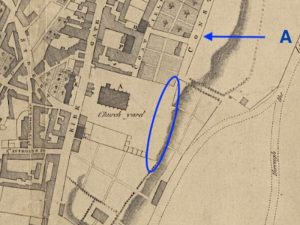
In 1978 gravestones were found in the grounds of Hirsel House near Coldstream in Berwickshire. From 1979 to 1984, Rosemary Cramp led staff and students from Durham University in excavations of the area, undercovering a 10th to 14th century church and associated 12th to 16th century burial ground (Cramp 2014). No burials were found within the walls of the church, however, just over 330 individuals were excavated from the surrounding area.
A sample of The Hirsel assemblage was analysed as part of a doctoral research project at the University of Edinburgh examining health and frailty in medieval Scotland. The rural population of The Hirsel was compared to the poor urban population of Constitution Street in Leith, Edinburgh and the rich urban population of Whitefriars in Perth. This research revealed insights into the populations of medieval Scotland and how health varied between urban and rural populations.
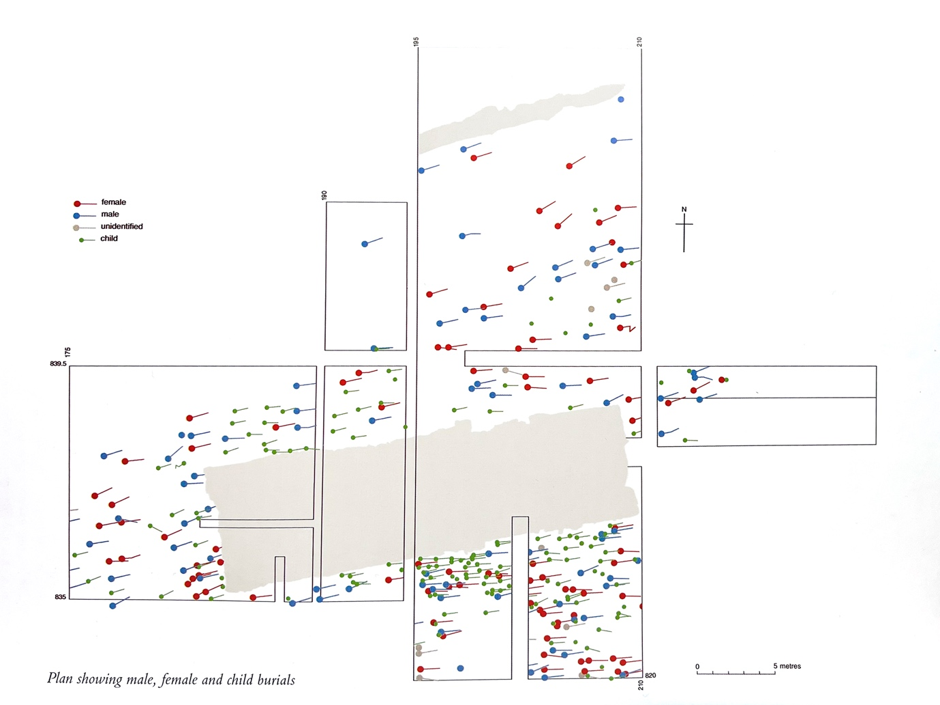
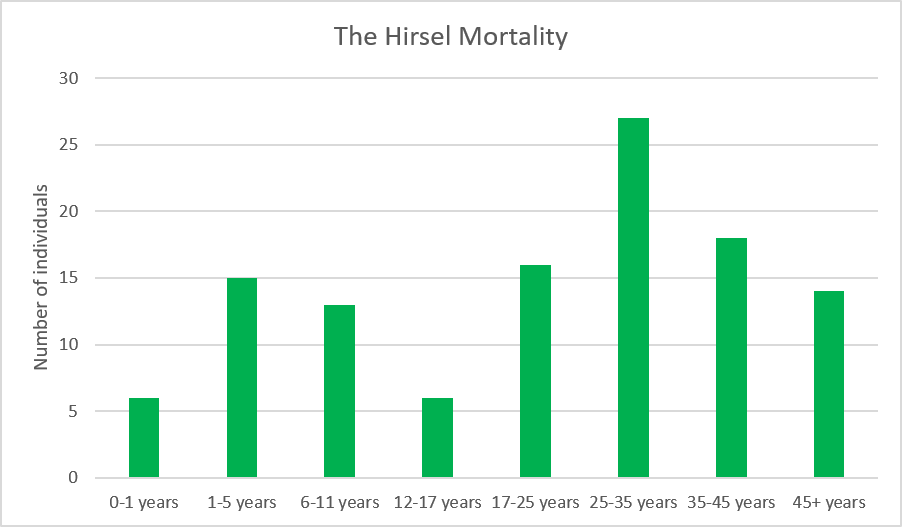
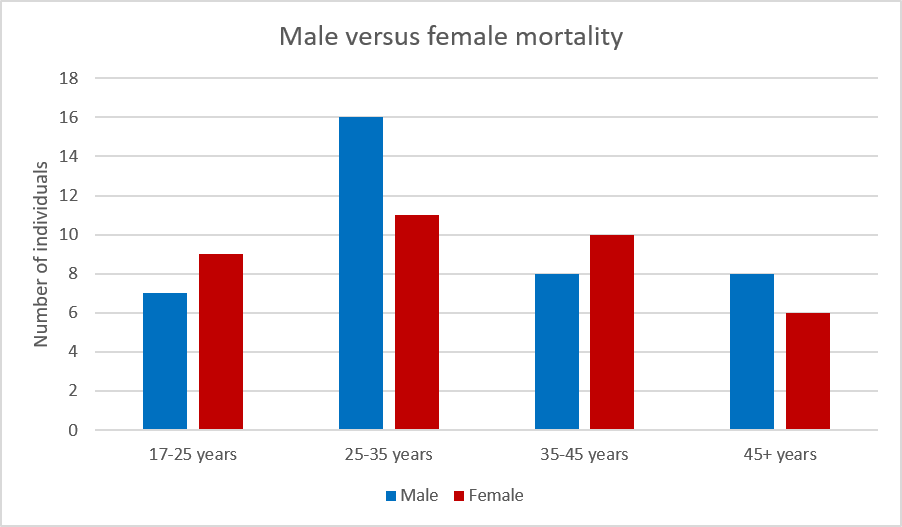
While over 330 individuals were found in total, the quality of preservation and degree of completeness varied significantly. Individuals that were at least 60% complete and in relatively good condition were selected for analysis, resulting in a sample of 115 individuals. Just over a third of these were non-adults (34.8%, 40/115) and the majority of non-adults died between the ages of 1 and 11. Among adults, mortality patterns were similar for males and females.
The Dataset
| Pathology | Site | Group | N | n | % | p-value |
| LEH | The Hirsel | All | 98 | 63 | 64.3 | – |
| Non-adults | 26 | 16 | 61.5 | – | ||
| Adults | 72 | 47 | 65.3 | – | ||
| Caries | The Hirsel | All | 110 | 48 | 43.6 | – |
| Non-adults | 37 | 9 | 24.3 | – | ||
| The Hirsel | Adults | 72 | 39 | 54.2 | ||
| Whitefriars | 45 | 36 | 80 | 0.009 | ||
| Antemortem Tooth Loss | The Hirsel | Adults | 2139 | 124 | 5.8 | 0.002 |
| Whitefriars | 1213 | 108 | 8.9 | |||
| Periodontal Disease | The Hirsel | Adults | 72 | 41 | 56.9 | 0.13 |
| Whitefriars | 46 | 17 | 36.9 | |||
| Constitution Street | 66 | 28 | 42.4 | |||
| New Bone Formation | The Hirsel | Ribs | 110 | 5 | 4.6 | – |
| Sinusitis | The Hirsel | All | 73 | 11 | 15.1 | – |
| Non-adults | 24 | 1 | 4.2 | – | ||
| Adults | 49 | 10 | 20.4 | – | ||
| Vitamin D | The Hirsel | All | 115 | 6 | 5.2 | – |
| Non-adults | 40 | 4 | 10 | – | ||
| Adults | 75 | 2 | 2.7 | – | ||
| Cribra Orbitalia | The Hirsel | All | 97 | 24 | 24.8 | 0.049 |
| Whitefriars | 55 | 5 | 9.1 | |||
| Constitution Street | 79 | 13 | 16.5 | |||
| Osteoarthritis | The Hirsel | Adults | 75 | 26 | 34.7 | – |
| Females | 36 | 14 | 38.9 | – | ||
| Males | 39 | 12 | 30.8 | – | ||
| The Hirsel | Females | 36 | 14 | 38.9 | 0.04 | |
| Constitution Street | 38 | 5 | 13.2 | |||
| Intervertebral Disc Disease | The Hirsel | Adults | 74 | 33 | 44.6 | – |
Results
The pathology observed in The Hirsel population revealed insights into the health of the population. Linear Enamel Hypoplasia (LEH) are horizontal defects in tooth enamel that form during dental development in childhood. These defects indicate stress of some kind, often poor nutrition or a period of illness, experienced during childhood. Prevalence of LEH at The Hirsel was 64.3%: 61.5% for non-adults and 65.3% for adults.
Dental caries affected 43.6% of the overall population but prevalence was lower in non-adults (24.3%) than adults (54.2%). Crude prevalence among adults was significantly lower (p = 0.009) than at the rich urban population of Whitefriars. Antemortem tooth loss was significantly lower (p = 0.002) at The Hirsel (5.8%) than at Whitefriars (8.9%). Periodontal disease affected 56.9% of individuals at The Hirsel, which was higher than at Whitefriars and the poor urban population of Constitution Street but not significantly so.
Stature could be estimated for the majority of adults at The Hirsel. The average male stature was 168.6 cm, similar to Constitution Street and Whitefriars. Average female stature was 160.2cm, which was significantly taller (p = 0.003) than Constitution Street (155.5cm) and Whitefriars (154.8cm).
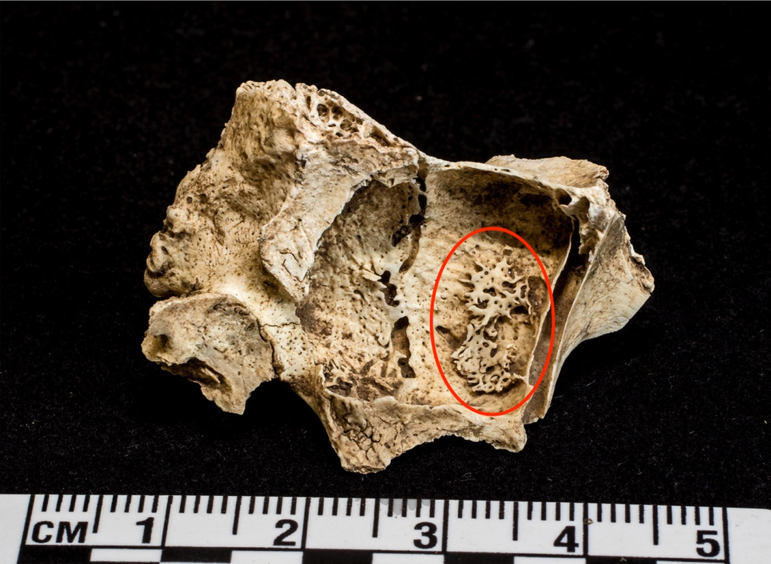
Evidence of infections and respiratory diseases was observed in some individuals. New bone formation on the interior surface of the ribs, indicative of respiratory infections, was observed in 4.6% of individuals. New bone formation in the maxillary sinus cavity was observed in 15.1% of individuals, with a prevalence of 4.2% in non-adults and 20.4% in adults (see Fig 4). Among adults, sinusitis was significantly more common (p = 0.03) in females (33.3%) than males (8%). Destructive lesions indicative of tuberculosis were observed in the spine of SK 281, a female aged 17-25 years. Five vertebrae in the lower thoracic spine were affected, two of which were almost entirely destroyed by the disease.
Evidence of nutritional and metabolic stress was higher at The Hirsel than at the urban sites of Constitution Street and Whitefriars. Vitamin D deficiency was observed in 5.2% of individuals, with a prevalence of 10% in non-adults and 2.7% in adults. Cribra orbitalia was observed in almost a quarter of individuals at The Hirsel (24.8%), which was significantly more (p = 0.049) than the prevalence rates seen at Constitution Street (16.5%) and Whitefriars (9.1%).
Joint disease was relatively common among adults at The Hirsel with 34.7% affected by osteoarthritis and 44.6% affected by intervertebral disc disease. Osteoarthritis was more common in females (38.9%) than in males (30.8%). Further the prevalence in females at The Hirsel was significantly higher (p = 0.04) than prevalence in females at Constitution Street (13.2%).
Discussion
The rural population of The Hirsel had better life expectancy than the urban populations of Constitution Street and Whitefriars, with a larger proportion of individuals surviving into older adulthood and this was particularly true of females. At both Constitution Street and Whitefriars nearly 50% of females died aged 17-25 years and only one female individual was estimated to be over 45 years old. In contrast only 25% of females at The Hirsel were aged 17-25 years and six individuals were estimated to be over 45 years old, suggesting health may have been better in rural populations.
The level of dental disease also suggests better oral health at The Hirsel, with the lower prevalence of caries suggesting that they ate less sugar and other carbohydrates than the urban populations. Archaeological evidence and manorial records suggest that rural populations primarily consumed grains, vegetables and fruit with some dairy, eggs and meat (Dyer 2002, 2018a, Sykes 2009). The wealthy urban population of Whitefriars would have had access to a richer diet including larger quantities of meat and imported figs and dates, while the poor urban population of Constitution Street would likely have subsisted largely on cheap foods sold by street hawkers (Dyer 2018b, 2002, Schofield 2006).
In contrast to the suggestion of better health and life expectancy among adults at The Hirsel, more evidence of nutritional and metabolic stress was seen in the non-adults. Cribra orbitalia is a porous lesion of the orbital roof thought to indicate anaemia. It serves as an indicator of poor health and potentially high parasite load as gastrointestinal parasites can significantly disrupt absorption of nutrients and the higher prevalence of these lesions at The Hirsel suggests poorer health (Godde and Hens 2021, Marques et al 2020). Vitamin D deficiency is not common in the medieval period, so the prevalence observed at The Hirsel is comparatively high. Light intensity in Scotland is insufficient for adequate vitamin D production from sun exposure so dietary sources of vitamin D, primarily oily fish, are vital for health (Roberts and Manchester 2007, Zgaga et al 2011). The Hirsel lies at the confluence of the Leet Water and the River Tweed and fishing equipment was found during excavations but it unknown how many individuals consumed fish regularly. The majority of vitamin D deficiency observed was in non-adults so dietary customs may have played a role (Cramp 2014). Medieval children were often weaned on a grain-based porridge which was low in vitamin D (Dyer 2002). Additionally, the reliance on grains would have provided plenty of phytates, which disrupt vitamin D metabolism (Harinarayan et al 2007).
A further consideration is that changes to skeletal tissue happen slowly and require an individual to survive long enough for pathology to develop. This means that frailer individuals may die long before their skeleton shows any changes and the presence of pathology can in fact be indicative of resilience. This Osteological Paradox may explain the pattern seen here where the elevated cribra orbitalia and vitamin D deficiency at The Hirsel reflect that rural life allowed the population to build the resilience to survive stressors that their urban peers could not (Wood et al 1992).
Overall, this study illustrates the benefits of rural life in the medieval period. Towns exposed their residents to many more sources of pollution and poor sanitation practices and their populations suffered as a result (Dyer 2018b, Ewan 2011). Rural life would have involved the physical labour of agricultural tasks and rural industries such as the extraction of coal and metal and pottery manufacture, but comparatively the population of The Hirsel were able to live longer, healthier lives than their urban peers. This follows the pattern seen in English medieval sites where mortality, and particularly female mortality, is often higher in urban areas and provides evidence that this pattern continues north into Scotland (Walter and DeWitte 2017). Future analysis of additional populations would add further detail to the patterns of rural and urban health across medieval Scotland.
Bibliography
Calce, S E, Kurki, H K, Weston, D A and Gould, L 2018 ‘The relationship of age, activity, and body size on osteoarthritis in weight-bearing skeletal regions’, International Journal of Paleopathology 22, 45-53. https://doi.org/10.1016/j.ijpp.2018.04.001
Cramp, R 2014 The Hirsel Excavations, Routledge: London. https://doi.org/10.4324/9781351191272
Dyer, C 2018a ‘Rural Living 1100–1540’, in Gerrard, C and Gutiérrez, A (eds) The Oxford Handbook of Later Medieval Archaeology in Britain, Oxford University Press, 0. https://doi.org/10.1093/oxfordhb/9780198744719.013.9
Dyer, C 2018b ‘Town and Countryside’, in Gerrard, C and Gutiérrez, A (eds) The Oxford Handbook of Later Medieval Archaeology in Britain, Oxford University Press, 0. https://doi.org/10.1093/oxfordhb/9780198744719.013.60
Dyer, C 2002 Making a Living in the Middle Ages: The People of Britain 850-1520, Yale University Press.
Ewan, E 2011 ‘Hamperit in ane hony came’: Sights, Sounds and Smells in the Medieval Town’, in Cowan, E J and Henderson, L (eds) A History of Everyday Life in Medieval Scotland, Edinburgh University Press, 109-144.
Godde, K and Hens, S M 2021 ‘An epidemiological approach to the analysis of cribra orbitalia as an indicator of health status and mortality in medieval and post‐medieval London under a model of parasitic infection’, American Journal of Physical Anthropology 174, 631-645. https://doi.org/10.1002/ajpa.24244
Harinarayan, C V, Ramalakshmi, T, Prasad, U V, Sudhakar, D, Srinivasarao, P V, Sarma, K V and Kumar, E G T 2007 ‘High prevalence of low dietary calcium, high phytate consumption, and vitamin D deficiency in healthy south Indians’, The American Journal of Clinical Nutrition 85, 1062-1067. https://doi.org/10.1093/ajcn/85.4.1062
Marques, R C, Bernardi, J V E, Dorea, C C and Dórea, J G 2020 ‘Intestinal Parasites, Anemia and Nutritional Status in Young Children from Transitioning Western Amazon’, International Journal of Environmental Research and Public Health 17, 577. https://doi.org/10.3390/ijerph17020577
Roberts, C A and Manchester, K 2007 The Archaeology of Disease, Cornell University Press.
Schofield, P R 2006 ‘Medieval Diet and Demography’, in Woolgar, C M, Serjeantson, D and Waldron, T (eds), Food In Medieval England: Diet and Nutrition. Oxford University Press, 0. https://doi.org/10.1093/oso/9780199273492.003.0017
Sykes, N 2009 Animals, the Bones of Medieval Society, in: Reflections: 50 Years of Medieval Archaeology, 1957-2007: No. 30, London: Routledge.
Walter, B S and DeWitte, S N 2017 ‘Urban and rural mortality and survival in Medieval England’, Annals of Human Biology 44, 338-348. https://doi.org/10.1080/03014460.2016.1275792
Wood, J W, Milner, G R, Harpending, H C, Weiss, K M, Cohen, M N, Eisenberg, L E, Hutchinson, D L, Jankauskas, R, Cesnys, G, Česnys, G, Katzenberg, M A, Lukacs, J R, McGrath, J W, Roth, E A, Ubelaker, D H and Wilkinson, R G 1992 ‘The Osteological Paradox: Problems of Inferring Prehistoric Health from Skeletal Samples’, Current Anthropology 33, 343-370.
Zgaga, L, Theodoratou, E, Farrington, S M, Agakov, F, Tenesa, A, Walker, M, Knox, S, Wallace, A M, Cetnarskyj, R, McNeill, G, Kyle, J, Porteous, M E, Dunlop, D and Campbell, H 2011 ‘Diet, Environmental Factors, and Lifestyle Underlie the High Prevalence of Vitamin D Deficiency in Healthy Adults in Scotland, and Supplementation Reduces the Proportion That Are Severely Deficient’, The Journal of Nutrition 141, 1535-1542. https://doi.org/10.3945/jn.111.140012