by Indigo Reeve
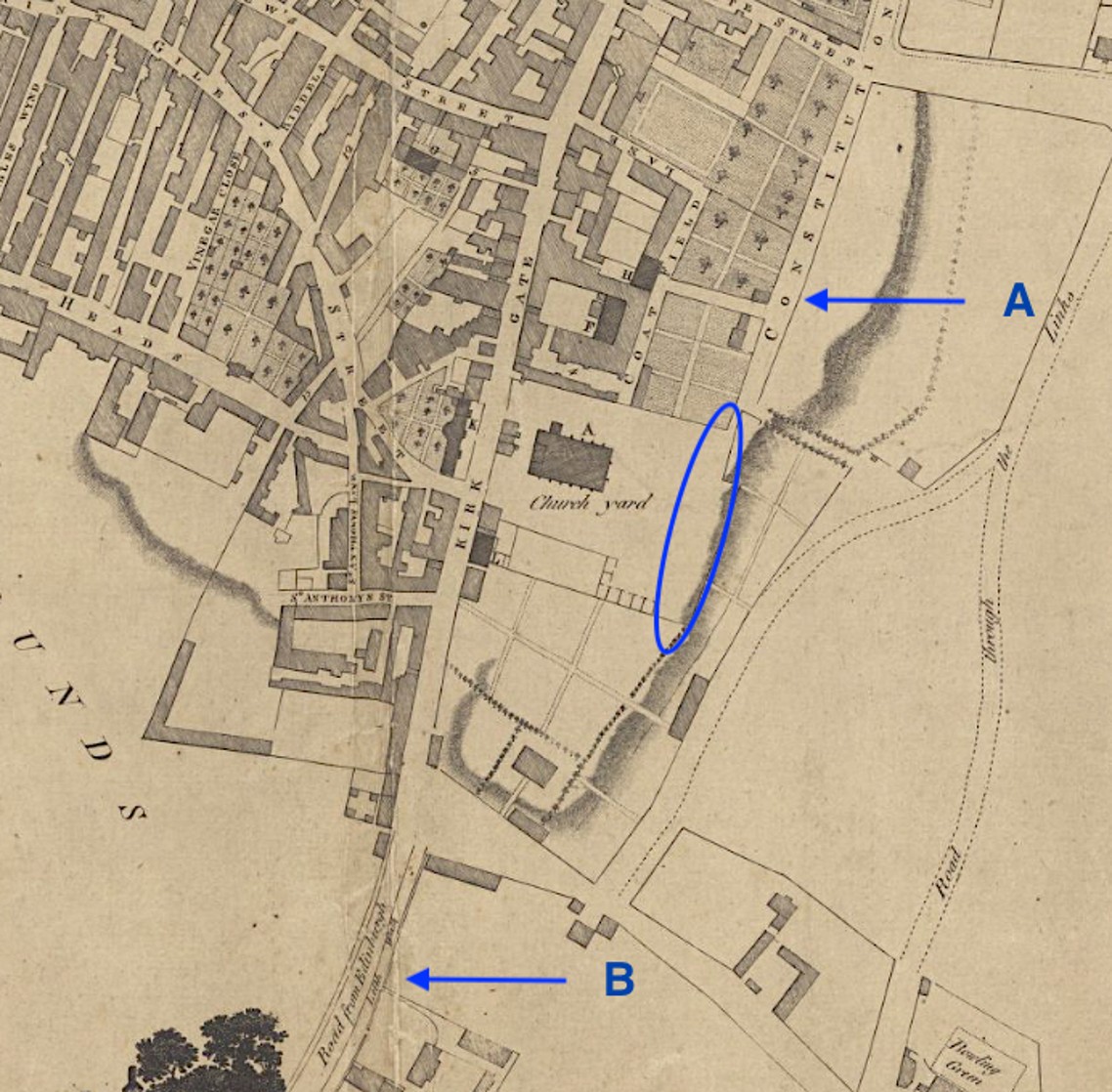
Constitution Street in Leith, Edinburgh, was excavated in 2008 as part of the Edinburgh Trams Project. The land had once formed the outer edge of the burial ground of South Leith Parish Church and was sold off in the 18th century so that Constitution Street could be constructed to connect Leith Walk into the centre of Leith (Franklin et al 2019). The remains of over 300 individuals were found during the 2008 excavations. Further excavations in 2021 found another 400 individuals but this assemblage was unavailable at the time of this study. A sample of the 2008 assemblage was analysed as part of a doctoral research project at the University of Edinburgh examining health and frailty in medieval Scotland.
The poor urban population of Constitution Street was compared to the rich urban population of Whitefriars in Perth and the rural population of The Hirsel from Coldstream in Berwickshire. This research revealed insights into the health of medieval Scots and the differences between urban and rural populations.
The Dataset
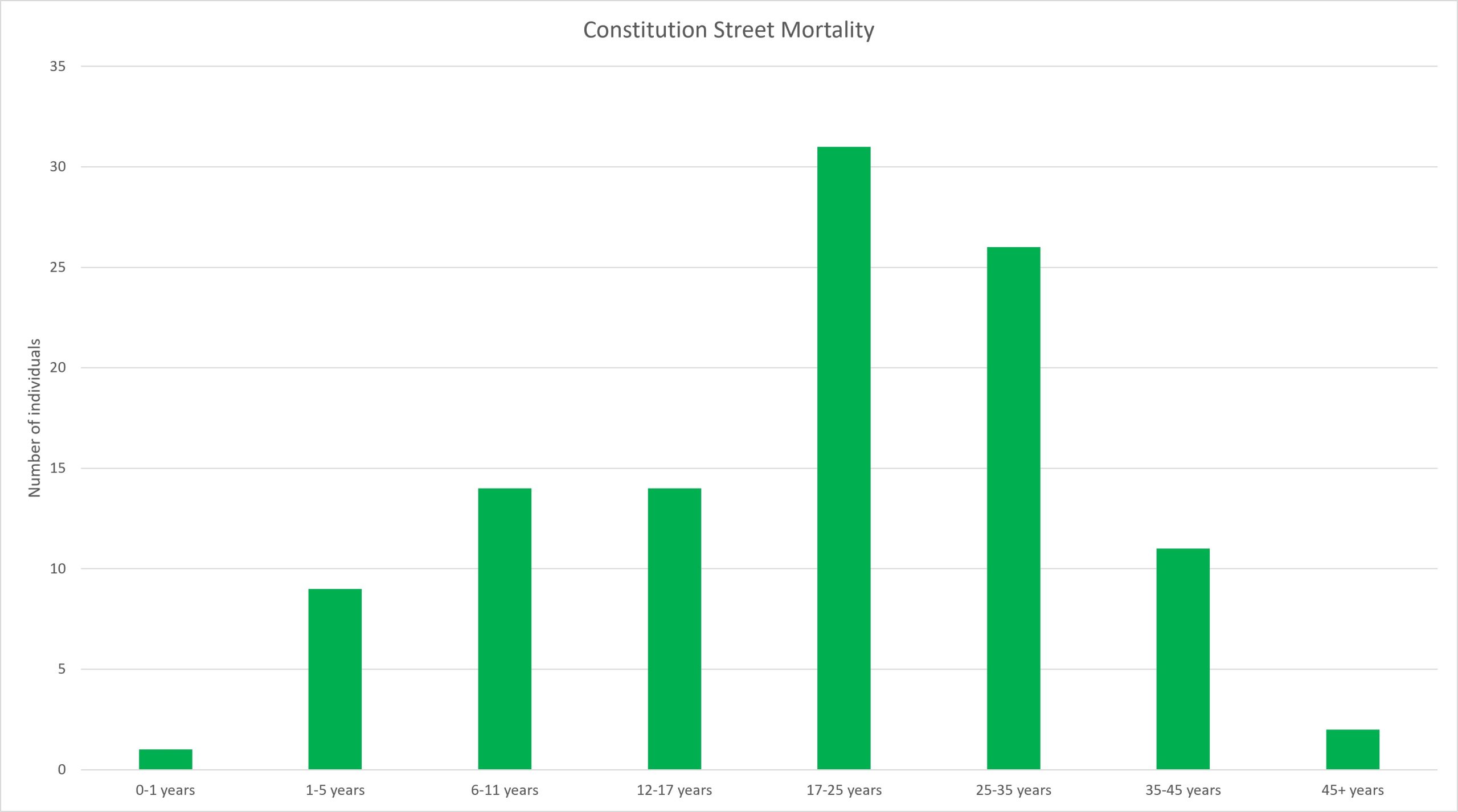
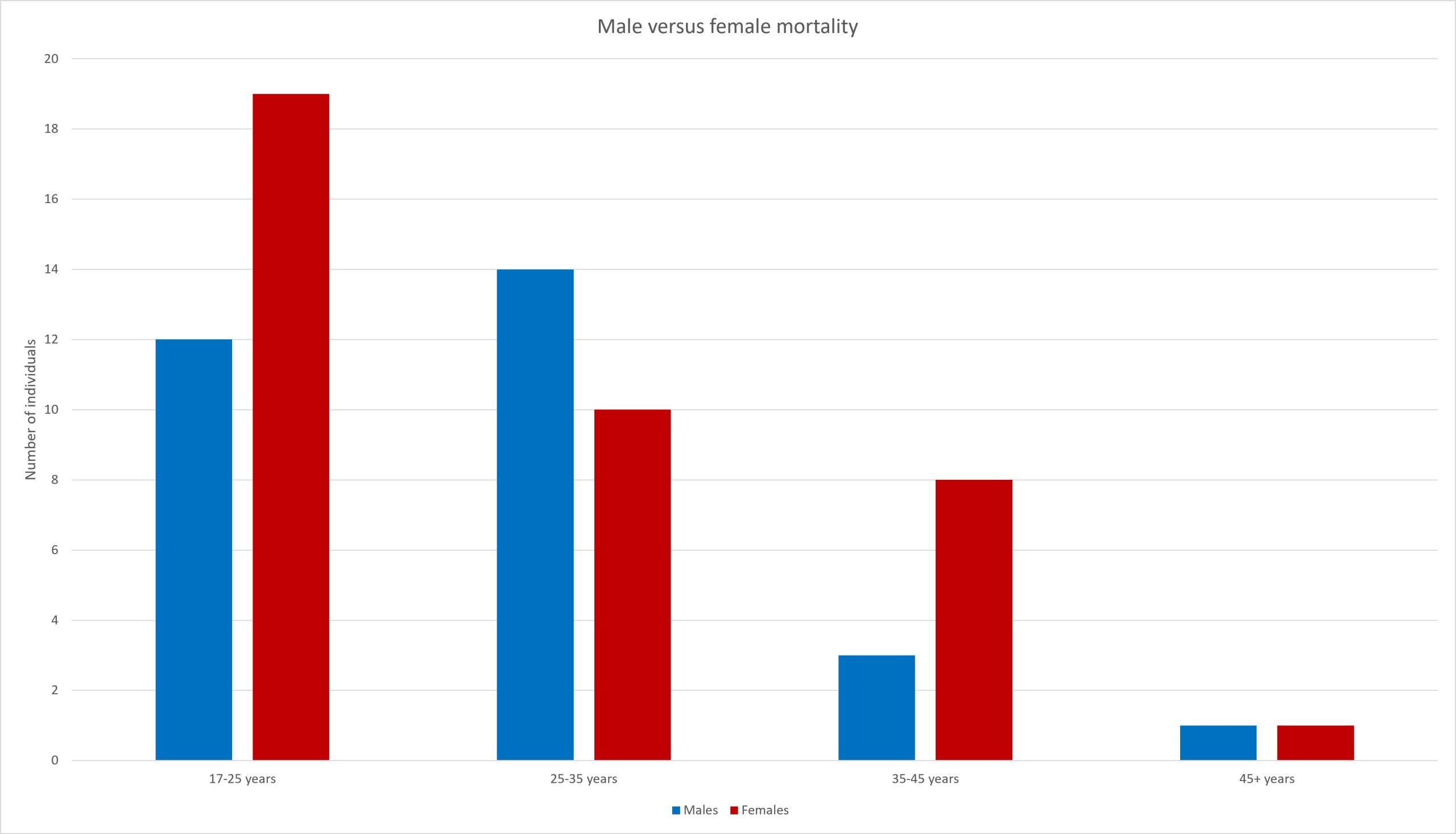
The site had suffered a great deal of disturbance and the bounds of the excavation also cut through some graves. This resulted in a lot of the burials being truncated and individuals being incomplete. All individuals that were at least 60% complete were selected for analysis, giving a sample of 109 individuals. 35.2% were non-adults, most of whom had died in later childhood (6-11 years) or adolescence (12-17 years). Among the adults there were more females (35.2%) present than males (27.8%). Females were more likely to die in early adulthood with 50% of female individuals aged 17-25 years. Overall, individuals aged 17-25 years (28.7%) were significantly over represented (p = 0.02) in comparison to The Hirsel (13.9%), while individuals aged over 45 years (1.9%) were significantly underrepresented (p = 0.02) compared to The Hirsel (12.2%).
| Pathology | Site | Group | N | n | % | p-value |
| LEH | Constitution Street | All | 96 | 71 | 73.9 | – |
| Non-adults | 30 | 21 | 70 | – | ||
| Adults | 66 | 50 | 75.8 | – | ||
| Caries | Constitution Street | All | 100 | 50 | 50 | – |
| Non-adults | 34 | 3 | 8.8 | – | ||
| Adults | 66 | 47 | 71.2 | – | ||
| Periosteal New Bone Formation | Constitution Street | All | 109 | 39 | 35.8 | – |
| Constitution Street | Active all | 109 | 25 | 22.9 | – | |
| The Hirsel | 115 | 31 | 26.9 | – | ||
| Whitefriars | 73 | 18 | 24.7 | – | ||
| Constitution Street | Healed males | 30 | 2 | 6.7 | 0.005 | |
| The Hirsel | 39 | 14 | 35.9 | |||
| Whitefriars | 25 | 3 | 12 | |||
| Constitution Street | Ribs | 104 | 4 | 3.9 | – | |
| Sinusitis | Constitution Street | All | 70 | 11 | 15.7 | – |
| Non-adults | 28 | 2 | 7.1 | – | ||
| Adults | 42 | 9 | 21.4 | – | ||
| Osteoarthritis | Constitution Street | All | 71 | 14 | 19.7 | – |
| Constitution Street | Females | 38 | 5 | 13.2 | 0.04 | |
| The Hirsel | 36 | 14 | 38.9 | |||
| Intervertebral Disk Disease | Constitution Street | Adults | 65 | 10 | 15.4 | <0.001 |
| The Hirsel | 74 | 33 | 44.6 | |||
| Rib fractures | All | 104 | 10 | 9.6 | – |
Results
Linear enamel hypoplasias (LEH) are horizontal defects in tooth enamel that form during the development of the tooth. These defects indicate that stress of some kind, often a period of poor nutrition or illness, was experienced during childhood. Prevalence of LEH at Constitution Street was 70% for non-adults and 75.8% for adults, with slightly higher prevalence for females (77.1%) than males (73.3%).
Overall half of individuals were affected by dental caries. Prevalence among adults (71.2%) was higher than at the rural population of The Hirsel (54.2%) but lower than the rich urban population of Whitefriars (80%). Prevalence in non-adults (8.8%) was around a third of the prevalence seen at Whitefriars (26.1%) and The Hirsel (24.3%).
Stature could be estimated for 67.6% of adults. The average stature for males was 168.9cm and the average stature for females was 155.5cm, similar to Whitefriars (154.8cm) but significantly shorter (p = 0.003) than the female average stature at The Hirsel (160.2cm).
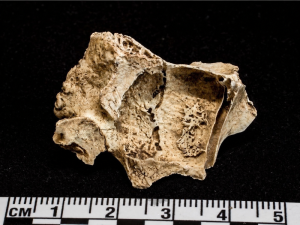
Periosteal new bone formation (PNBF), which indicates infection or stressors such as strain injuries, was overall slightly lower (35.8%) than at The Hirsel (41.7%) but this varied between active and healed PNBF. Prevalence of active PNBF was similar across all three populations, however, prevalence of healed PNBF (6.4%) was noticeably lower at Constitution Street than The Hirsel (17.4%) and Whitefriars (16.4%). Among males healed PNBF (6.7%) was significantly lower (p = 0.005) than at The Hirsel (35.9%). New bone formation on the interior surface of the ribs indicating respiratory disease was observed in 3.9% of individuals. New bone formation in the maxillary sinus indicating sinusitis was observed in 15.7% of individuals (7.1% of non-adults and 21.4% of adults) and prevalence was higher among females than males.
Degenerative joint disease was low at Constitution Street. Osteoarthritis was observed in 19.7% of adults and among females prevalence at Constitution Street (13.2%) was significantly lower (p = 0.04) than at The Hirsel (38.9%). Intervertebral disk disease was observed in 15.4% of adults and this was significantly lower (p = <0.001) than at The Hirsel (44.6%).
Trauma affected the ribs more than any other part of the skeleton with rib fractures seen in 9.6% of individuals. The majority of these rib fractures (80%) were also not yet healed at the time of death. The populations of The Hirsel and Whitefriars also had around 10% of individuals affected by rib fractures but in these populations the majority of the fractures had healed.
Discussion
High mortality in early adulthood, particularly among females, and high prevalence of LEH suggests that urban life in Leith was difficult with high childhood stress and continued stress in adulthood. The low prevalence of degenerative joint diseases, which are strongly associated with increasing age (Calce et al 2018), also serves as an indicator of the urban poor having shorter life expectancy than rural populations. The high proportion of rib fractures that had not yet healed at Constitution Street suggests that these individuals were either too frail to survive with their injuries for long or were employed in physical jobs and unable to take the time to rest and recover. Continued movement of the torso would have moved the fractured ribs and prolonged or interrupted the healing process (May et al 2016).
The fact that the majority of PNBF observed was active at the time of death and prevalence of healed PNBF was lower than at The Hirsel and Whitefriars also suggests high stress as it suggests that individuals at Constitution Street were less likely to survive infections and similar stressors. However, this may have been influenced by the disturbance and truncation of the site as PNBF is commonly seen on the lower leg (often due to falls or strain injuries such as shin splints) and the bones of the lower leg were often missing. The patterns of PNBF on the ribs do suggest respiratory diseases were present in the population and the population density present in towns made transmission of disease a more significant risk for urban populations.
The majority of non-adults having died in late childhood and adolescence is an unusual pattern as many populations had a higher proportion of mortality in infancy and early childhood (Lewis 2007). A possible factor increasing the number of adolescents in the sample is that it was common for young people from rural areas to move into towns to work as apprentices or in service positions (Lewis 2016).
However, it is likely that the assemblage does not reflect actual mortality but rather the circumstances of the site. A large amount of topsoil was removed when the road surface was constructed and a Victorian sewer and a variety of modern service trenches caused further disturbance to the site (Franklin et al 2019). Infants and younger children are often buried in shallower graves than adults (Lewis 2007) and are more likely to have been disturbed or removed entirely. Additionally, at some medieval sites infant burials have been found clustered around the church (Cramp 2014). the South Leith Parish Church is still standing and retains much of its burial ground. The Constitution Street site had originally formed the outermost edge of the burial ground, so if it was local custom for infants to be buried close to the church then they would sit well outside the excavated area. If the population had similar mortality patterns to other sites with higher infant and early childhood mortality, then the original proportion of non-adults in the Constitution Street population would have been higher than average.
Leith was the busiest port in Scotland for much of the medieval period and a wealth of international trade occurred from its docks but its residents were not free to enjoy control of this trade or fully benefit from it. The nearby royal burgh of Edinburgh kept strict control over Leith and banned residents of the town from conducting trade, possessing warehouses or shops, or keeping inns for travellers, with many businesses within the bounds of Leith owned by burgesses from Edinburgh (Colston 1892, Mowat 1994, Simpson 1981). The Constitution Street population were likely employed in lower skilled jobs within Leith’s port and wider town and the assemblage reflects both the hardships of medieval urban life and the impact of Edinburgh’s control on the poorer residents of the town.
Bibliography
Calce, S E, Kurki, H K, Weston, D A, Gould, L 2018 ‘The relationship of age, activity, and body size on osteoarthritis in weight-bearing skeletal regions’, International Journal of Paleopathology 22, 45-53. https://doi.org/10.1016/j.ijpp.2018.04.001
Colston, J 1892 The town and port of Leith; its historical connection with the city of Edinburgh, printed for the magistrates and Town Council, Edinburgh.
Cramp, R 2014 The Hirsel Excavations, Routledge: London. https://doi.org/10.4324/9781351191272
Franklin, J, Troy, C, Britton, K, Wilson, D and Lawson, J A 2019 Past Lives of Leith: Archaeological Work for Edinburgh Trams, Edinburgh Museums and Galleries.
Lewis, M 2016 ‘Work and the Adolescent in Medieval England ad 900–1550: The Osteological Evidence’, Medieval Archaeology 60, 138-171. https://doi.org/10.1080/00766097.2016.1147787
Lewis, M E 2007 The Bioarchaeology of Children: Perspectives from Biological and Forensic Anthropology, Cambridge University Press.
May, L, Hillermann, C and Patil, S 2016 ‘Rib fracture management’, BJA Education 16, 26-32. https://doi.org/10.1093/bjaceaccp/mkv011
Mowat, S 1994 The Port of Leith: Its History and Its People, Forth Ports.
Simpson, A T 1981 Historic Edinburgh, Canongate & Leith: the archaeological implications of development, Scottish Burgh Survey, Department of Archaeology, University of Glasgow: Glasgow.
Wood, A 1777 To the magistrates, the commisioners of police and the four Incorporations, this plan of the town of Leith from an actual survey is humbly dedicated.