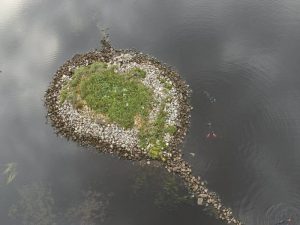
There have been several exciting developments in Outer Hebridean Neolithic studies since the publication of the National ScARF. In 2012, knowledge of Neolithic settlement evidence was at best patchy, with limited understanding of the character of Neolithic life. While the Eilean Dòmhnuill excavations in North Uist (SIRFA Case Study: Eilean Dòmhnuill) gave rise to the idea that islets may have been significant places for Neolithic communities, their ubiquity as a Neolithic settlement locale had yet to be demonstrated. In addition to Eilean Dòmhnuill, Early Neolithic radiocarbon dates associated with settlement evidence had been recovered from Taobh Tuath (Northton), Harris (Simpson et al 2005), Allt Chrisal, Barra (Branigan and Foster 1995), and from eroding midden at Traigh na Beirghe (Traigh na Berie), Lewis (Church 2013).
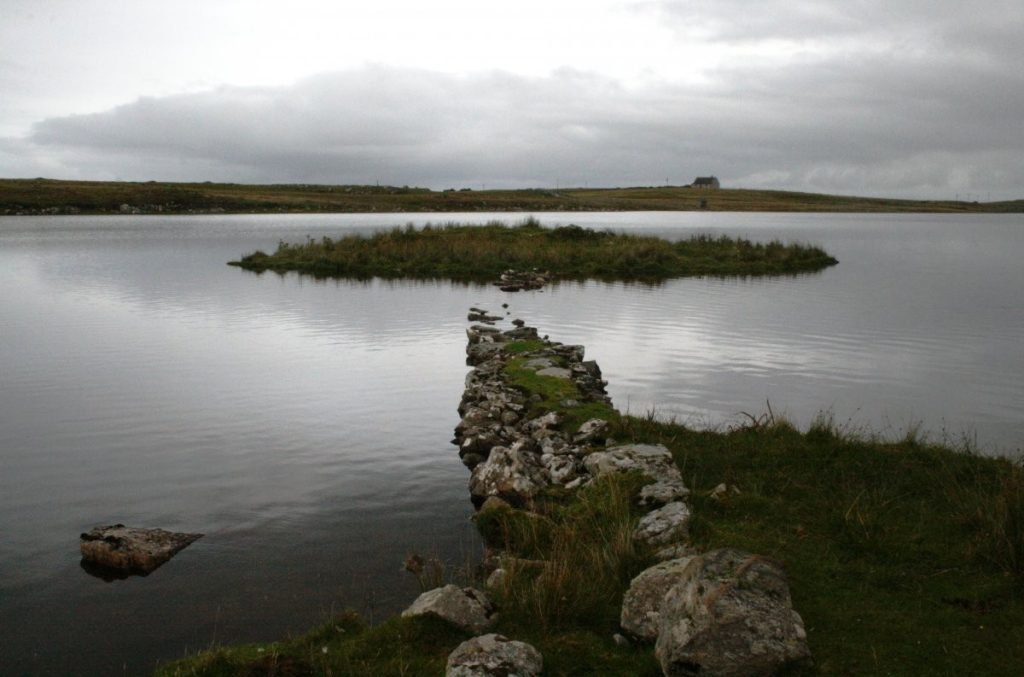
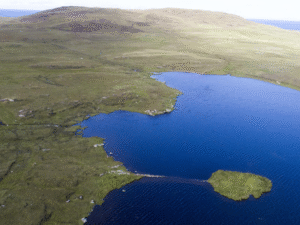
Since 2012 the number of known Neolithic settlements and sites of broader domestic activity have more than doubled. This improved knowledge base is largely an outcome of The Islands of Stone Project (SIRFA Case Study: Islands of Stone) which included extensive survey of islet sites across the Outer Hebrides. The project increased the number of known Neolithic crannog settlement from a mere two to more than ten (Blankshein et al 2023), demonstrating that islets were an essential part of the settled Neolithic landscape.
In addition, excavations at An Doirlinn (Sharples 2005; Garrow et al 2017a) and Sgeir nam Portan (Gal and Rennell forthcoming) in South Uist, at Lionacleit, Benbecula (Hambly and Timpany 2017 and SIRFA Case Study 8) and Aird A Chleirich (Sober Island) in Steòrnabhagh (Stornoway) (McHardy 2022) have further enhanced this emerging picture of Neolithic domestic life. Importantly, the last decade has also seen the publication of new scientific analyses of Neolithic material that has expanded current understanding of diets and subsistence practices (eg Bishop et al 2021; Hammann et al 2022). Furthermore, Outer Hebridean material has made important contributions to wider debates about Mesolithic-Neolithic transition (Garrow et al 2017a) and island colonisation strategies (Stanton et al 2016).
Developments in stable isotope analysis and ancient DNA analysis has reignited debates about Neolithic population movement. However, despite the apparent relevance of the Scottish islands to these wider debates, Outer Hebridean material is notably absent from current discussions (see Shulting and Richards 2002; Brace et al 2019). The lack of Neolithic human remains from the Outer Hebrides is a sampling issue which requires attention if these islands are to continue playing a central role in ongoing debates about Neolithic population movements.
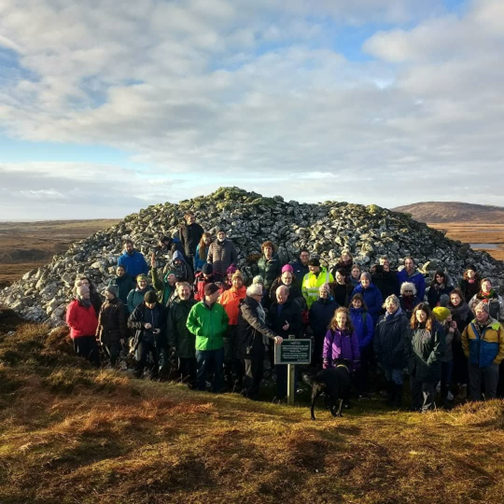
Ceremonial and monumental sites including burial tombs, standing stones, and stone circles are still the most dominant category of known Neolithic sites across the Outer Hebrides. Despite their ubiquity, very few chambered tomb sites have been excavated in a modern context (although see Dunwell et al 2004; Cummings et al 2005) and there is still not a single radiocarbon date that can be confidently attributed to either the construction or primary use of these monuments. There are consequently major gaps relating to the chronology of Neolithic monument construction and use across the Outer Hebrides. Although Calanais has been relatively well-researched (Ashmore), the chronology of this monumental landscape and how it articulates (both chronologically and conceptually) with the wider Hebridean Neolithic landscape is still poorly understood (but see Richards 2013 and Bates et al 2019). There are broad chronological gaps for most of the Hebridean Neolithic as well as a need to better understand the transitions leading into and out of this period.
You can download the datasheet for more information on the Neolithic sites and c14 dates from the Outer Hebrides.
Outer Hebrides Neolithic Research Questions
How and why is the Hebridean Neolithic different from the evidence from Scotland’s Northern Isles?
The Neolithic across the Outer Hebrides looks different from the Neolithic across Scotland’s Northern Isles – both in terms of settlement types and locales and monumental expressions. Did the Hebrides have a distinct identity from Neolithic communities in the Northern Isles? To what extent were there links and connections between these places? Whether there were connections or insularity from the wider island setting –the question remains as to why this was the case? This is a very broad and wide-ranging question and is not likely to be answered with a single research project; it is encouraged that a series of projects (or PhDs) are designed to tackle it. In a developer-funded context, the research significance of dating and other post-excavation work needs to be emphasised, in addition to the accurate and thorough recording of structures and material culture of this period.
Status:
Active
Date accepted:
26/08/2026
Date of next review:
26/08/2031
How big was the Neolithic population across the Hebrides?
This is an aspirational question. Currently, there is a lack of information, data and sites to address this question in earnest. Nevertheless, it is recommended that future researchers consider ways of gauging the likely size of the Outer Hebrides Neolithic populations. Furthermore, for investigating how this might have changed overtime? How did changes to the size Neolithic populations potentially impact on the local environment and ecology? It is unclear what metrics and methods would be best used to address these questions. Genetic modelling has demonstrated potential in other areas, but is likely to be of limited application in the Hebrides where there are very few human remains from this period. Analysis of radiocarbon dates has been used to model Neolithic populations elsewhere in Europe (Shennan and Edinborough 2007). Exploring existing, new and developing methodologies is therefore encouraged as well as expanding datasets through various fieldwork methods. A better understanding of settlement numbers and distribution would also undoubtably aid understanding here.
Status:
Active
Date accepted:
26/08/2026
Date of next review:
26/08/2031
How did Hebridean populations change during the early Neolithic?
Is there evidence to support a marked population influx to the Hebrides in the earliest part of the Neolithic? If so, where did this population come from? How do changes in diet and subsistence strategies articulate with our understanding of population changes? It is likely that these questions will be addressed partly through collation, reassessment and reanalysis of existing material and literature. Ancient DNA and stable isotope analysis have huge potential, although currently there is a lack of data and appropriate samples. Expanding Neolithic datasets for the Hebrides are therefore likely to be fundamental for unlocking the value of these potential approaches towards addressing these questions. To fully address this question, a better understanding of the nature of Mesolithic settlement and occupation across the Outer Hebrides will also be required.
Status:
Active
Date accepted:
26/08/2026
Date of next review:
26/08/2031
How did Neolithic communities in the Hebrides connect beyond the island or archipelago?
Current understanding of Neolithic connectivity is relatively limited and based largely on similarities in ceramics and tomb architecture. There is very little known about physical interactions. Is it possible to determine how closely Hebrideans were interacting with other island groups (Inner Hebrides, Northern Isles for example), the Scottish and Irish mainland, or further afield? How often were connections made? Or is there evidence of purposeful isolation? How does this appear to have impacted the Hebridean Neolithic? This is a broad and wide-ranging question and is not likely to be answered with a single research project; it is encouraged that a series of projects (or PhDs) are designed to tackle it. This question encourages the synthesis of grey, published, and unpublished literature, in addition to synthesis of the knowledge held within museum collections. Exploring existing, new and developing methodologies is encouraged as well as expanding datasets.
Status:
Active
Date accepted:
26/08/2026
Date of next review:
26/08/2031
How was the Neolithic landscape structured throughout the Neolithic period?
Recent survey and excavation work across the Hebrides has substantially enhanced our understanding of Neolithic settlements (Blankshein, Gannon, Garrow and Sturt 2024). We now have a more detailed picture of where monuments and houses for this period were located. But how were these domestic and monumental spaces organised within the wider Neolithic landscapes? Can we identify spatial or wider landscape relationships between Neolithic burials, settlements and other monuments across the Outer Hebrides? What about wider activity zones; agricultural, pastoral and marine landscapes, for example? Are there regional differences within the archipelago to this structure and does it change over time? It is likely that these questions will be addressed partly through collation, reassessment and reanalysis of existing material and literature. Digital mapping, modelling and wider landscapes approaches are encouraged. It is likely that further dedicated survey work, as well as opportunities discoveries and those via developer-funded work, will enhance datasets. In a developer-funded context, the research significance of surveying, dating and other post-excavation work with the potential to inform on this period needs to be emphasised.
Status:
Active
Date accepted:
26/08/2026
Date of next review:
26/08/2031
What can isotope work tell us about the Outer Hebrides’ Neolithic populations?
Archaeological Sciences are increasingly an integral part of archaeological research and work. Extensive isotope has yet to be carried out on Outer Hebridean material; what can this reveal? Did Neolithic Hebridean populations have dietary practices differing from the rest of Scotland (or the other Scottish island groups)? Is there evidence indicating population movements, for example incoming groups? The use of isotope work is reliant on the collation of skeletal remains (both human and animal) and as such this question requires the retrieval of such material. This is difficult and presents issues (as referenced elsewhere); it is unlikely this area will not see development until an increase in availability of skeletal remains is achieved. The integration of museum archives and collections into this work is crucial. Additionally, it should be noted that the collation of substantial quantities of isotopic data is required to improve accuracy and understanding of this data. In a developer-funded context, the research significance of bone (both faunal and human) needs to be emphasised.
Status:
Active
Date accepted:
26/08/2026
Date of next review:
26/08/2031
What did monumentality represent for the Hebrides’ Neolithic populations?
There is still more to understand about the role and meaning of monumentality within a Hebridean Neolithic context. Who built the Neolithic monuments found across the Outer Hebrides? What did monuments such as standing stones and chambered tombs represent and mean to the communities who used them? Furthermore, the relationship between monumental sites and contemporary settlements in the Hebridean Neolithic needs to be better understood. Especially given the apparent lack of monumentality in Neolithic settlements. In terms of monumentality, there appears to be quite different patterns across the region, especially regarding the density of monuments and wider distribution patterns. A chronology of these monuments would undoubtedly aid this area of research including clarity on when monumental structures were first built and finally went out of use (SIRFA13). A study of the topographic and spatial arrangements of monumental sites across all the Outer Hebridean islands would be beneficial. New data alongside new theoretical approaches are likely to be beneficial.
Status:
Active
Date accepted:
26/08/2026
Date of next review:
26/08/2031
What did Neolithic domestic settlement look like across the Hebrides?
Few permanent Neolithic settlements have been the subject of detailed excavation in the Outer Hebrides. Although recent survey work has vastly expanded our knowledge of Neolithic settlements (Blankshein, Gannon, Garrow, and Sturt 2024) our understanding of these sites remains limited. Were some Neolithic settlements across the Outer Hebrides similar to those found in Orkney – i.e. substantial, permanent and made of stone? If not, why not? It is expected that this research will initially be reliant on more survey work and data, with a potential later focus on long-term excavation efforts. Researchers are encouraged to look in all areas equally, especially beneath peat deposits. With the rise in renewable projects across the Outer Hebrides it is likely that developer-led archaeological fieldwork will bring new data from peatland areas to this topic.
Status:
Active
Date accepted:
26/08/2026
Date of next review:
26/08/2031
What did the Hebridean palaeoeconomy look like during the Neolithic?
The Minch is often referred to as a ‘sea highway’, which would make the Outer Hebrides perfectly located for high levels of connectivity. Trade networks were undoubtedly an important aspect of Neolithic life; to what extent were the Hebrides involved in trade with the Northern Isles, the Scottish mainland, and further afield? Additionally, the internal economy of the Outer Hebrides requires investigation. This is a broad and wide-ranging question and is not likely to be answered with a single research project; it is encouraged that a series of projects (or PhDs) are designed to tackle it.
Status:
Active
Date accepted:
26/08/2026
Date of next review:
26/08/2031
What did the Neolithic social landscape look like across the Outer Hebrides?
Neolithic Hebridean settlements are an unknown quantity (although see Blankshein, Gannon, Garrow, and Sturt 2024). It is yet to be determined where the majority of settlements were located or what they even looked like. The architecture, location, size, lay out, building materials, and temporal changes all require further exploration and understanding, as well as the ‘taskscapes’ within these settlements. This is also true of the wider land-use for farming, grazing and subsistence strategies. It is likely that further dedicated survey work, as well as opportunities discoveries and those via developer-funded work, will enhance Neolithic settlement datasets. Excavation of known or suspected Neolithic settlement and other non-monumental sites are also likely ways forward. These questions will also likely be aided by a better understanding of the natural environment at this time (SIRFA18).
Status:
Active
Date accepted:
26/08/2026
Date of next review:
26/08/2031
What did the transition periods leading into and out of the Outer Hebridean Neolithic look like?
The transition periods both leading into and out of the Neolithic are not particularly well understood for the Outer Hebrides; this is especially true in terms of understanding the social changes that appear to have taken place during these transition periods. These changes include (but are not limited to) arrivals of new populations, new cultures, and shifts in monumentality. Beaker remains have been recorded at a number of machair locations across the archipelago, including at Allt Chrisal (Barra), Sligeanach, Cill Donnain and Cladh Hallan (South Uist), Roisinis (Benbecula), Northton (Harris), and Cnip, Barvas, Olcote, and Dalmore (Lewis) (Sharples, 2009). Existing research shows that the nature of beaker settlement in the Hebrides is particularly interesting and a topic that warrants more investigation. It is unlikely that these questions will be addressed via a single project. A series of well-funded projects, almost certainly interdisciplinary and multi-proxy in nature, are likely ways forward. It is likely that these questions will be addressed partly through collation, reassessment and reanalysis of existing material and literature. Better dating will undoubtedly aid understanding.
Status:
Active
Date accepted:
26/08/2026
Date of next review:
26/08/2031
What is the chronological relationship between Neolithic monuments across the Outer Hebrides?
Whilst Neolithic monuments (chambered cairns, standing stones, stone circles) still dominate the Hebridean landscape, there has yet to be a systematic programme for dating these sites. It is currently not known what the interplay or relationship was between the construction of these different monuments, nor if their use represents different periods throughout the Neolithic. A more detailed chronology would provide insight into the construction of different styles and would provide some level of insight into Neolithic Hebridean monumentality.
Status:
Active
Date accepted:
26/08/2026
Date of next review:
26/08/2031
What is the evidence for prehistoric artwork across the Outer Hebrides?
In comparison with other regions, Neolithic artwork or artistic outlets from this period is fairly elusive across the Outer Hebrides. How has this impacted current understanding and interpretation of societal creativity? How should researchers improve this understanding? Did the Neolithic populations utilise organic materials which have not survived? Or were these resources considered precious and were therefore recycled? Is it possible to determine what resources were utilised for this work? Further, is there a difference in the artwork of the Outer Hebrides and Orkney? What does this tell us? It is likely that further dedicated survey work, as well as opportunities discoveries and those via developer-funded work, will enhance datasets. In a developer-funded context, the research significance of material culture needs to be emphasised.
Status:
Active
Date accepted:
26/08/2026
Date of next review:
26/08/2031
What is the overall chronology of Neolithic activity across the Outer Hebrides?
We still need better resolution on the chronology of all examples of Neolithic activity across the Outer Hebrides. This would be of significant value to furthering Hebridean Neolithic research. A refined chronology would illuminate potential patterns in site types; it would highlight additional gaps in Neolithic research. This question aims to encapsulate domestic, monumental, and any other site type, and it researchers are encouraged to make use of grey, published, and unpublished data for initial data collation. Further, systematic dating of collections in museums and Comann Eachdraidh is recommended. Researchers are encouraged to make use of grey, published, and unpublished data for initial data collation. Further, systematic dating of collections in museums and Comann Eachdraidh is recommended.
Status:
Active
Date accepted:
26/08/2026
Date of next review:
26/08/2031
What was the chronological progression of Hebridean pottery with respect to form, fabric and design?
Despite recent research (Copper and Armit 2018) our understanding of Neolithic Hebridean pottery is lacking in comparison to pottery in other areas of Scotland. Chronological sequences, fabric and composition require further study. This will undoubtedly aid in our understanding of the Neolithic economy of the Outer Hebrides, as well as their interconnectivity with the rest of Scotland. Dedicated, well–funded research likely to be the most expedient way forward. In an excavation context, the importance of dating Neolithic sites and securing reliable chronologies for material culture is paramount. As is the identification and excavation of known Neolithic sites in order to expand the dataset. Within a developer-funded context, the significance of Neolithic materials and the value of post-excavation and dating programmes needs emphasising.
Status:
Active
Date accepted:
26/08/2026
Date of next review:
26/08/2031
What was the environmental or ecological impact of farming during the Hebridean Neolithic?
What impact did farming have on the surrounding environment? Was there a detrimental or beneficial effect on the local flora and fauna? It is expected that research into this question will be multi-disciplinary but with a particular focus on palaeoecology and soil science. It is unlikely that these questions will be addressed via a single project. A series of well-funded projects, almost certainly interdisciplinary and multi-proxy in nature, are likely ways forward. Within a developer-funded context, the importance of retaining faunal assemblages and environmental data for this period and funding post-excavation work needs emphasis.
Status:
Active
Date accepted:
26/08/2026
Date of next review:
26/08/2031
What was the impact of the emergence of agriculture across the Outer Hebrides?
The arrival of agriculture was a landmark stage in the development of many cultures across the globe. However, the impacts of the arrival of farming are not necessarily examined beyond changes in diet and a shift to sedentary settlement. What were the impacts on the Hebridean environment? How did the arrival of crops and livestock impact on the flora and fauna? What was the extent of prehistoric cereal cultivation during this time? Further, what was the extent of usable land (for farming or otherwise)? What were the wider impacts of the arrival of agriculture on Hebridean material culture? For example, the tools, pottery, artistic outlets, etc. It is unlikely that these questions will be addressed via a single project. A series of well-funded projects, almost certainly interdisciplinary and multi-proxy in nature, are likely ways forward. It is likely that these questions will be addressed partly through collation, reassessment and reanalysis of existing grey, published, and unpublished literature, in addition to synthesis of the knowledge held within museum collections and environmental data. Research may also be reliant on more survey work and data, with a potential later focus on long-term excavation efforts. In a developer-funded context, the research significance of surveying, dating and other post-excavation work with the potential to inform on this period needs to be emphasised, as well as environmental data and post-excavation work.
Status:
Active
Date accepted:
26/08/2026
Date of next review:
26/08/2031
What was the Neolithic environment like across the Outer Hebrides?
The natural environment during the Hebridean Neolithic is still not well understood. This hinders our understanding of the way in which the environment and its resources were utilised. The Neolithic coastline, as well as vegetation (e.g. tree cover) and growth of blanket bog during this period no doubt informed and shaped Neolithic Hebridean society in ways that are yet to be explored. Moreover, existing datasets (pollen, intertidal peats, dune building, etc.), albeit localised in scope and mostly undertaken mostly by palaeoecologist, would benefit from being rationalised and brought together within an archaeological context. It is unlikely that these questions will be addressed via a single project. A series of well-funded projects, almost certainly interdisciplinary and multi-proxy in nature, are likely ways forward. Within a developer-funded context, the importance of retaining faunal assemblages and environmental data for this period and funding post-excavation work needs emphasis.
Status:
Active
Date accepted:
26/08/2026
Date of next review:
26/08/2031
What was the relationship between users of Neolithic Grooved ware and early Beakers across the Hebrides?
The use and status of Grooved Ware and Beakers amongst Hebridean populations is not well understood. Furthermore, the relationship between these respective ceramic-users is still unclear; do these ceramic styles represent different and separate populations? Is it possible to determine their relationship and the nature of their interactions? What methodologies should be utilised to do this? It is unlikely that these questions will be addressed via a single project. A series of well-funded projects, almost certainly interdisciplinary and multi-proxy in nature, are likely ways forward. Exploring existing, new and developing methodologies is encouraged as well as methods for expanding datasets. Secure and refined dating and confident identification of Grooved Ware as well as Beakers will be important.
Status:
Active
Date accepted:
26/08/2026
Date of next review:
26/08/2031
What were Neolithic boats like for the Outer Hebrides?
Boats from the Neolithic are rare, and none have yet been found from the Outer Hebrides. This is likely due to the poor preservation conditions. However, seafaring was likely an integral aspect of Neolithic island life. What did Neolithic boats looked like? How large were they? What materials were they made of? What was the availability of these materials? What were the practicalities of getting to and from the Outer Hebrides in a boat during this period? Was seafaring seasonal? Where there any differences in boat sizes or types when trading, travelling, fishing, or hunting? Finally, were there any major differences between Neolithic seafaring technology and Mesolithic seafaring technology? What level of seafaring knowledge was prevalent during the Hebridean Neolithic? It is likely that further dedicated survey work, as well as opportunities discoveries and those via developer-funded work, will enhance datasets. The use of experimental archaeology for this area of research is highly encouraged. Public engagement through such work is also recommended. In a developer-funded context, opportunistic discoveries of remains potentially related to seafaring should be considered a priority.
Status:
Active
Date accepted:
26/08/2026
Date of next review:
26/08/2031
When and how did farming arrive in the Outer Hebrides?
It is generally accepted that the introduction of farming did not immediately replace hunter-gatherer subsistence practices across the Outer Hebrides. But the exact point of the arrival of farming is not yet clear. When did farming arrive? How did it arrive? What was the process and over what period did it take place? Were there substantial periods when both sedentary farmers and transient hunter-gathers were living within the same landscapes? What were the processes by which the entirety of the Hebridean population subsequently took up farming? What do the features of this transition tell us about pre-Neolithic and early Neolithic societies? It is unlikely that these questions will be addressed via a single project. A series of well-funded projects, almost certainly interdisciplinary and multi-proxy in nature, are likely ways forward. Within a developer-funded context, the importance of retaining faunal remains and funding post-excavation work as well as scientific dating.
The arrival of farming was a significant shift in Neolithic life across Britain, however, it is currently unknown where the Hebridean domesticates originated from. Where did they come from? Is there a difference between species? What does this mean for our understanding of Neolithic Hebridean connections? Further, is there evidence of multiple waves of domesticate importation? It is recommended that this research involves the use of archaeological sciences, such as stable isotope analysis and aDNA. Exploring existing, new and developing methodologies is encouraged as well as expanding datasets. Within a developer-funded context the value of faunal assemblages and the need to fund post-excavation work needs emphasis.
If you have answered a research question, or have an update to add about a specific site or period, you can use our inline comments to flag the change and keep the frameworks up to date.
Register for an account, or login now to add updates and comments to our existing frameworks.

 SIRFA Case Study: