Medieval (c AD 1100 – AD 1500)
The medieval period across the Outer Hebrides has received relatively little attention from archaeological researchers. Some areas, such as South Uist, Barra and northern Lewis have been fairly extensively surveyed, but excavation of medieval sites across the region are still rare. Compared to earlier and later periods, the list of known and well dated sites for this period remains remarkably small, as well as patchy in terms of geographical coverage. Interestingly, most of the university-led research that has produced significant medieval material developed out of large, multi-period projects. This includes Cardiff and Sheffield Universities’ SEARCH project across South Uist (Parker Pearson 2012), Ian Crawford’s work across Coileagan an Udail (the Udal peninsula), North Uist (Crawford 1977) and the Edinburgh University affiliated Loch Olabhat Research Project, all of which began with an interest in and focus on the islands’ prehistory (Armit et al 2008).
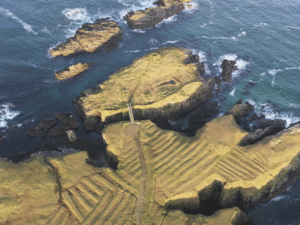
Four decades worth of archaeological investigations across the Barabhas (Barvas) machair in Lewis, combining commercial, community, rescue and university-led projects, has also produced significant medieval material as part of a wider multi-period data assemblage (Cowie and Macleod 2015). In all these examples, however, the islands’ prehistory was the initial focus with medieval and post-medieval research developed largely as an adjunct. GUARD and Glasgow University’s work at Dùn Èistean, a late medieval fortified settlement located on a small, coastal island off the north coast of Lewis in Nis (Ness), stands out as one of the few large-scale excavation projects with a distinct medieval and post-medieval focus (Barrowman 2015a, 2015b).
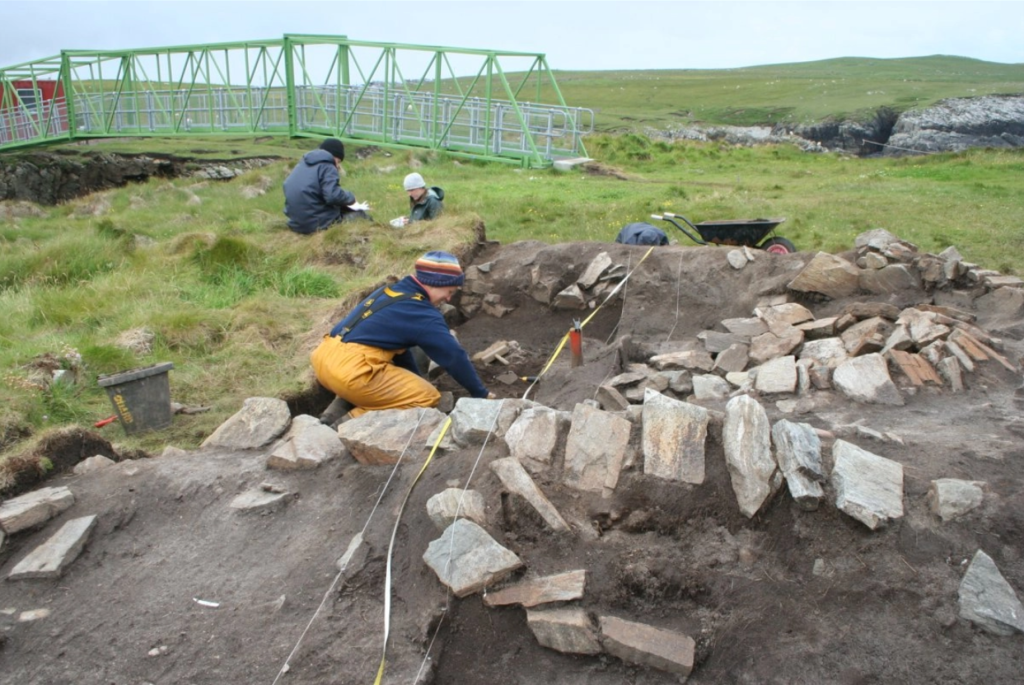
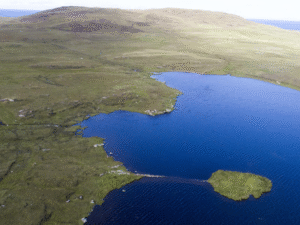
Most known medieval sites across the Outer Hebrides are ecclesiastical in nature, including chapels, burial grounds and churches. Although ecclesiastical sites have received relatively little archaeological attention in recent years (although see Barrowman 2020), there are decent records for many of these sites. Developer and community-led building surveys, for example, exist for a large number of ecclesiastical buildings with medieval origins. However, this dataset would benefit hugely from synthesis and wider interpretation. What is the relationship between medieval and post-medieval graveyards and prehistoric sites and where are the settlements and the churches associated with known medieval chapels? High-status sites and power centres, including clan strongholds like Dùn Èistean as well as galley castles and small towers, are another key feature of the archaeological record for this period (Macniven 2017, Martin 2017, Oram 2017, Raven 2017). Many of these are built into the remains of prehistoric sites. Like the remains of ecclesiastical buildings, these sites tend to be reasonably well recorded and documented, even if few have been the subject of detailed excavation.
The emergence of medieval power structures, via the church, wider Lordship of the Isles and associated clan systems, are clearly important topics that complement the limited historical records for this period. What remains largely absent, however, is an understanding of the everyday lives and experiences of medieval communities living across the islands. We still know little about how medieval Hebrideans lived day-to-day and the extent to which this changed during periods of social upheaval and wider political change. In part, this is because medieval settlements have proved hard to identify across the Outer Hebrides. The reasons for this are complex and multifaceted. One of very few excavated medieval settlement sites is at Loch Olabhat, in North Uist (Armit and Campbell 1998), where small and partly turf-built buildings were identified, and highlighted the seasonal or temporary character of later medieval dwellings. Outwith high-status sites, the seemingly insubstantial nature of medieval buildings, constructed largely from organic materials, perhaps goes some way towards explaining the lack of wider settlement visibility for this period. It is also likely that a significant proportion of medieval settlements are hidden beneath or absorbed into later post-medieval sites. Or simply remain unrecognised as medieval in date.
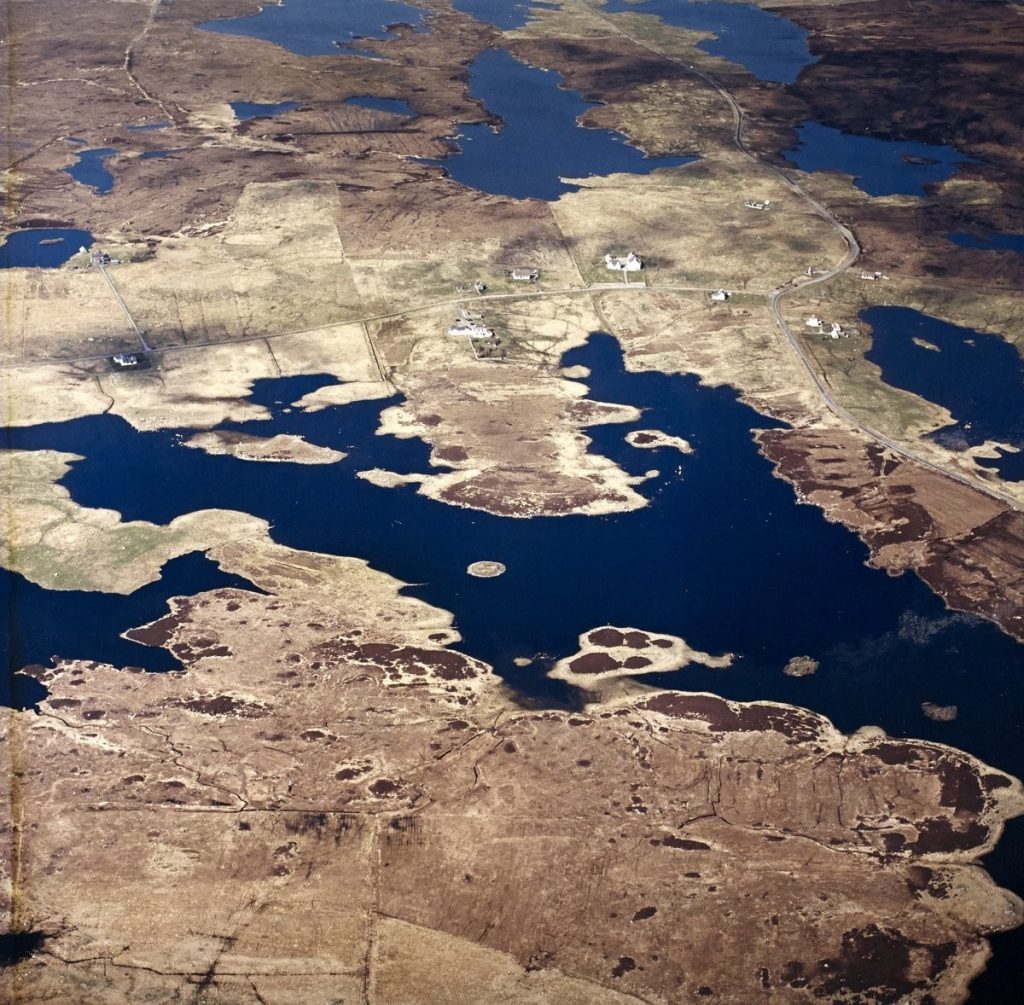
The lack of evidence is also likely a consequence of changing settlement patterns during this period. Current evidence, drawn primarily from research in Bharbhas, Lewis (MacLeod 2018) and across South Uist (Raven 2005, Parker Pearson 2012), suggest a shift away from the machair during the early medieval period into the so-called blacklands and island interior – environments far less conducive to site preservation. Substantial restructuring of the settled landscape may help explain the relative invisibility of wider medieval settlements and activities. However, the apparent shift away from the machair, a landscape and environment seemingly favoured by prehistoric communities from the Bronze Age onwards, also highlights further gaps in our understanding. For example, motivations for these changes still remain poorly understood at a local level. Moreover, whether this apparent pattern of settlement change was the case for all areas of the Outer Hebrides, or a more local response to these pressures.
Historic records highlight periods of environmental change, deteriorating climate and increased instability of machair environments during the early part of the medieval period. This narrative is also supported by evidence from sites such as Coileagan an Udail as well as wider landscape and coastal surveys (the Udal, Crawford 1977). However, further archaeological research is clearly needed for a more nuanced understanding of the impacts of environmental changes on medieval settlements and communities. Relatedly, there is huge scope for archaeological research to enrich our understanding of how external social, economic and political changes, well-rehearsed in historical narratives, impacted the everyday lives of Outer Hebridean populations throughout the medieval period. This includes the impact of the emerging Scottish Kingdom and the Lordship of the Isles, as well as other external factors such as disease epidemics and emigration, poorly understood in a Hebridean context. With regards to geographical coverage of archaeological investigations, well-researched medieval sites and landscapes are restricted to South Uist, pockets within North Uist, and areas of the north-west of Lewis. As with other periods, a west coast machair focus is also apparent. However, this is especially significant for our understanding of the medieval period, where settlements appear to be shifting away from these environments. The potential for further survey and excavation beyond the machair zone to elucidate knowledge of medieval landscapes was first highlighted by the SEARCH project’s work into Loch Aoineart (Loch Eynort) and Loch Sgiopoirt (Loch Skipport, Parker Pearson 2012). Although lacking chronological refinement, the results of local community survey projects further demonstrate the potential for incorporating comparatively under-explored moorland environments into our understanding of medieval landscape usage (see Uist Community Archaeology Group outputs). Similarly, commercial archaeological work in advance of wind turbine developments, often constructed in less accessible and by extension less intensely researched places, contribute to a growing dataset which potentially includes significant medieval material. Again, synthesis and wider, contextualised interpretation is needed to make the most of this.
The approach taken with the Dùn Èistean Project (Barrowman 2015a, Stiùbhart 2015), as well as the research undertaken as as part of the SEARCH project (Symonds 1999a, 1999b, 2000, Symonds 2011, Raven 2012) across South Uist, are excellent examples of the value of inter-disciplinary and community integrated research approaches for medieval topics. Both pieces of work were completed in the early 2000s, since which time there has been little new medieval archaeological research of a comparable scale or focus. The research gaps and questions identified in the National ScARF lack details specific to this region. Nevertheless, there has been little new or significant research since 2012 and therefore most of the general gaps identified in this document still remain poorly addressed.
National ScARF themes and questions for this period focus largely on that of identity, primarily through the lens of modern political identities and state formation– Scottish versus Norwegian, Gaeldom, and the Lordship of the Isles. These research concerns echo those prevalent in medieval history, which is largely concerned with fluctuating political affiliations and power structures, played out via complex inter-dynastic clan relationships and the vying for regional control, power and influence across the Highlands and Islands. The Outer Hebrides, like much of Scotland’s Highlands and Islands, are areas where dominant narratives for the medieval period are highly contested and where archaeology clearly has an important role to play in ongoing debates. The contrast between established historical perspectives and the types of knowledge that can potentially emerge from more focused archaeological research presents exciting opportunities to explore and build alternative narratives for this period that focus more on the everyday lives of medieval islanders.
You can download the datasheet for more information on the medieval sites and c14 dates from the Outer Hebrides.