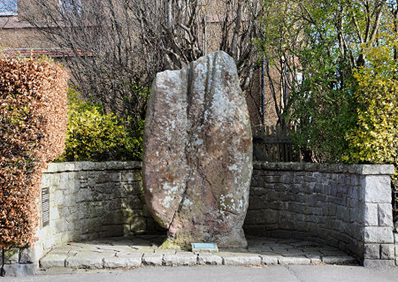
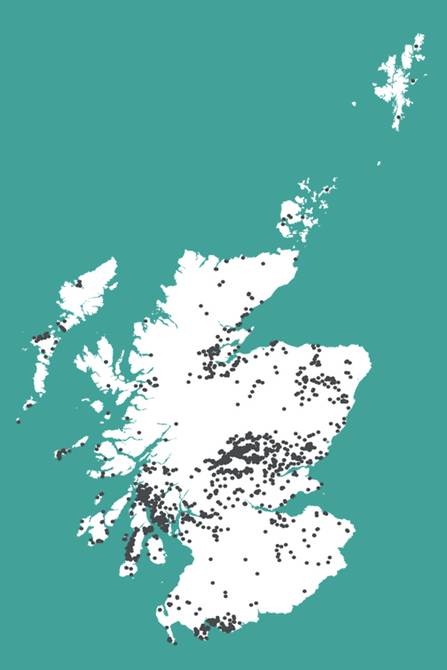
Scotland’s Rock Art Project recorded fairly numerous examples of complex Atlantic rock art, as well as simple cup-marked stones, in the SESARF area. The overall density of sites is lower than in some other parts of Scotland but it is likely that lots of rock art in the area could have been destroyed through urban and infrastructure development, sandstone quarrying and intensive farming. For example the Witches Stone near Ratho was blown up by the farmer in the early 20th Century. This leaves a relatively impoverished resource. Chance finds like the Whitelaw Hill panel in East Lothian give a glimpse of what has been lost. This however was not found in it’s original context.
There is surprisingly little rock art recovered in the Scottish Borders even though this area is less developed that Edinburgh and the Lothians.
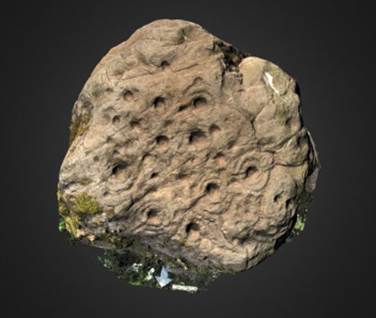
The sites range from outcrops and boulders – usually on elevated ground – such as Tormain Hill in Edinburgh, to lower level sites.
Quite a number of rock art panels from this area are now in the care of the National Museum of Scotland having been saved from destruction in the 19th and early 20th centuries. This includes casts from unusual carvings on Traprain Law.
However, the dating of complex Atlantic rock art, and of simple cup-marks, is problematic as virtually no direct dating evidence for its creation exists. A Late Neolithic date for at least some complex Atlantic rock art has been inferred from the fact that slabs with these designs have, elsewhere in Scotland, been re-used during the Early Bronze Age to create capstones, or other stones, in cists. Just outside of Edinburgh at Craigie Hill there is the reuse of rock art panels as cover stone in an Early Bronze Age cist.
The creation of cup-marks appears to be a multi-period phenomenon, with one example of a cup-marked slab from Dalladies non-megalithic long cairn in Aberdeenshire seemingly dating as far back as the Early Neolithic. Others, such as the cup-marks on recumbent stone circles, could date to the late Chalcolithic or Early Bronze Age, during the late third millennium BC (Bradley 2005) although the ScRAP project did not confirm an cup-marked standing stones in the south east of Scotland. Caiy Stane, located in a housing estate in Edinburgh, has cup mark originally identified as rock are but now thought to be natural (Barnett pers comm).