Iron Age (c 800 BC – AD 400)
A preoccupation with brochs, and other forms of monumental domestic architecture, arguably persists in all narratives for the Atlantic Scottish Iron Age. Antiquarians and early 20th century researchers, attracted by the monumentality of these sites, investigated numerous brochs across the Outer Hebrides and in doing so established a strong baseline for future researchers (Armit 1992). Sites from the Outer Hebrides became central to debates in the late 90s around the classification and wider interpretation of monumental Atlantic Iron Age architecture, specifically brochs and their related forms (Parker Pearson et al 1996, Armit 1997a, Gilmour and Cook 1998, Parker Pearson et al 1999b), as well as discussions on the use of artificial islets for monumental structures (Harding and Dixon 2000, Harding and Gilmour 2000, Harding 2002, Rennell 2010, Lenfert 2012).
However, despite the ongoing narrative focus elsewhere, comparatively few brochs across the Outer Hebrides have been excavated in modern times. Dùn Mhùlan (Dun Vulan) in South Uist (Parker Pearson and Sharples 1999), and the two broch-type sites on the Bhaltos peninsula in Lewis, Dùn Bharabhat (Harding and Dixon 2000) and Loch na Bheirigh (Loch na Berie) (Harding and Gilmour 2000), are the only modern excavations of these site types.
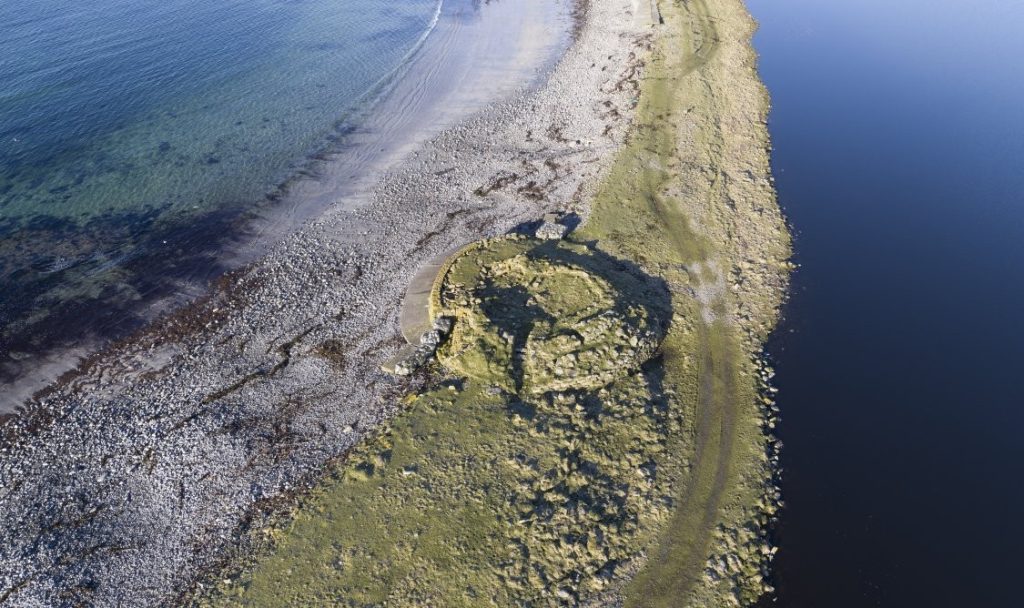
Although brochs and broch-type sites have attracted substantial researcher attention there remain some pressing knowledge gaps. Fundamental questions on the chronology of Iron Age domestic sites across the Outer Hebrides, for example, remain unanswered. It is remarkable, given the attention these structures have received historically, that we still lack radiocarbon dates associated with the initial construction and earliest occupation of these iconic buildings within an Outer Hebridean context (although see Armit 1990, Harding 2002, Gilmour 2005). The problems with radiocarbon dating and calibration for this period are well known (Armit, 1991, Hamilton et al 2015). Nevertheless, it is clear that a targeted programme of dating would contribute substantially to our understanding of the Hebridean Iron Age as well as enabling more nuanced exploration of the relationship between Hebridean Iron Age societies and their contemporaries across the Highlands and the Northern Isles.
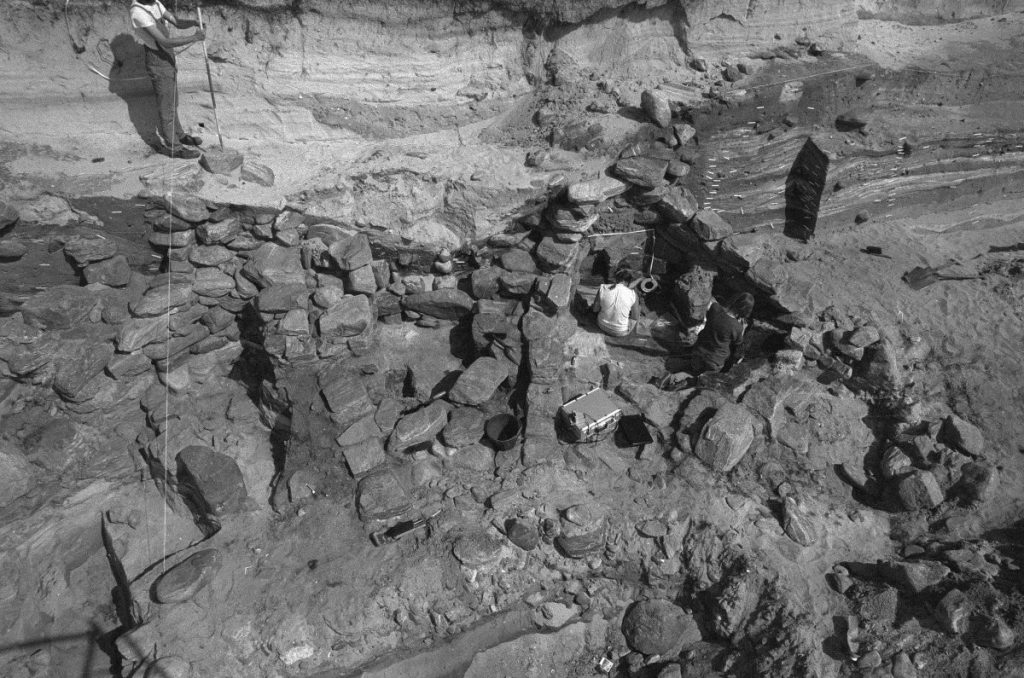
Wheelhouses, their construction and occupation are by comparison better understood. More than 15 Iron Age wheelhouse sites have been excavated across the Outer Hebrides. The vast majority are located across the Southern Isles – a reflection of key research projects across Coileagan an Udail (the Udal peninsula) in the 1970s (Crawford 1977), across the Bhaltos Peninsula in Lewis (Armit 2006), and across South Uist and Barra as part of the SEARCH project (Parker Pearson and Zvelebil 2014, Sharples 2012). Other wheelhouse excavations were instigated by infrastructure developments across Uist associated with Ministry of Defence activity within the islands (Fairhurst 1971, Young and Richardson 1962, Campbell 1992, Brown forthcoming).
Wheelhouses across the Outer Hebrides tend to be semi-subterranean machair sites, and their frequent exposure through coastal and wind erosion processes, lends visibility and an urgency to their investigation. Erosion has prompted the modern excavation of several wheelhouse sites across the archipelago including at least two individual buildings at Baile Sear, North Uist (Barber 2003, Dawson forthcoming), Cnip in Lewis (Armit 2006), and Rubha Hornais (Hornish Point) in South Uist (Barber 2003). It is likely that wheelhouses and other Iron Age occupation debris, such as the substantial midden sites evidenced at places like Baile Sear, will continue to be revealed in erosion and development contexts. How researchers and managers of the historic environment deal with this vulnerable but sizeable resource into the future remains unclear.
Material at Iron Age sites tends to demonstrate high levels of preservation and consequently there are substantial and well-preserved assemblages of Iron Age material to draw on from across this region. Although historically there has been mixed reporting and publication of Iron Age artefact assemblages (Sharples 2016, 634), and a few still unpublished sites (but see Dawson, Sharples and Brown forthcoming) alongside archival and museum resources there is huge scope for the collation, synthesis and analysis of the full suite of Iron Age material from the Outer Hebrides to contribute towards an ever more nuanced picture of Iron Age lifestyles and communities. The quality of faunal data from these excavations has led to a detailed understanding of Iron Age diet and subsistence strategies (Campbell 2000, Craig et al 2000, Mulville et al 2003, Craig et al 2005, Mulville et al 2009, Cramp et al 2015).
Decorated pottery is notably abundant on Iron Age sites across the Outer Hebrides and includes incised, applied, and impressed designs, simple cordons and finger-channelled decoration. Existing research on Iron Age pottery has focused largely on chronological development, the suggestion being that elaborate decoration declines into the later Iron Age (Lane 1990, Johnson 2005). In addition to the dating potential of Iron Age pottery, there is scope for further exploring the production and use of ceramics, including clay sourcing, firing methods and kiln construction, as well as the social, economic and ritual significance of Iron Age pottery (Campbell 2000). Comparatively neglected topics, however, include metal working and other craft industries and remains associated with these practices.
As with other areas, Iron Age funerary evidence is poorly understood across the Outer Hebrides. Current evidence, based on a small number of examples, suggests that formal burials for this period are defined largely by their diversity in style and practice. Although human remains are frequently found within domestic Iron Age contexts (see Armit and Shapland 2015) formal burials appear to be distinct from Iron Age settlement locales. Perhaps unsurprisingly then, current understanding for Iron Age funerary practices has resulted largely from opportunistic discoveries via developer-funded investigations or erosion finds rather than dedicated research projects (Cook 2018).
Souterrains are another Iron Age site type that are poorly integrated into wider narratives for this period and region. In the Outer Hebrides very few souterrains have been formally investigated and, similar to other areas, our understanding of their date, function and meaning is limited and up for debate. Like Iron Age funerary sites, souterrains tend to be investigated opportunistically (Moore 2008, Watt 2019, AOC 2025). A better grasp of the wider suite of Iron Age site types and material has the potential to truly move Iron Age debates beyond the brochs.
You can download the datasheet for more information on the Iron Age sites and c14 dates from the Outer Hebrides.
Outer Hebrides Iron Age Research Questions
Did the Outer Hebrides’ later Iron Age communities identify with a wider ‘Pictish’ identity?
More information on this question
URI:
https://researchframeworks.org//researchframework/v1/question/question-11207973-efc6-4501-822b-da1503be601bLocal framework numbering:
SIRFA OH67More information:
Did communities across the Outer Hebrides regard themselves as part of a wider ‘Pictish’ identity during the Late Iron Age? Relatedly, why so few Pictish stones known from the Outer Hebrides? Does this suggest that more localised and regional identities took priority in the Outer Hebrides? Or was ‘Pictish’ identity across the Outer Hebrides expressed in other ways? Did all Later Iron Age communities across the Outer Hebrides identify in the same way? How did local and regional identities and wider political allegiances change throughout the Hebridean later Iron Age? These questions would benefit from new theoretical frameworks and more holistic approaches. Reanalysis and synthesis of existing datasets will be key, including reanalysis of museums and archive collections. However, continued recording of new material from both developer-funded and research targeted survey and excavation, has the potential to expand knowledge around these broad research gaps.Status:
ActiveDate accepted:
26/08/2026Date of next review:
26/08/2031Was there a local iron industry in the Hebrides during the Iron Age?
More information on this question
URI:
https://researchframeworks.org//researchframework/v1/question/question-7c429950-fe4a-4739-a578-88558c0b1c3dLocal framework numbering:
SIRFA OH62More information:
The social dynamics of iron production in the Outer Hebrides is yet to be explored and understood. Do the iron artefacts found here originate from elsewhere, brought through trade networks? Or is there an indigenous iron industry? How should researchers approach these questions and what methods can be utilised to best address these gaps in knowledge? It is likely that new techniques within the archaeological sciences will contribute meaningfully to these questions. For example, the use of portable X-ray fluorescence (pXRF) during targeted fieldwork has potential to identify metalwork in the absence of more direct evidence. In a developer-funded context, the significance of Iron Age period metalworking and metal artefacts needs to be emphasised, with funds made available for post-excavation work as appropriate.Status:
ActiveDate accepted:
26/08/2026Date of next review:
26/08/2031What characterised pre-Christian beliefs and belief systems for Hebridean Iron Age communities?
More information on this question
URI:
https://researchframeworks.org//researchframework/v1/question/question-9d5489bf-f7e0-4ce3-8967-b9495c8ee384Local framework numbering:
SIRFA OH66More information:
Little is known of pre-Christian belief systems across the Iron Age. In the absence of substantial burial evidence and designated ‘ritual’ sites for this period, what evidence should archaeologists be looking for in order to better address this research gap? What methodologies should be used? We know that some elements of people’s belief systems were enacted in the domestic sphere during the Iron Age. Reanalysis of existing sites through new interpretive lenses may therefore provide some answers to these questions. Synthesis and reanalysis of existing archives and assemblages will be key. The Outer Hebrides have several large-scale Iron Age excavation projects to draw on here, as well as extensive museum collections. New methods and theorical approaches are also welcome developments. The continued recording and dating of Shetland’s Iron Ages sites and the recovery of securely dated Iron Age material, in both a targeted research and developer-funded context, will be instrumental for expanding knowledge around these broad research gaps.Status:
ActiveDate accepted:
26/08/2026Date of next review:
26/08/2031What did Early and Middle Iron Age funerary practices look like across the Outer Hebrides and where are the burial grounds?
More information on this question
URI:
https://researchframeworks.org//researchframework/v1/question/question-873be70c-bc24-4454-ae1f-47111311a175Local framework numbering:
SIRFA OH58More information:
Although there has been some recent progress on this topic (Armit and Tucker 2010, Armit and Shapland 2015, Cook et al 2018). Early to Middle Iron Age funerary practices of the Outer Hebrides have yet to be fully understood. This is undoubtedly due to the apparent scarcity of Iron Age burial grounds – are researchers looking in the wrong places? Did Iron Age populations across the Outer Hebrides take part in practices that left little to no remains to bury? Eg excarnation, water burial, etc. is there scope for exploring Iron Age reuse of Neolithic tombs within this context? In a developer funded context it is important to prioritise the excavation and post-excavation of Iron Age funerary remains.Status:
ActiveDate accepted:
26/08/2026Date of next review:
26/08/2031What did Iron Age trade networks look like from the Hebrides?
More information on this question
URI:
https://researchframeworks.org//researchframework/v1/question/question-c0b2710d-33f3-4f07-a77a-33c9c8506e3eLocal framework numbering:
SIRFA OH63More information:
Is it possible to find evidence for regional trade networks within and outwith the Outer Hebrides? If so, what was being traded and what kind of regional, inter-regional and long-distance networks are implied? If there is little to no direct evidence for traded items outwith the immediately locality, then why is that? Was this a society focused largely on local self-reliance? This is a research area that is likely reliant on the collation of data across the discipline, and it is recommended that primary efforts focus on synthesising this from grey, published and unpublished literature along with survey data.Status:
ActiveDate accepted:
26/08/2026Date of next review:
26/08/2031What do similarities in monumental architecture across the Northern and Western Isles tell us about Iron Age society?
More information on this question
URI:
https://researchframeworks.org//researchframework/v1/question/question-d677fd40-88fd-492b-8356-48ecd73b5372Local framework numbering:
SIRFA OH64More information:
Monumental architecture across the three island archipelagos is strikingly similar in a number of ways. How did this evolve? Do the apparent similarities in monumental architecture between the northern and western isles indicate cultural connectivity or convergent evolution? What are the implications for our understanding of the Hebridean Iron Age? There are many unanswered questions here, unlikely to be addressed by a single research project. Synthesis of existing data, as well as new data, probably from targeted survey and excavation, will undoubtably expand knowledge and understanding. In a developer-funded context, the research significance of dating souterrains and other post-excavation work needs to be emphasised, in addition to the accurate and thorough recording of structures and material culture.Status:
ActiveDate accepted:
26/08/2026Date of next review:
26/08/2031What is the earliest date associated with brochs or complex roundhouses in the Outer Hebrides?
More information on this question
URI:
https://researchframeworks.org//researchframework/v1/question/question-968e20df-c11b-4f50-8d78-c469623f959dLocal framework numbering:
SIRFA OH60More information:
The chronology of brochs and complex roundhouses is still only vaguely understood in the Outer Hebrides and requires both clarification and more detail. As an initial step, reanalysis of previous large-scale excavations of these sites, particularly those with deep stratigraphy should be undertaken. The use of Bayesian analysis to model these chronologies is recommended. However, the existing broch and complex roundhouse excavations have focused on upper levels and there is currently a lack of secure stratigraphy for initial occupation phases. Therefore, new excavations will be required if researchers are to address this question fully.Status:
ActiveDate accepted:
26/08/2026Date of next review:
26/08/2031What relationship did communities in the Hebrides have with Pictland and ‘Pictishness’?
More information on this question
URI:
https://researchframeworks.org//researchframework/v1/question/question-0cbc3d6d-5499-49e7-b96b-69fcab39b4f6Local framework numbering:
SIRFA OH65More information:
Pictish stones have been found amongst the Outer Hebrides, however, these are exceptionally few. Is this due to recycling of material? Or should this be taken as a sign of the nature of the regions relationship with Pictland? It is not clear what the island cultural identity was during the height of Pictish power; were the Outer Hebrides ‘Pictish’? Were they under a Pictish polity/governance? Did ‘Pictishness’ manifest differently here? Further, if the Outer Hebrides could not be called ‘Pictish’, then why? How should the culture be classified? It is recommended that this area of research is approached with a multi-disciplinary and holistic view, primarily focusing on the presence of ‘classical’ Pictish architecture and material culture. It is likely that this work will require survey work and long-term excavation. These questions would benefit from new theoretical and more holistic approaches. Reanalysis and synthesis of existing datasets will be key, including reanalysis of museums and archive collections. However, continued recording of new material from both developer-funded and research targeted survey and excavation, has the potential to expand knowledge around these broad research gaps.Status:
ActiveDate accepted:
26/08/2026Date of next review:
26/08/2031What was the relationship between Iron Age crannog and broch builders?
More information on this question
URI:
https://researchframeworks.org//researchframework/v1/question/question-c6c77b0c-e2e5-4dc1-8b76-28d2e1a0f403Local framework numbering:
SIRFA OH61More information:
Crannogs and brochs across much of Scotland have been dated to roughly the same period of time. Whilst several Neolithic examples have been found in the Outer Hebrides, the majority of artificial and semi-artificial islets here are still considered Iron Age. With this in mind, what was the relationship between brochs and other complex monumental architecture and the use of islets and the construction of crannogs? Some crannogs appear to be used for a specialist activity. For example, a large number of small crucibles were recovered at Dun Bharabhat (Harding and Dixon 2000). How would researchers go about exploring this relationship? This is a broad and wide-ranging question and is unlikely to be answered with a single research project; it is encouraged that a series of projects (or PhDs) are designed to tackle it. It is likely that targeted survey work and GIS analysis, along with targeted excavations will all play a role. The systematic dating of both brochs and crannog sites is recommended in order to further explore this topic, as this will allow greater insight into the overlap in construction and use of these site types.Status:
ActiveDate accepted:
26/08/2026Date of next review:
26/08/2031What was the significance and function of souterrains across the Outer Hebrides? How do we integrate them into our understanding of Iron Age structures?
More information on this question
URI:
https://researchframeworks.org//researchframework/v1/question/question-45cc44f8-30cf-43bb-bc1d-fce704cbb3f4Local framework numbering:
SIRFA OH59More information:
Souterrains are a widely recognised feature of the Scottish and Irish Iron Age, however, their use is still up for debate. In the Hebrides few of these sites have been formally investigated. Their relationship to other Iron Age structures (such as brochs) is not yet fully understood either, likely hindering our understanding of their functionality. Further exploration of these structures and integration of them into our understanding of other Iron Age architecture is required. There are many unanswered questions here, unlikely to be addressed by a single research project. Synthesis of existing data, as well as new data, probably from targeted survey and excavation, will undoubtably expand knowledge and understanding. In a developer-funded context, the research significance of dating souterrains and other post-excavation work needs to be emphasised, in addition to the accurate and thorough recording of structures and material culture. The forthcoming post-excavation results from the rescue excavation at Cnoc Aird Souterrain, in Ness, Lewis, will likely add important information to this topic.Status:
ActiveDate accepted:
26/08/2026Date of next review:
26/08/2031Why is monumental Iron Age architecture across the Outer Hebrides not associated with broch villages as evidenced in the Northern Isles?
More information on this question
URI:
https://researchframeworks.org//researchframework/v1/question/question-78d5bb15-f2fd-4a26-92eb-6d8c96405e60Local framework numbering:
SIRFA OH57More information:
The Northern Isles are famed for their monumental architecture, particularly that dating to the Iron Age. In particular, broch villages are a significant part of Northern Isle’s Iron Age archaeology; comparable examples of these, however, have yet to be found in the Hebrides. This lack of evidence for broch villages in the Outer Hebrides requires further exploration, as it likely indicates a significant social difference between the West and the North of Scotland. This is a broad and wide-ranging question and is unlikely to be answered with a single research project; it is encouraged that a series of projects (or PhDs) are designed to tackle it. It is likely that reanalysis of existing records will be key to unlocking understanding. In addition, new, targeted excavation to enhance knowledge and data. In a developer-funded context, the research significance of dating and other post-excavation work associated with brochs and other monumental Iron Age sites needs to be emphasised, in addition to the accurate and thorough recording of structures and material culture.Status:
ActiveDate accepted:
26/08/2026Date of next review:
26/08/2031