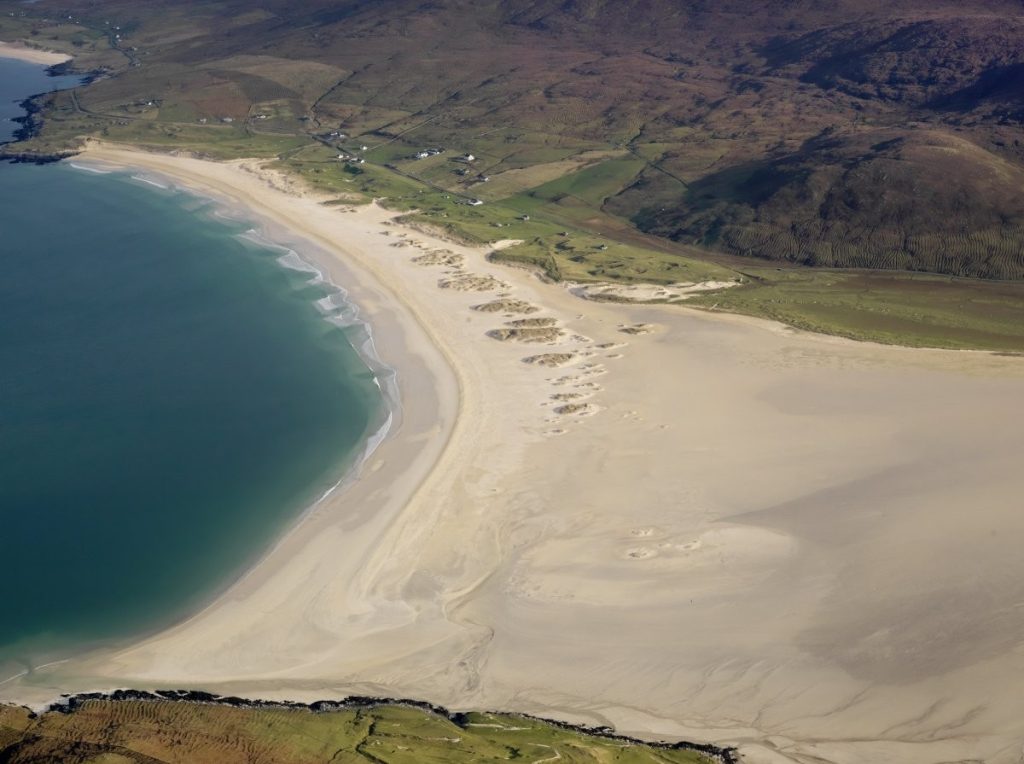
The excellent preservation of faunal assemblages from sites across the Outer Hebrides, specifically machair sites, has resulted in vast datasets for the analysis of prehistoric and early historic diet and subsistence strategies across most periods. The outputs of the SEARCH project excavations are particularly important here, as is work on the material from Taobh Tuath (Northton), Harris. Significantly, material from the Outer Hebrides has contributed substantially to wider debates about prehistoric animal and plant exploitation across northwest Europe (Mulville et al 2003, Mulville et al 2005, Mulville 2010, Mulville et al 2009, Bishop et al 2021, Hammann et al 2022). The impressive faunal datasets from across the Outer Hebrides have revealed the potential for addressing ever more detailed and ambitious questions on these wide-ranging topics. There is still much more to understand about changing marine subsistence practices over time, as well as the balance between fishing and hunting and the types of species exploited. There is also more to discover about when large mammals, especially red deer, first arrived on the islands, as well as the origin of early domesticates (see SIRFA Case Study: Craftwork at Deer).
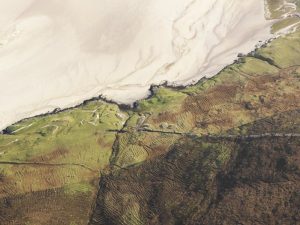
Late industrialisation across the region, further reinforced by the Crofting Act and a reliance on small-scale subsistence farming into the modern period, has resulted in the exceptional preservation of past agricultural and pastoral landscapes across the Outer Hebrides. These are particularly notable across the islands’ moorland and peatland interior, where the visible remains of dykes, sheilings, enclosures and lazy beds, for example, provide invaluable insight into past land management and transhumance practices. There is a huge amount of data here, most assumed to be post-medieval in date, but there is a lack of chronological refinement, synthesis and wider interpretation that needs addressing. For some periods and regions across the Outer Hebrides, a reasonably detailed understanding of subsistence practices has been achieved. The results of the SEARCH project have produced detailed information on crops and agricultural strategies from a range of prehistoric and historic sites across the archipelago’s Southern Isles.
However, for other regions and periods the evidence is patchy and the narrative in need of refinement. Taking a longer term and wider geographic perspective, key questions relate to how subsistence practices changed over time and the impact of these on the wider environment. Gaelic is a key resource for archaeologists interested in these topics, embedded with vocabulary that draws on traditional economic and subsistence practices that can potentially complement archaeological evidence. The importance of Gaelic for understanding historic land use and management practices is generally known and accepted (Grant 2019). However, there is also potential for these resources to inform on earlier periods. Local knowledge on fishing, held by older generations of native Gaelic speakers, is potentially insightful in similar ways. Amongst traditional fishing communities, for example, particular townships are known to retain rights to specific fishing grounds. This kind of knowledge potentially provides routes to understanding and interpreting a range of archaeological material.
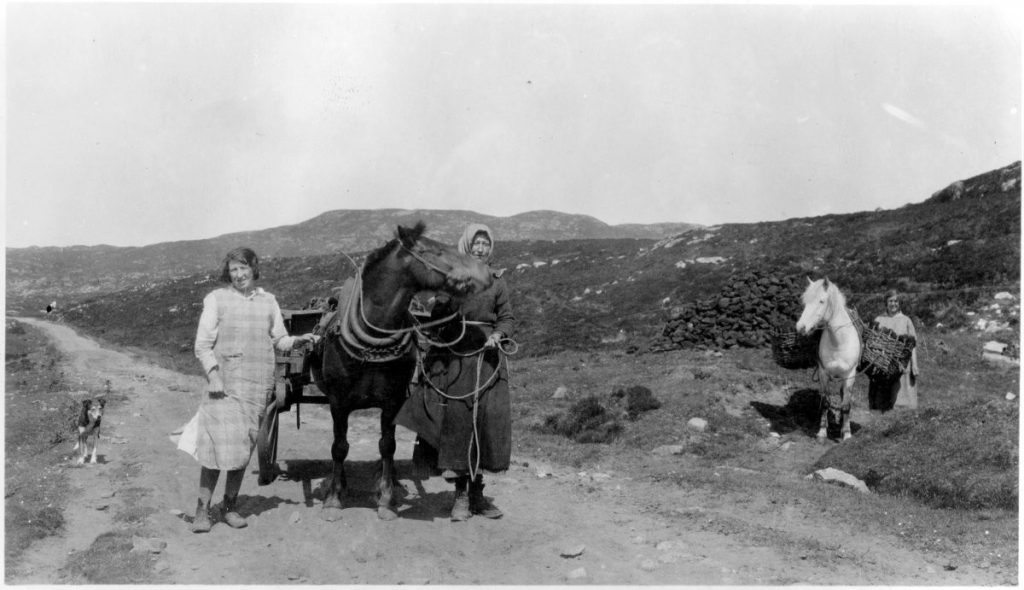
The practice and significance of peat cutting is another related research area. The cutting of peat and subsequent use as fuel, still widespread across the Outer Hebrides, extends back into prehistory with lenses of peat ash a common feature of prehistoric middens. More direct evidence for peat cutting techniques have been identified in Barra where the remnants of a Bronze Age peat stack suggest similar methods of extraction and stacking to modern hand methods (Branigan et al 2002). Engaging with traditional peat cutting methods provides useful ethnographic resources that may help us understand practices in the deeper past.
Recent work on Neolithic pottery has substantially enhanced understanding in terms of key technologies, crafts and industries, as well as its articulation with wider subsistence strategies (Copper and Armit 2018, Hammann et al 2022). For other periods, however, despite relatively substantial datasets, there is still a lack of interpretation and wider synthesis of this material (Lane 1990). Chronological sequences of pottery fabric, form and composition require further study, which will undoubtedly enhance our understanding of the changing economies of the Outer Hebrides, as well as addressing topics of wider cultural connections over time. Similarly, a better grasp of metalworking industries and the social and economic dynamics involved in metal production and acquisition require further research and attention. For example, the extent to which bronze and iron metalworking industries were active across the islands throughout later prehistory is still unclear and likewise, what proportion of finished material was imported from elsewhere. Linking to this, the extent to which traded and exchanged materials, of all types, were key to prehistoric and historic island economies requires further attention. The integration of Gaelic resources has potential relevance to our understanding of wider commerce and trade throughout the islands’ past. As Irvine argues, the relations, forces, means and objects of production are often denoted linguistically (1989, 255). This is of particular relevance to Gaelic language and culture which has evolved through periods of distinct economic transformation across the islands– notably from farming to crofting and fishing, and more recently to visitor economies.
For most periods, there are still key gaps relating to smaller-scale domestic industries and crafts, such as wood carving, wool and flax production, knitting, weaving, and spinning. These were likely crucial aspects of the wider economy that contributed meaningfully to the material and social existence of past societies and require further research focus. Research by Thacker (2013a, 2013b, 2015) on lime and lime production in the medieval and post-medieval periods demonstrates the value of focused research not only for furthering our knowledge of manufacturing practices, but our understanding of the built environment and its architectural chronology. Gaelic resources, including folklore, song, superstitions and sayings, are embedded with ethnographic insights into a wide range of traditional crafts such as spinning, knitting and weaving and provide potential routes to understanding and interpreting archaeological materials in this context.
Our understanding of bone and antler working is relatively well developed for the Outer Hebrides, specifically for the Norse period (Sharples and Dennis 2016, Mulville 2020). As with much of the subsistence and dietary research, this is partly due to the availability of well-preserved faunal material. It is also an outcome of the work of specific researchers who have driven the exploration of new techniques and approaches to the wider analysis of faunal remains via these exceptionally-well preserved datasets. Beyond bone and antler working, there is a need to broaden our engagement with domestic crafts and small-scale, skilled resource exploitation within a range of archaeological contexts. That smaller-scale, domestic industries and crafts often go unrecognised in broader narratives for historic and prehistoric society is acknowledged in other regional research frameworks and the National ScARF. To fully address these gaps requires a shift in perspective and a readjustment to research value. Alongside this, emphasising the importance of craft material and craft sites of all types, all material and all periods is recommended.
Economy and Subsistence Research Questions
How big was the Neolithic population across the Hebrides?
This is an aspirational question. Currently, there is a lack of information, data and sites to address this question in earnest. Nevertheless, it is recommended that future researchers consider ways of gauging the likely size of the Outer Hebrides Neolithic populations. Furthermore, for investigating how this might have changed overtime? How did changes to the size Neolithic populations potentially impact on the local environment and ecology? It is unclear what metrics and methods would be best used to address these questions. Genetic modelling has demonstrated potential in other areas, but is likely to be of limited application in the Hebrides where there are very few human remains from this period. Analysis of radiocarbon dates has been used to model Neolithic populations elsewhere in Europe (Shennan and Edinborough 2007). Exploring existing, new and developing methodologies is therefore encouraged as well as expanding datasets through various fieldwork methods. A better understanding of settlement numbers and distribution would also undoubtably aid understanding here.
Status:
Active
Date accepted:
26/08/2026
Date of next review:
26/08/2031
Was there a local iron industry in the Hebrides during the Iron Age?
The social dynamics of iron production in the Outer Hebrides is yet to be explored and understood. Do the iron artefacts found here originate from elsewhere, brought through trade networks? Or is there an indigenous iron industry? How should researchers approach these questions and what methods can be utilised to best address these gaps in knowledge? It is likely that new techniques within the archaeological sciences will contribute meaningfully to these questions. For example, the use of portable X-ray fluorescence (pXRF) during targeted fieldwork has potential to identify metalwork in the absence of more direct evidence. In a developer-funded context, the significance of Iron Age period metalworking and metal artefacts needs to be emphasised, with funds made available for post-excavation work as appropriate.
Status:
Active
Date accepted:
26/08/2026
Date of next review:
26/08/2031
What did Bronze Age agricultural practices look like across the Outer Hebrides?
There is still more to understand about Bronze Age agricultural practices of this time looked like in terms of technology and animal husbandry. Closely tied to this is the matter of diet. Further, what potential impact did social changes have on these aspects of life? It is likely that this will be best answered through strategic excavation strategies as well as continued analysis of existing assemblages, specifically coarse stone tools. Within a developer-funded context the significance and value of retaining and analysing faunal remains and environmental evidence needs emphasis.
Status:
Active
Date accepted:
26/08/2026
Date of next review:
26/08/2031
What did Iron Age trade networks look like from the Hebrides?
Is it possible to find evidence for regional trade networks within and outwith the Outer Hebrides? If so, what was being traded and what kind of regional, inter-regional and long-distance networks are implied? If there is little to no direct evidence for traded items outwith the immediately locality, then why is that? Was this a society focused largely on local self-reliance? This is a research area that is likely reliant on the collation of data across the discipline, and it is recommended that primary efforts focus on synthesising this from grey, published and unpublished literature along with survey data.
Status:
Active
Date accepted:
26/08/2026
Date of next review:
26/08/2031
What did pre-Neolithic resource usage look like across the Outer Hebrides?
What resources were available during this early stage of the Outer Hebrides occupation? What would have been considered the key resources? Is it possible to identify them and their usage in the archaeological record? Further, what factors would have impacted on their usage? Were these seasonal? Were there social restrictions/requirements? How should these be explored? It is expected that addressing these questions will rely on palaeoenvironmental research and data, as well as osteoarchaeological or zooarchaeological research if any skeletal remains are recovered. Work at Northton has progressed this topic substantially (SIRFA Case Study 1; Bishop et al 2021). Reassessment of existing datasets, reports, archives and collections, alongside new programmes of material analysis are likely ways forward. In a developer-funded context, the research significance of faunal and environmental data needs to be emphasised.
Status:
Active
Date accepted:
26/08/2026
Date of next review:
26/08/2031
What did the Hebridean palaeoeconomy look like during the Neolithic?
The Minch is often referred to as a ‘sea highway’, which would make the Outer Hebrides perfectly located for high levels of connectivity. Trade networks were undoubtedly an important aspect of Neolithic life; to what extent were the Hebrides involved in trade with the Northern Isles, the Scottish mainland, and further afield? Additionally, the internal economy of the Outer Hebrides requires investigation. This is a broad and wide-ranging question and is not likely to be answered with a single research project; it is encouraged that a series of projects (or PhDs) are designed to tackle it.
Status:
Active
Date accepted:
26/08/2026
Date of next review:
26/08/2031
What natural stone resources were utilised by pre-Neolithic populations across the Outer Hebrides?
Whilst it is understood that flint and quartz were widely used by early populations in Scotland, it is not entirely known whether other lithic resources were utilised in the same way. The origins of the flint and quartz used in the Outer Hebrides are not fully known; this is especially important with respect to flint resource exploitation and trade networks. Exploring the use and availability of these resources will provide a better understanding of social networks, mobility, and land use. It is likely that these questions will be addressed through analysis of materials and collections already held in institutions and museums, as well as materials emerging from new excavations. Interdisciplinary approaches will also be important, as well as archaeological survey.
Status:
Active
Date accepted:
26/08/2026
Date of next review:
26/08/2031
What was the chronological progression of Hebridean pottery with respect to form, fabric and design?
Despite recent research (Copper and Armit 2018) our understanding of Neolithic Hebridean pottery is lacking in comparison to pottery in other areas of Scotland. Chronological sequences, fabric and composition require further study. This will undoubtedly aid in our understanding of the Neolithic economy of the Outer Hebrides, as well as their interconnectivity with the rest of Scotland. Dedicated, well–funded research likely to be the most expedient way forward. In an excavation context, the importance of dating Neolithic sites and securing reliable chronologies for material culture is paramount. As is the identification and excavation of known Neolithic sites in order to expand the dataset. Within a developer-funded context, the significance of Neolithic materials and the value of post-excavation and dating programmes needs emphasising.
Status:
Active
Date accepted:
26/08/2026
Date of next review:
26/08/2031
What was the impact of the emergence of agriculture across the Outer Hebrides?
The arrival of agriculture was a landmark stage in the development of many cultures across the globe. However, the impacts of the arrival of farming are not necessarily examined beyond changes in diet and a shift to sedentary settlement. What were the impacts on the Hebridean environment? How did the arrival of crops and livestock impact on the flora and fauna? What was the extent of prehistoric cereal cultivation during this time? Further, what was the extent of usable land (for farming or otherwise)? What were the wider impacts of the arrival of agriculture on Hebridean material culture? For example, the tools, pottery, artistic outlets, etc. It is unlikely that these questions will be addressed via a single project. A series of well-funded projects, almost certainly interdisciplinary and multi-proxy in nature, are likely ways forward. It is likely that these questions will be addressed partly through collation, reassessment and reanalysis of existing grey, published, and unpublished literature, in addition to synthesis of the knowledge held within museum collections and environmental data. Research may also be reliant on more survey work and data, with a potential later focus on long-term excavation efforts. In a developer-funded context, the research significance of surveying, dating and other post-excavation work with the potential to inform on this period needs to be emphasised, as well as environmental data and post-excavation work.
Status:
Active
Date accepted:
26/08/2026
Date of next review:
26/08/2031
What was the relationship between users of Neolithic Grooved ware and early Beakers across the Hebrides?
The use and status of Grooved Ware and Beakers amongst Hebridean populations is not well understood. Furthermore, the relationship between these respective ceramic-users is still unclear; do these ceramic styles represent different and separate populations? Is it possible to determine their relationship and the nature of their interactions? What methodologies should be utilised to do this? It is unlikely that these questions will be addressed via a single project. A series of well-funded projects, almost certainly interdisciplinary and multi-proxy in nature, are likely ways forward. Exploring existing, new and developing methodologies is encouraged as well as methods for expanding datasets. Secure and refined dating and confident identification of Grooved Ware as well as Beakers will be important.
Status:
Active
Date accepted:
26/08/2026
Date of next review:
26/08/2031
What were the impacts of wider political & social change or upheaval on the Hebridean economy during the Medieval period?
The impact of wider political and social change and upheaval on the Outer Hebrides and their economy is still not fully understood. The removal of the Lords of the Isles from power, for example, created a power vacuum that led to two centuries of clan warfare and civil unrest. How did this impact the everyday economy and life of Hebrideans living through this period? How is this evidenced in the archaeological record? This question is open to any form of political or social change, and as such the methodologies are likely to be very wide ranging and vary in scope and focus. Interdisciplinary approaches are almost certainly the way forward here. These questions would benefit from new theoretical and more holistic approaches. Reanalysis and synthesis of existing datasets will be key, including reanalysis of museums and archive collections as will a more detailed understanding of Shetland’s medieval period more generally. In a developer-funded context, the significance of medieval remains to address questions about Hebridean responses to international conflict needs to be emphasised. Alongside this the importance of dating and post-excavation work.
The arrival of farming was a significant shift in Neolithic life across Britain, however, it is currently unknown where the Hebridean domesticates originated from. Where did they come from? Is there a difference between species? What does this mean for our understanding of Neolithic Hebridean connections? Further, is there evidence of multiple waves of domesticate importation? It is recommended that this research involves the use of archaeological sciences, such as stable isotope analysis and aDNA. Exploring existing, new and developing methodologies is encouraged as well as expanding datasets. Within a developer-funded context the value of faunal assemblages and the need to fund post-excavation work needs emphasis.
Status:
Active
Date accepted:
26/08/2026
Date of next review:
26/08/2031
How did approaches to marine resource exploitation change over time across the Outer Hebrides?
Exploitation of marine resources across the Hebrides evolved and changed over time, fluctuating from opportunistic and occasional procurement of marine resources to specialised practices and the emergence of dedicated marine-based industries. Taking a long-term perspective, what drove major changes in marine resource exploitation from early prehistory through to the modern period? When did major shifts in resource procurement and processing practices occur? It is assumed that technology, environmental changes and sustainability of resources were key factors, but to what degree? How did social and wider political factors influence resource exploitation practices and approaches? It is likely that these questions will be best addressed through analysis of materials and collections already held in institutions and museums, as well as materials emerging from new excavations. Survey and map-based research will also be crucial for developing understanding of historic and prehistoric marine-working landscapes, such as the location of shell, fish or seaweed processing sites, boat noosts, harbours and natural landing bays. Archaeological approaches to these questions are likely to be enhanced through interdisciplinary research drawing on place-name studies, oral histories, ethnography, palaeoenvironmental studies, marine sciences and experimental archaeological approaches.
Date accepted:
09/10/2026
Date of next review:
09/10/2026
How did Hebridean agricultural subsistence strategies change over time?
Taking a long-term perspective, how did strategies for agricultural subsistence change from early prehistory through to the historic and into the modern period across the Outer Hebrides? What crops were grown when? How was crop production organised across the landscape and over time? What were the proportions of different crops grown and did this change between islands and regions within the Outer Hebrides. What was the scale of subsistence farming, and how, when and why did the scale of these subsistence practices change? It is likely that changes to subsistence strategy were motivated by a combination of technological development, cultural shifts and the introduction or discovery of new resources, alongside environmental and population changes. But to what degree? For some periods and regions within the Hebrides, a reasonably detailed understanding of this topic already exists – for example the results of the SEARCH project have produced detailed information on crops and agricultural strategies from a range of prehistoric and historic sites across the archipelago’s Southern Isles. But for other regions and periods the evidence is patchy and the narrative in need of refinement. These questions might be further addressed through additional programmes of coring and pollen analysis, along with other environmental analyses.
Date accepted:
09/10/2026
Date of next review:
09/10/2026
How important were whales and how prevalent where whaling practices for past island communities?
Whilst no longer a significant aspect of Scottish island life, whales were an important source of oil, bone and meat, and thus potentially highly valuable to past island communities. Direct and indirect evidence of whales as an economic and dietary resource is associated with all periods of island settlement from the Mesolithic through to the post-medieval period. Commercial whaling had become important industries across the Hebrides, Shetland and Orkney by the post-medieval period, but how were communities acquiring whale resources prior to that? Were whale resources in prehistory and the early historic period mostly the result of opportunistic exploitation of beached animals? Or were people actively seeking and hunting whales? Given that almost every part of the whale was likely used, what kind of archaeological evidence would point to specific whaling practices over opportunities discoveries? When was dedicated whale hunting, as opposed to opportunistic beach collection, first practiced across Scotland’s islands? A particular challenge here is the difficultly in dating whale bone due to the Marine Reservoir Effect.
Date accepted:
09/10/2026
Date of next review:
09/10/2026
How reliant were Mesolithic populations across the Scottish islands on fishing and hunting of sea mammals?
There is still much more to understand about marine subsistence practices of Scotland’s Mesolithic communities. If sea mammals were part of early prehistoric diets across the islands, to what extent? Were sea mammals significant? Were they hunted seasonally? Are there any differences between the island groups? How did these strategies for marine resource exploitation change into the Neolithic?
Date accepted:
09/10/2026
Date of next review:
09/10/2026
What mineral resources exist or existed in the Outer Hebrides, and how have they been exploited over time?
To date, there has been little archaeological work to fully understand the mineral resources available to past populations across the Outer Hebrides. Further exploration of this topic would contribute to wider debates regarding resource exploitation and development of material culture. For example, is the lack of appropriate mineral resources the reasons there are relatively few prehistoric metal objects and limited metalworking evidence from across the Outer Hebrides? Additionally, locating natural clay deposits would further knowledge and understanding of Hebridean ware. If there is a lack of natural ore or clay deposits across the Outer Hebrides, where were these resources obtained from instead? These questions are likely to be addressed through a combination of archaeological survey work, mapping and inter-disciplinary work with geologists.
Date accepted:
09/10/2026
Date of next review:
09/10/2026
What more can imported materials and goods tell us about Scotland’s past island communities?
Archaeological evidence for imported materials or goods are generally viewed in terms of trade or exchange economies and outward communication or contact. What more can we glean about island communities in the past from imported items and how do we go about this? Why were certain goods prioritised over others for example? What does imported material suggest about the nature of the relationship between the exporter and importer communities? Are there new methods or theoretical approaches that can be developed to help us better understand the significance of imported materials? Given the potential to more easily identify imported materials within island contexts, compared with large mainland regions, are there specific island approaches and methods for addressing these questions? Relatedly, is there something specific about Scottish islands and the potential for imported materials in the archaeological record to inform about past islands communities?
Date accepted:
09/10/2026
Date of next review:
09/10/2026
What was the economic relationship between the different Hebridean islands and how has this changed through time?
When discussing the Hebrides, these islands are frequently framed in terms of their economic relationship to places outwith the archipelago. Simultaneously, the economic relationships within the archipelago and between the individual islands is often overlooked. In the past, did island communities within the Hebrides operate economically as a single region or did they rely on each other for economic sustainability? Were there periods when individual islands were relatively self-sufficient from the wider archipelago and its economic resources? Addressing these questions would contribute to wider debates about the social and political dynamics between the islands, and our understanding of changing inter-island relationships over time. Addressing this question is likely to require an assessment of material already held by museums and institutions, synthesis and comparative analysis of existing excavation reports and archives.
Date accepted:
09/10/2026
Date of next review:
09/10/2026
What was the extent of trading and exchange beyond the Hebrides and how did this change over time?
Taking a wide temporal perspective, what was the extent of traded and exchanged materials into and out of the Hebrides over time? For later periods, what were the sources and flows of capital? What does an assessment of material connections suggest about the nature of economic relationships with places beyond the Hebrides? What was the scale of economic markets that Hebridean populations contributed to or were part of and how and when did these connections and scales of trade and exchange alter? What were the main drivers for change and were they primarily internal or external, local or international? Addressing this question is likely to include an assessment of material already held by museums and institutions, synthesis and comparative analysis of existing excavation reports and archives.
Date accepted:
09/10/2026
Date of next review:
09/10/2026
What was the impact of plagues/significant disease outbreaks on human and animal populations across the Outer Hebrides?
Historically, we know that plagues and other disease outbreaks potentially have major impacts on human and animal populations worldwide. What is the archaeological evidence for plagues and other significant disease outbreaks across the Outer Hebrides over time? Is it possible to map major disease instances across the Outer Hebrides in animals and humans and to analyse the wider impact? For example, the Black Death famously killed one in three Europeans, however the impact of this disease on populations and wider society across the Outer Hebrides remains relatively unknown. What does the archaeological evidence for plagues and disease outbreaks in this context actually look like?
Date accepted:
09/10/2026
Date of next review:
09/10/2026
What was the role of ‘domestic’ industries across the Hebrides and how did practices and economies at this scale change over time?
Domestic industries, such as wood and bone carving, wool and flax processing, often go unrecognised in broader narratives for historic and prehistoric society. Yet these, and similar small scale, home-based crafts and skilled resource exploitation, were likely crucial aspects of the wider economy that contributed meaningfully to the material and social existence of past societies. What is the archaeological evidence for these domestic industries and are we able to identify the full range of resources, skills and crafts? How extensive where these industries and how did they change over time? What motivated changes in practice and scale? It is likely that these questions will be best addressed through analysis of materials and collections already held in institutions and museums, as well as materials emerging from new excavations and survey work. Survey and map-based research will also be crucial for developing our understanding of the wider historic and prehistoric landscapes, such as likely resource procurement locales and processing sites. Archaeological approaches to these questions are likely to be enhanced through interdisciplinary research drawing on place-name studies, oral histories, ethnography, palaeoenvironmental studies and experimental archaeological approaches.
Date accepted:
09/10/2026
Date of next review:
09/10/2026
When and how did large mammals (such as red deer) first arrive in the Outer Hebrides?
The arrival of larger mammals in the Outer Hebrides is important to our understanding of Hebridean populations, their subsistence strategies and wider social connections. Recent research has indicated that Neolithic red deer populations from the Outer Hebrides are unrelated to those found on mainland Scotland (Stanton et al 2016). This raises questions of how and why this population differ, where they were introduced from and why? Relatedly, were other mammals introduced in similar ways and from similar origin points?
If you have answered a research question, or have an update to add about a specific site or period, you can use our inline comments to flag the change and keep the frameworks up to date.
Register for an account, or login now to add updates and comments to our existing frameworks.