
Numerous artefacts have been discovered as chance finds over the past two centuries with the best source of information on these being the Proceedings of the Society of Antiquaries of Scotland (PSAS).
For example:
- James Callander’s account of the discovery of Middle and Late Neolithic as well as Chalcolithic/Early Bronze Age pottery at Hedderwick, East Lothian, due to the blowing away of sand dunes (Callander 1929)
- Audrey Henshall’s account of the discovery of sherds of a Middle Neolithic Impressed Ware vessel, during the creation of the Woodburn Housing Scheme, Dalkeith, Midlothian, in the late 1930s (Henshall 1966);
- Robert Stevenson’s note on a small, uncarinated Early Neolithic bowl, belonging to the Carinated Bowl tradition, that was found in January 1948 when sand was being dug from the Oatslie sand quarry on the outskirts of Roslin, Midlothian (Stevenson 1948)
- A note of the acquisition by the National Museum of Antiquities of Scotland (NMAS) of a stone axehead found at Blackford Hill Quarry (Anon. 1966, 326);
- A note of the acquisition by NMAS of a carved stone ball found in or near the Water of Leith, City of Edinburgh (Anon. 1878, 614; Stewart-Moffitt 2022, fig. 7.12 and a 3D photogrammetric model);
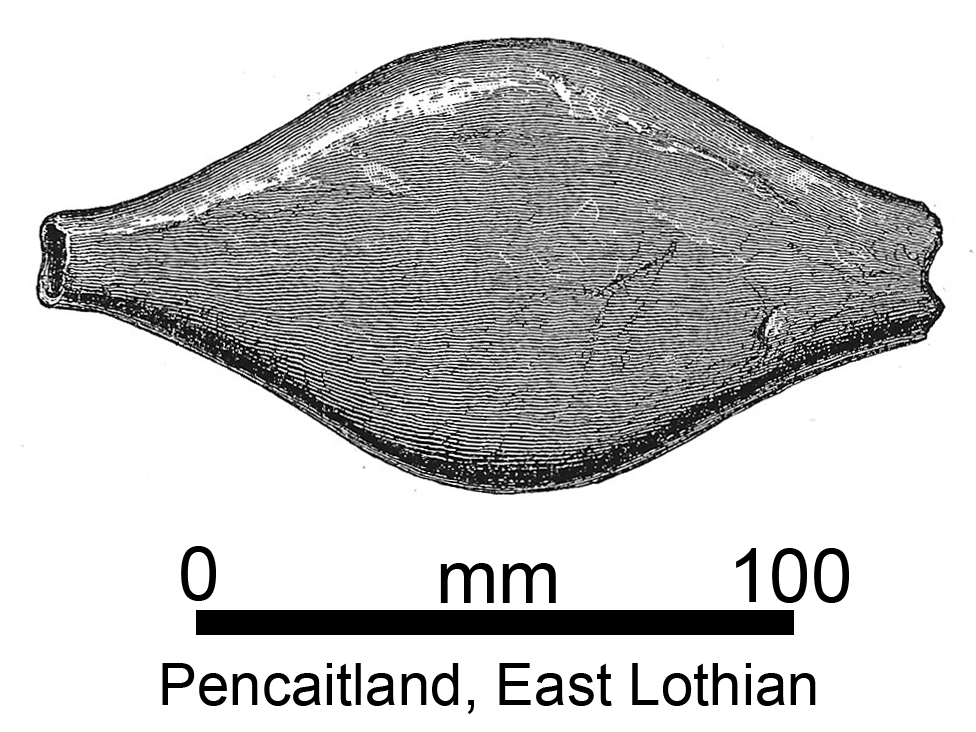
- A note of the acquisition, by NMAS, of a Middle Neolithic ‘monster bead’ of shale or cannel coal from Pencaitland parish, East Lothian (Anon. 1879, 126-7).
The Proceedings also record antiquarian investigations of Neolithic sites. These include James Cree’s excavation of a multi-period ‘midden’ in the grounds of his house ‘Tusculum’, in North Berwick, East Lothian (Cree 1908), and the exploration, by Alexander Curle, of further multi-period ‘middens’ on the Archerfield Estate, Gullane, East Lothian (Curle 1908).