
Routine rescue excavations in 2001 at Newbridge, just west of Edinburgh found a completely unexpected discovery. A figure of eight pit contained the vehicle which was buried intact, in contrast to examples known from Yorkshire which were typically dismantled. There was no sign of any barrow or enclosure to mark the burial. There were no surviving grave goods apart from the vehicle and harness fittings, all of which were of iron. Radiocarbon dates on preserved wood from Newbridge suggest a date around 520 BC to 370 BC.
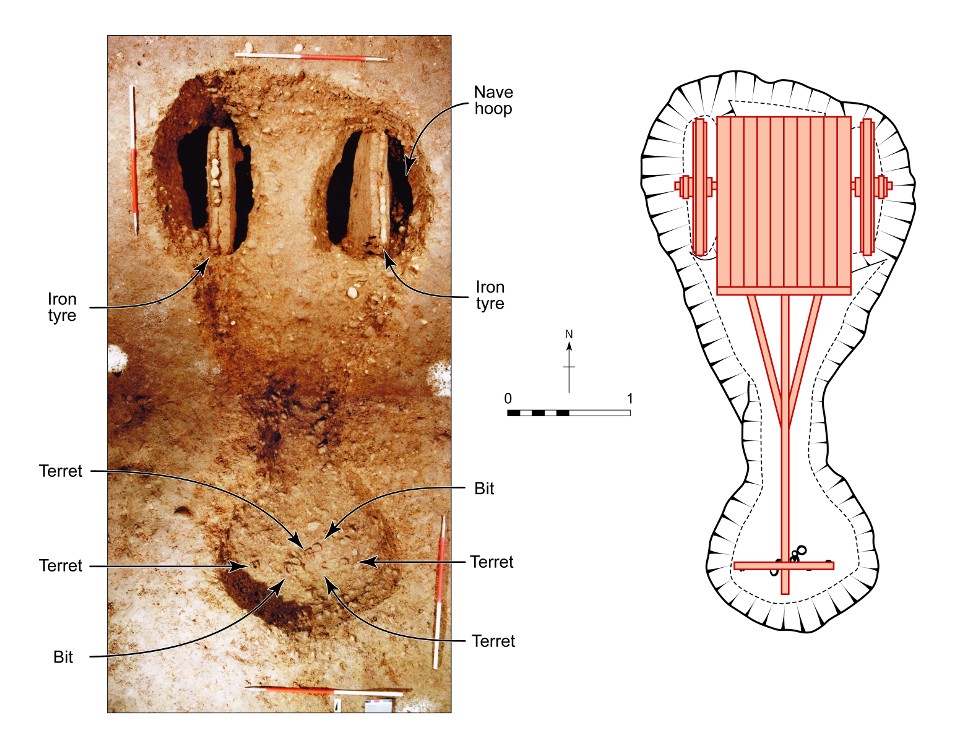
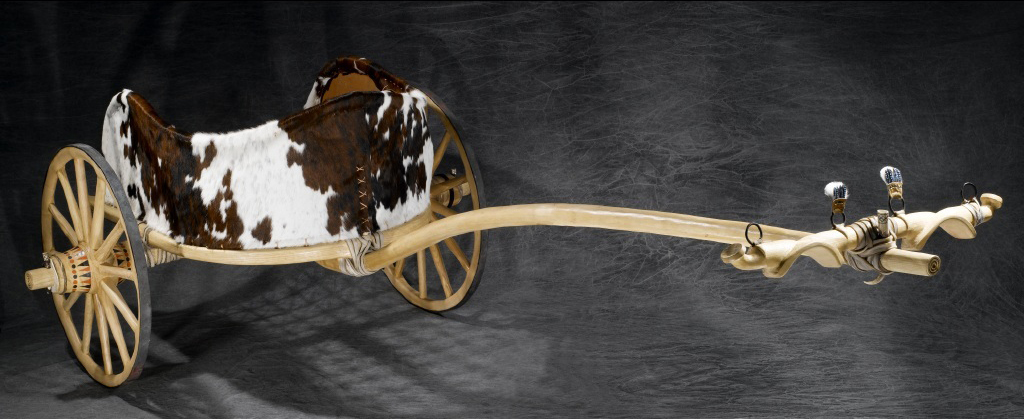
The discovery was the first chariot burial in Britain from outside the tight concentration in East Yorkshire. That said, the best parallels for the Newbridge chariot are from the Continent, where the predominant rite was intact vehicle burial and the finds show closer similarities. The chariot is unlikely to be an import but is best understood in the context of other Continental influences seen in high-quality bronze work. The Newbridge burial indicates that ideas and customs as well as objects were moving across the North Sea in the mid-1st millennium BC (Carter and Hunter 2002; Carter, Hunter and Smith 2010).
The Newbridge burial is completely unique in Scotland, let along South East Scotland and ‘…therefore remains unique and anomalous, so that, beyond its intrinsic interest, it cannot cast much light upon the nature of Iron Age ritual or funerary practice in southern Scotland’ (Harding 2017).