
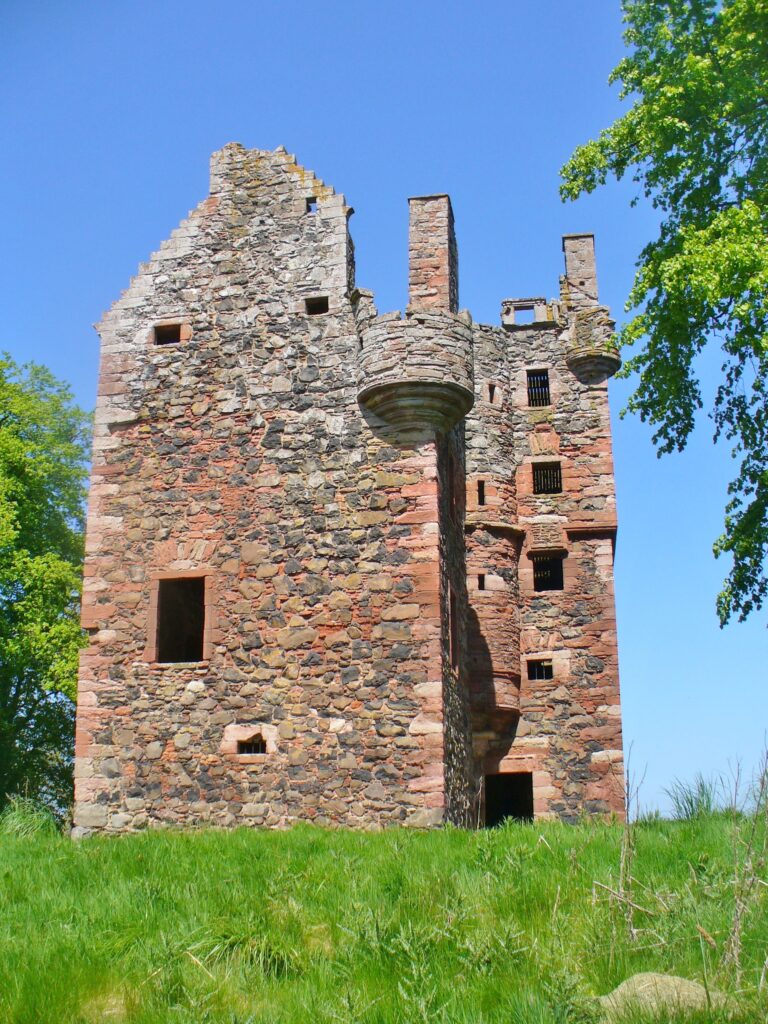
South East Scotland has a large number of medieval estate centres and associated elite residences. Typically, properties in the care of organisations such as Historic Environment Scotland or the National Trust for Scotland have received greater study than those which remain in private hands. However, even Historic Environment Scotland sites would often benefit from further research. For instance, at Greenknowe Tower in the Borders small-scale investigations undertaken in the 1970s revealed the potential this site holds both for understanding the relationship between a sixteenth-century tower house and earlier occupation, and for considering the interaction between a late medieval elite residence and its associated designed landscape (HES Statement of Significance 2011). Yet further archaeological study of this property has been limited.
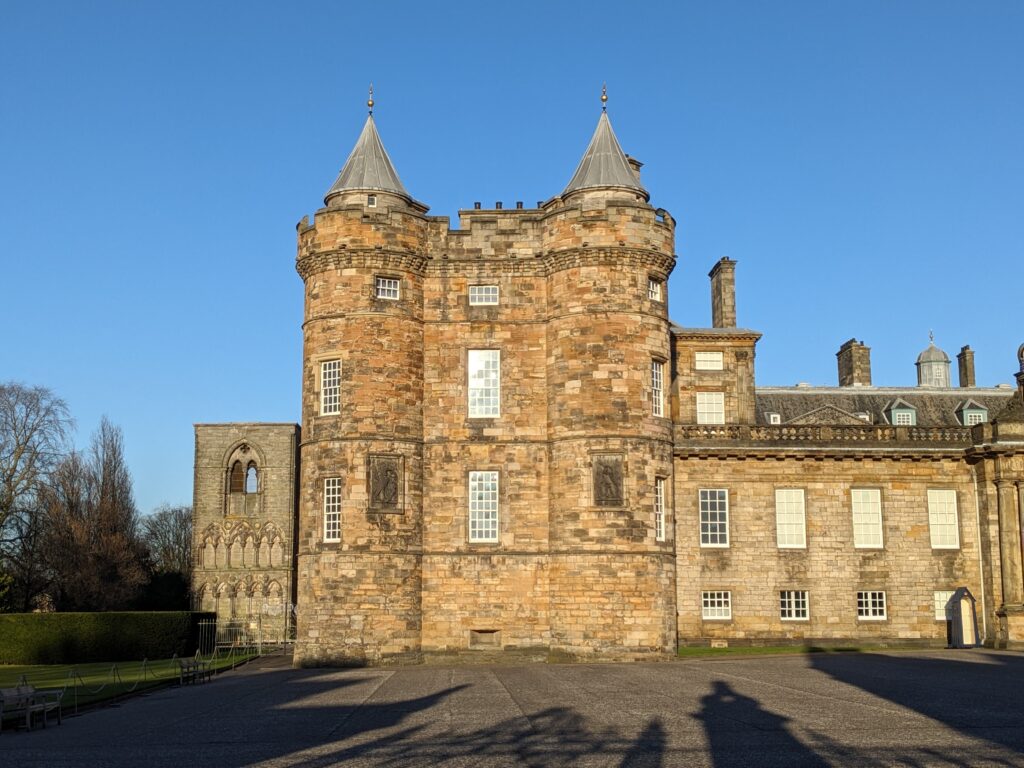
Several of South East Scotland’s important medieval residences continue to function as homes or fulfil ceremonial purposes – the Palace of Holyroodhouse being perhaps the most prominent of these sites. Most of the elite residences which are still occupied have undergone major alterations, as is the case at Traquair, a greatly extended late medieval tower house which probably sits on the site of a twelfth-century hunting lodge. In many cases the medieval appearance of these properties has been largely obscured by the changes of later generations. However, important clues may remain in the surviving structure, sometimes obscured by harling or interior plasterwork. Conservation work and alterations provide valuable opportunities for understanding the evolution of these sites, and it is important that the often fragmentary medieval evidence is not overlooked when building work is undertaken.
At some locations, such as Seton Castle (or Seton Palace as it was traditionally known), the medieval buildings were cleared to make way for later residences. Nevertheless, the foundations of medieval structures, and at times associated designed landscapes, may still be discernible. We should not assume that everything has been lost, even where the main medieval dwelling has been demolished. In this context, the significance of Seton Castle’s medieval and post-medieval designed landscapes should perhaps be noted – a setting which the Elizabethan travel writer Fynes Morrison praised as being ‘beautified with faire orchards and gardens’ and which served as an impressive and productive backdrop to ‘the stately Pallace’ of Lord Seton (Hume Brown 1891, 82).
| Place | Council Area | Historically Recorded Details of Landscape |
| Arniston House | Midlothian | Tower house with sixteenth-century walled garden and orchards. |
| Ballencrieff | East Lothian | Fifteenth-century orchard and dovecote. |
| Craigmillar Castle | City of Edinburgh | Fifteenth and sixteenth-century dovecote, gardens, orchards, and fish ponds. |
| Crichton Castle | Midlothian | Fifteenth and sixteenth-century orchards, gardens, and deer park. |
| Dalkeith Castle | Midlothian | Sixteenth-century gardens and orchard. |
| Edinburgh Castle | City of Edinburgh | Gardens and orchards from at least twelfth century onwards. |
| Greenknowe Tower | Scottish Borders | Survey evidence for sixteenth or seventeenth-century gardens and parkland. |
| Haddington – King’s Garden near St Mary’s Church | East Lothian | Garden and orchards from at least the twelfth to the fifteenth centuries. |
| Holyroodhouse | City of Edinburgh | Gardens, orchards, and park – older grounds altered in sixteenth century. |
| Roxburgh Castle | Scottish Borders | Orchard recorded in twelfth century. |
| Seton Palace | East Lothian | Gardens recorded in fifteenth century. |
| Traquair House | Scottish Borders | Garden recorded in thirteenth century. |
| Whittingehame Tower | East Lothian | Garden recorded in sixteenth century. |
| Winton Castle | East Lothian | Elaborate knot gardens recorded in sixteenth century. |
There is a pressing need to better understand the settings of medieval elite residences. Researchers need to look beyond the main house or fortification, which in the past was all too often the focus of surveys by bodies such as RCAHMS. The traditional preoccupation with substantial architectural remains has left its mark on present day records. Despite the best efforts of Historic Environment Scotland’s inventory of designed landscapes, medieval gardens and parkland remain very poorly recorded in resources such as Canmore. Research by Marilyn Brown in the early years of this century provided initial insights into some of the most prominent medieval lost gardens in South East Scotland, but much more investigation needs to be conducted (Brown 2012). The Glorious Gardens in East Lothian project is currently seeking to expand the recording of lost gardens and designed landscapes in that area. Similar projects across the whole region would be desirable.
Much of the published literature on medieval elite residences in Lothian and the Borders has been dominated by castles and tower houses. These are an important feature of the region’s medieval heritage and deserve ongoing study. However research into unfortified medieval elite residences should also be a priority. There is a need for greater recognition of the diversity of noble and gentry dwellings across the medieval period. More comparison between urban and rural elite residences could be of interest, as might greater study of the similarities and differences between the dwellings of religious and secular leaders. Our understanding of religious elite residences has been recently enhanced by the partial excavation of the former bishop’s palace at Mantle Walls near Ancrum, where there was found high quality carved masonry, as well as substantial assemblages of ceramics, animal and fish bones, and cereals. More research into the dwellings of the lower gentry should also be considered. These families played a major role in the functioning of many communities in South East Scotland, yet their tastes and aspirations remain poorly understood.
High-Status Residences Research Questions
- In what ways did elite residences change during the medieval period?
- How did the location of medieval elite residences relate to earlier sites of importance?
- What factors shaped the location and design of royal, noble and gentry estate centres?
- Did Anglo-Norman immigration significantly alter the design of elite dwellings?
- How did notable periods of crisis and instability (e.g. the Wars of Independence or the Anglo-Scottish conflicts of the 1540s) affect elite sites?
- What can we learn about the decoration and furnishing of elite residences?
- To what extent did elite dwellings in South East Scotland follow national and international fashions?
- Where were food and goods sourced for elite residences?
- How much evidence is there for the importation of luxuries (or indeed any other type of resources)?
- What can we discover about entertainment and display?
- Is there evidence for changing expectations of privacy and / or comfort during the medieval period?
- How was access to elite dwellings managed and controlled?
- What can we find out about the homes of the lower ranking gentry? To what extent were they visibly different from the dwellings of surrounding farming communities?
- What was the gender balance in elite residences? Were these disproportionately male households? What can we find out about the lives of women in these households?
- What can we discover about the lives of retainers and servants?
- How did the kitchens and other service buildings for elite residences evolve during the medieval period?
- What can we learn about the setting of elite residences (e.g. gardens, parks, agricultural activity, industrial sites)?
- How did elite residences impact on surrounding communities? What was the relationship between estate centres and the wider countryside?