
One key question we must attempt to understand is how many people actually lived in South East Iron Age Scotland?
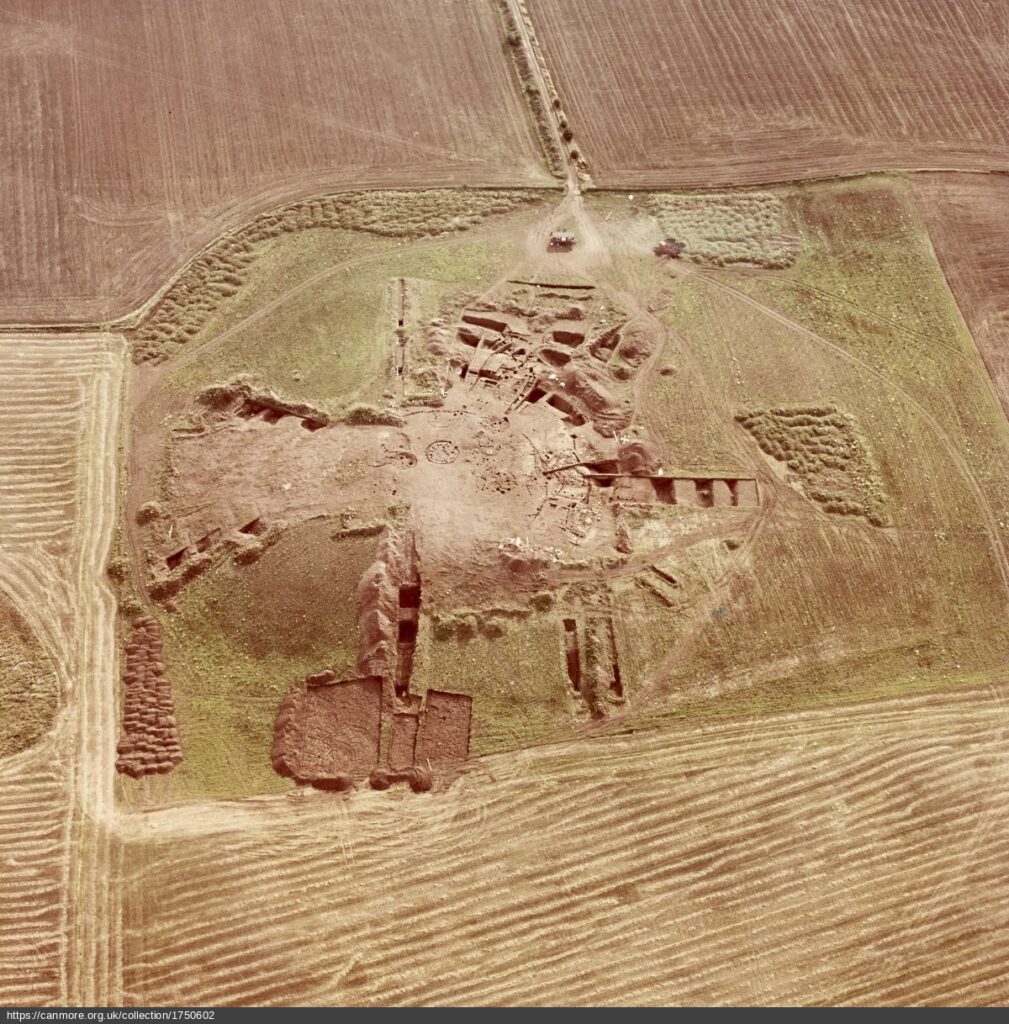
In terms of estimating how many people lived in houses Armit and MacKenzie pointed out the inherent difficulties and assumptions in any model, highlighting questions about the function of ‘houses’, differences in status and the possibility that houses were multi-storied. Broxmouth obviously had different phases of occupation during the Iron Age, with different house types and sizes. However, some houses may have housed between 5 to 8 people, whilst others between 17 and 27. At its height, an overall population capacity of Broxmouth may have been between 150 and 240 people (Armit and McKenzie 2013).
Cowley moved away from house populations to populating regional landscapes, with one study focussed on the end of the 1st millennium BC in East Lothian (2021). As a starting basis Cowley preferred a lower occupancy per household than most – around five persons per building. Critically, Cowley built on his extensive knowledge, scrutiny and interpretation of the settlement and landscape record of East Lothian (and inherent biases) to suggest a low population count of just under 5,500 people in the Late Iron Age East Lothian (2009; 2016). As Cowley acknowledged, if one accepts a higher upper range of people per household, then the figure could be as high as 21,000.
As Cowley reminds us, these figures are, of course, based on the known settlement record – we must also consider the scale of the unknown elements, that is the likely settlements that don’t show up in the survey record, as shown at Phantassie (LeLong and MacGregor 2007). With this in mind, Cowley’s preferred scenario was that the population of East Lothian in the Late Iron Age was around 20,000 people or around 40 people per kilometre squared. Brilliantly, Cowley suggests that if we multiply this number for East Lothian across the entirety of Scotland, then around 100 BC there may have been around 800,000 people living in Scotland.