
The 17th and 18th centuries are believed to have seen significant changes in recreational activities. Indeed, historians have claimed that this period saw the ‘invention of leisure’ (Burke 1995, 144). Writings from Scotland and further afield suggest that by the end of the 18th century there was a tendency to regard elite leisure activities as markers of civilization and deserving of their own designated spaces. The archaeological record provides a valuable way of testing the extent to which changes in attitudes to recreation amongst the gentry and professions reshaped public and private spaces. Physical evidence is also central to understanding working class experiences of entertainment and recreation – which often only featured in written records when these activities became deemed problematic by literate elites.
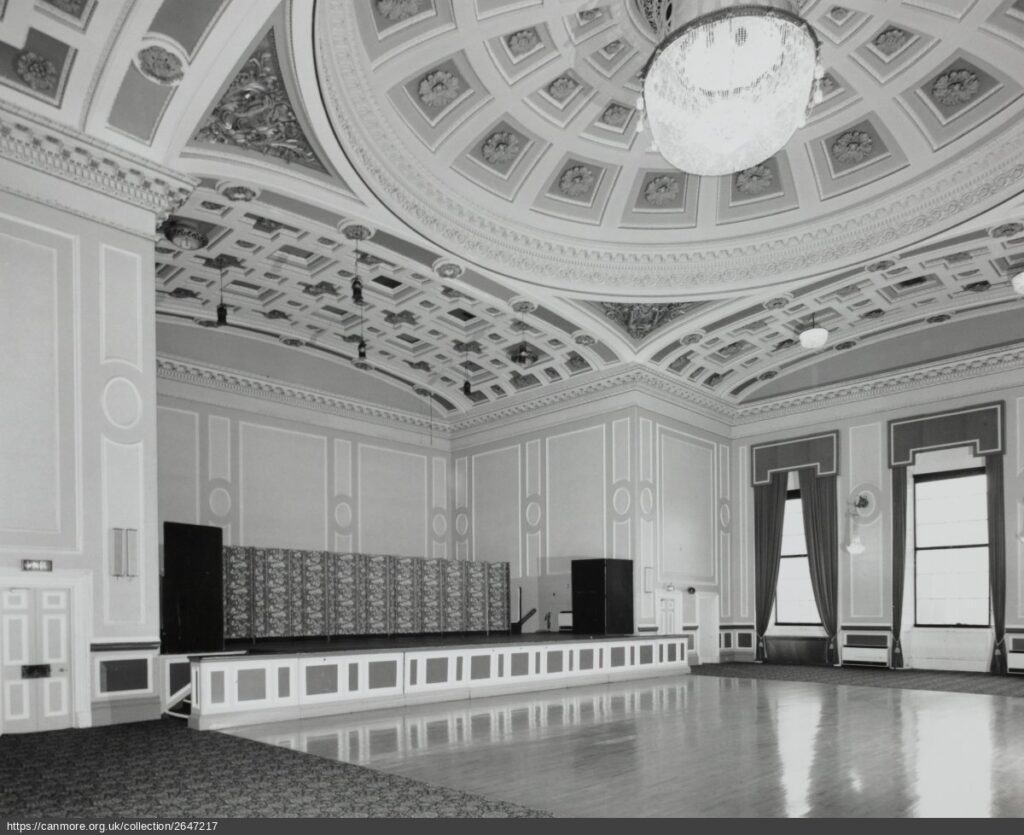
During the late 18th century a number of new places for upper class evening entertainment were created in Edinburgh. Notably, the 1780s saw the building of the imposing assembly rooms on George Street in Edinburgh, which survive to this day. However, it is worthwhile noting that there was an earlier tradition of assembly rooms in Edinburgh, with subscription dances initially being held in the 1710s in a house on the West Bow, before relocating to ‘a spacious Edifice’ on New Assembly Close. By the late 18th century there were apparently three assembly rooms in Edinburgh and one in Leith (Creech 1793, 618). Research into these additional structures could be of interest. Tolbooths and other public buildings in Scottish towns were also sometimes adapted in the 18th century for the purpose of dancing (Dennison 2018, 177). Further research into evidence for such alterations could perhaps be undertaken.

During the late 18th century Scotland’s first purpose built theatres were constructed, with Edinburgh at the forefront of this movement. The Theatre Royal was established at the end of the 1760s on Princes Street, although this building was later demolished. Yet, as with dancing, Edinburgh had a longer tradition of public performances – even if at times such activities were condemned by local religious and secular authorities. The late 17th century supposedly saw dramatic performances in Edinburgh under the patronage of the Duke of York, meanwhile during the early 18th century various touring companies put on plays in Edinburgh, including some performances at the Taylors Hall in Cowgate (Arnot 1788, 365-367). Further interdisciplinary research into spaces used for various forms of post-medieval dramatic and musical performances would be desirable, both in Edinburgh and in other parts of South East Scotland.
The post-medieval period saw new venues for eating out and drinking hot and cold beverages. The first coffee house in Edinburgh was supposedly opened by John Row in the 1670s in a building on the east side of Parliament Square (Pincus 1995, 813). By the 18th century a number of coffee houses were operational in the capital. Although coffee houses have received a degree of historical attention, further consideration of their location and material culture could be helpful. Historians have likewise identified the location of several taverns and eating-houses in Edinburgh (Stuart 1952; Allen 2006). Greater interdisciplinary research into the characteristics of the sites of taverns, both within Edinburgh and further afield, would be desirable.
Consideration might also be given to whether the archaeological record can further our understanding of the post-medieval sex-trade. Contemporary commentators alleged that between 1763 and 1783 the number of brothels in Edinburgh ‘increased twenty fold’ whilst the number of ‘women of the town’ grew ‘more than a hundred fold’ (Creech 1793, 612). Written sources such as Ranger’s Impartial List of Ladies of Pleasure indicate where brothels were located in 18th century Edinburgh, and interdisciplinary study of these sites could perhaps cast light on the material culture of places where sex was sold (Anonymous 1775; Harris 1978).

Post-medieval Scots took part in a variety of types of sport. Archery continued to be practiced in South-East Scotland during the post-medieval period, with the Old Statistical Account entry for Inveresk noting in the 1790s that archery was ‘an exercise as fashionable as it was manly’ (Carlyle 1795, 28). Football and golf appear to have grown in popularity during the post-medieval period, although they were still not as formalised activities as they became in the 19th century. Archery, football and golf all often took place on open spaces which also served other purposes, such as grazing animals. However, the post-medieval period saw the origins of a trend for setting aside spaces specifically for golf. There is written evidence for golf being played in Edinburgh and Musselburgh in the 17th century. A number of places in South East Scotland which became established golf courses in the 19th century appear to have had an earlier golfing tradition. The extent to which there was infrastructure associated with golf in the 17th and 18th centuries is an interesting question, which is of particular relevance to South East Scotland given the evidence for early golfing activity in this region.
Greater research into the hand ball game traditionally known as cache or caiche could be undertaken. Written records indicate the considerable popularity of this sport in Scotland during the 17th and 18th centuries. Two surviving cache balls, tentatively dated to between 1600 and 1800, were discovered during building work on Advocate’s Close in Edinburgh (Carradice 2002, 527). Because cache involved using walls as part of the game, enclosed courts known as cachepules were created for this sport. Cache is therefore more likely than some other post-medieval sports to have left a physical trace, and perhaps merits greater attention from archaeologists.