
The post-medieval period saw profound changes in the scale, style and function of elite residences. At the beginning of the 1600s aristocratic houses often sought to convey a martial impression (although the extent to which they actually served defensive purposes is debated). By the end of the 1700s upper class homes typically followed Classical models and were often much larger in size. This trend can be seen in many parts of Scotland, but was substantially pioneered in Lothian and the Borders.
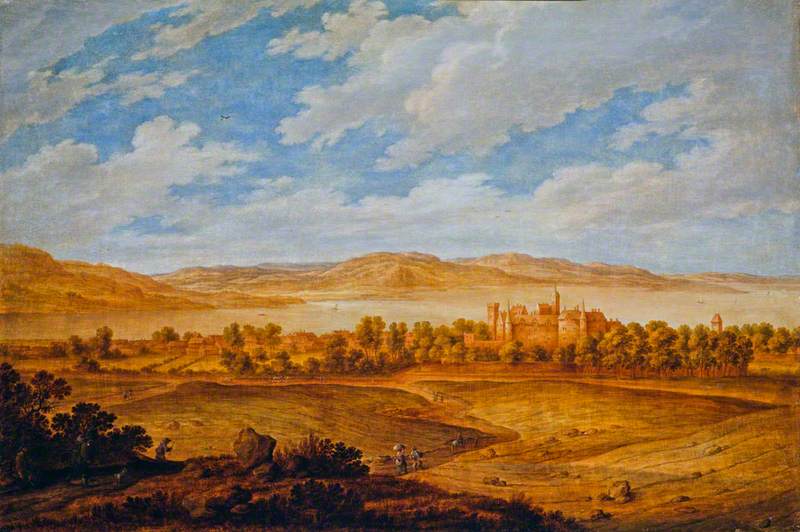
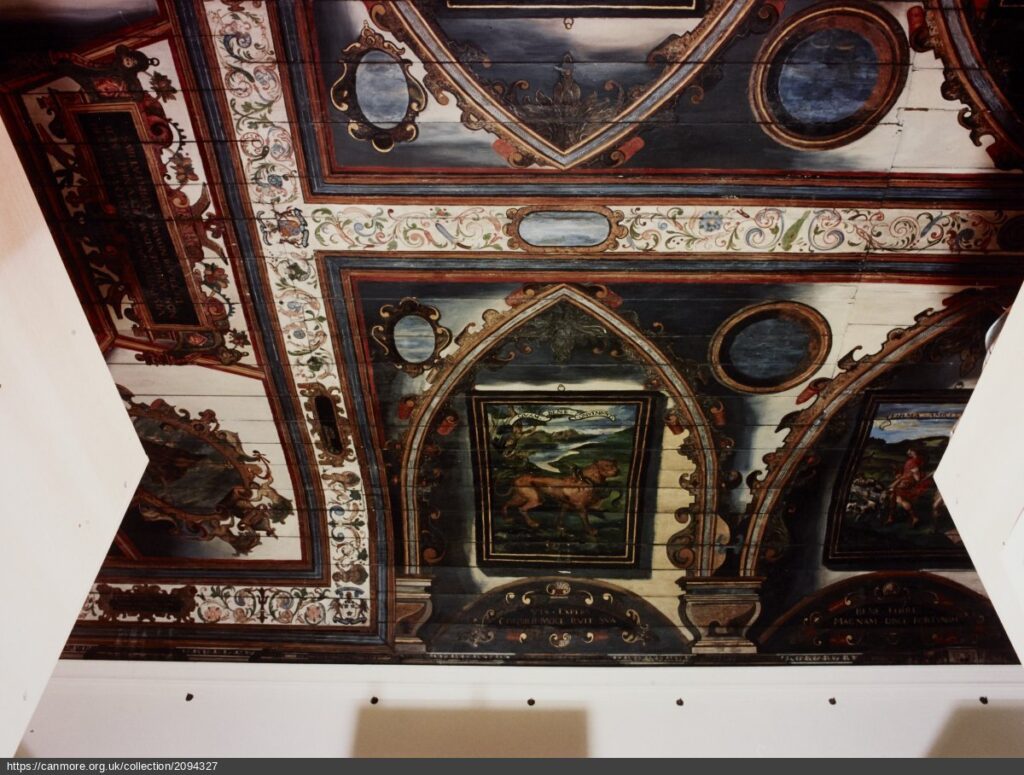
During the early 17th century the South East had a high concentration of elite residences, which have survived in vastly varying degrees of preservation. Whilst sites such as Seton Palace have been largely obliterated by later development, other properties retain substantial 17th-century elements. For example, Winton Castle (where the Setons embarked on major building work around 1610) has considerable early 17th-century decorative detailing surviving on the exterior and interior. Important elements of 17th-century interiors have been preserved at several elite houses in the region. Among other features, the region has a significant proportion of the country’s post-medieval painted timber ceilings – including a particularly notable ceiling from about 1614 at Pinkie House (formerly another residence of the Seton family, now occupied by Loretto School). The trend for painted board ceilings arguably reflects Scandinavian fashions, and provides a reminder of the eclectic influences on Scottish interior design in the period before 1660. Recent decades have seen valuable art historical and dendrochronological study of known painted timber ceilings (Crone, Bath and Pearce 2017). However, it is likely that fragments of further painted ceilings and other elements of early post-medieval interior decoration remain overlooked inside elite residences – typically concealed by later alterations.
The restoration of Charles II in 1660 was followed by significant changes to the architectural aspirations of Scottish aristocrats. Symmetry and classicism were increasingly desirable, and new architectural features (such as sash windows) were introduced. Further research into the practicalities of this aesthetic transformation, and the craftspeople who implemented the ambitions of their employers would be beneficial. The form and style of the aristocracy’s new classical residences also had a significant influence on the houses of the lower gentry and professional families. The houses of smaller landowners and of prosperous professionals are deserving of much greater study – providing a window into the lives of a key section of society, and potentially casting new light onto the dissemination and adaptation of new architectural trends in South East Scotland.
The houses of the aristocracy and gentry must not be considered in isolation – their setting was of considerable importance both aesthetically and practically. Almost all elite houses had gardens, and many were situated within extensive designed landscapes. Whilst grand houses have long enjoyed considerable study and a degree of legal protection, the designed landscapes of South East Scotland are understudied. Historic Environment Scotland’s inventory of gardens and designed landscapes only covers a small proportion of the elite gardens, parks and other artifical landscapes which existed in South East Scotland during the post-medieval period. The ongoing East Lothian Survey of Gardens and Designed Landscapes seeks to address this gap in our understanding, by providing recording of a much wider range of current and former historic gardens. Similar schemes across the whole of South East Scotland could be of considerable value. It should be acknowledged that gardens have often undergone even greater changes than the houses they surround. Yet, as the work of researchers such as Marilyn Brown has demonstrated, remnants of earlier landscape features can often be detected in the much modified gardens of today (Brown, 2012).
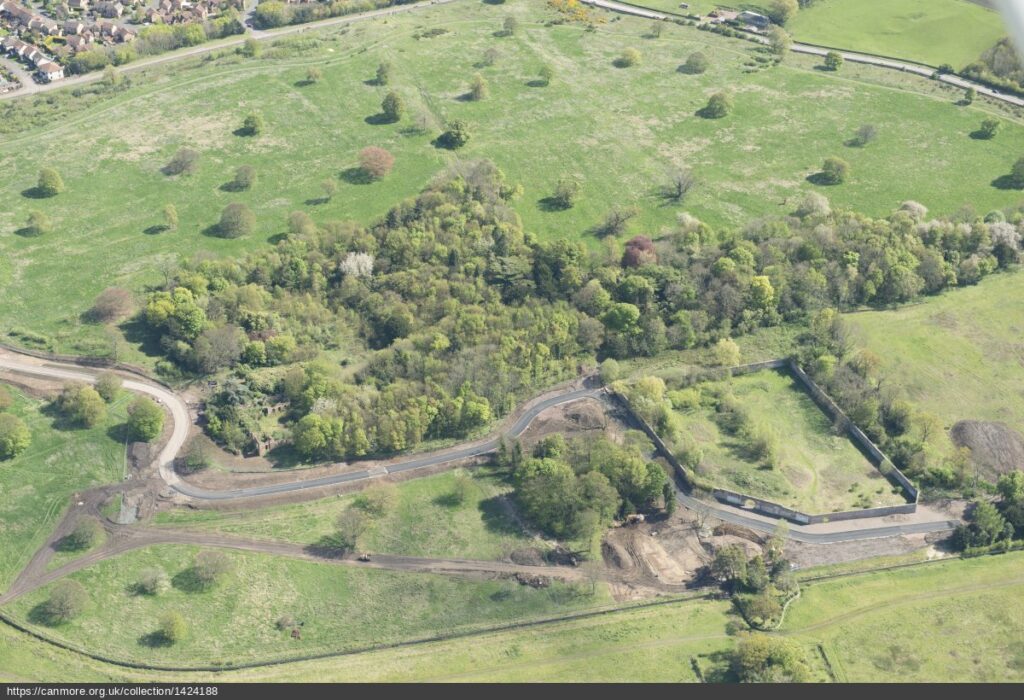
The post-medieval period also saw elite families undertaking more ambitious projects on their wider estates. Further investigation of the expansion and use of parkland in South East Scotland during the post-medieval period would be desirable. We currently have a surprisingly patchy understanding of the relationship between 18th-century deer parks and earlier enclosed spaces. There is also room for much better understanding of drainage, the creation of lakes and other water features, and of new plantations. Indeed, recent dendrochronological study of old oaks at Dalkeith Park has revealed a complex history of planting spanning across the sixteenth to 18th centuries (Mills 2022). The numerous industrial and service buildings associated with great houses also deserve greater consideration. Critically, traces of service buildings sometimes survive even when the big houses themselves have been demolished. At Edmonstone, on the outskirts of Edinburgh, former lodges, an ice house, and fragments of stables survived into this century, despite the demolition of the mansion in the 1950s (McGowan 2007). These ancillary structures which contributed to the functioning of aristocratic estates have traditionally received less attention than thee grand houses. Yet they provide vital insights into the interactions between elite residences and wider economic networks.