
The late 18th century saw significant urbanisation in South East Scotland. In contrast, the earlier part of the post-medieval period was characterised by much slower urban expansion. Indeed, some burghs appear to have experienced a degree of decline during the 17th century – perhaps in part because of the conflicts and political instability of the period. More research into how urban communities navigated the stresses of the 17th century would be desirable.
Perhaps unsurprisingly, discoveries from Edinburgh have dominated our understanding of urban life in South East Scotland during the 17th and 18th centuries. Edinburgh has a significant number of post-medieval standing buildings. In recent years construction and conservation work at sites such as Riddle’s Court on the Lawnmarket have revealed the rich evidence these surviving structures hold, including the remains of historic interior decoration (Cressey et al 2023). Numerous highly productive excavations have further enhanced our knowledge of life in post-medieval Edinburgh, and it is likely that development pressures will continue to provide opportunities for archaeological interventions in the capital.
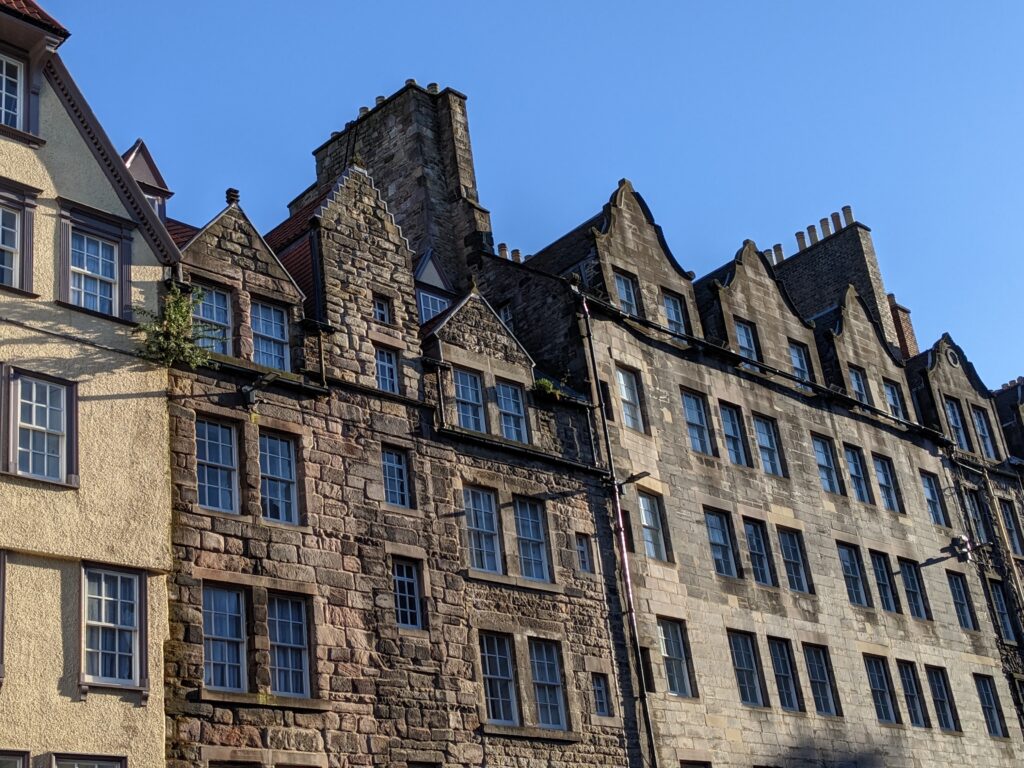
Throughout the 17th and 18th centuries, what is now the Old Town of Edinburgh was densely populated. Excavations at sites such as the former Marlin’s Wynd (now encompassed by the site of the Tron Kirk), at Advocate’s Close, and on Jeffrey Street have provided valuable insights into the evolution of the capital’s tenements (Cook, Cross and Lawson 2013; Engl 2017; Masser et al 2014). The investigation at Advocate’s Close uncovered middens dating from the 17th and 18th centuries, as well as an early 19th-century sewer (Engl 2017). Further study of sanitation, waste disposal, and water supplies in post-medieval burghs in the region would be of interest.
Recent decades have seen valuable research into the suburbs of post-medieval Edinburgh. Excavations at Candlemaker Row have provided insights into the lives of the relatively prosperous burgess families who inhabited this area during the early post-medieval period – including a fine assemblage of good quality early 17th-century glass and ceramics (Franklin 2017). Meanwhile, investigations in the backlands of the Canongate has highlighted how the post-medieval period saw this area shift from relative wealth into moderate poverty (Gooder 2013). The changing status of the Canongate has also been highlighted by the recent Canongate Poorhouse excavation (Engl et al 2025). Here, elite burgage plots were transformed into a low status burial ground, before in the 1760s a poorhouse was built on the site. The shifting status of different areas, the extent to which the post-medieval period saw a separation of commercial and residential space, and the interface between town and country are all themes deserving of more research, both within Edinburgh and further afield.

In Edinburgh, the declining status of the Canongate and the wider Royal Mile was partly driven by the construction of the New Town in the late 18th century. The New Town was an extreme version of a wider trend towards classicising urban architecture that affected most urban centres in South East Scotland during later part of the post-medieval period, as burgh elites sought to make their local townscapes conform to notions of ‘polite’ architecture. Across the region, the late 18th century saw a shift towards sash-windows, regular proportions and classical details. Many buildings of this period still survive, although often much altered. Greater study of the processes by which older urban settlements were refashioned to meet with changing post-medieval aesthetics, and the extent to which daily life within these places changed would be desirable.

Excavations in Edinburgh have uncovered a wealth of post-medieval remains. This is partly because pressure to redevelop land in the capital has driven large numbers of rescue excavations. In contrast, the smaller burghs of South-East Scotland have been studied in much less depth. However, they too preserve important post-medieval evidence, both in standing buildings and below-ground. Investigations in North Berwick during the upgrading of the water mains revealed well-preserved medieval and post-medieval road surfaces and ceramics – casting additional light on the evolution of the burgh (Dingwall, 2009). Further archaeological and historical research into the post-medieval experiences of middle ranking and smaller burghs should be a priority. Without this work, our understanding of post-medieval urban life in the region will inevitably be partial and distorted.