The geomorphological change in the Clyde Valley is discussed by Tipping through slope and river instability of the past which unclear causation (2015, 13). Again, little work to further examine this in the Clyde Valley has been done since the production of Tipping’s essay.
Due to the present climate change risk, future slope instability has been analysed by BGS which may adversely impact archaeological and historic sites. However, these models are not publicly available, and the level of resolution of available models does not allow a refined analysis of the potential adverse impacts on the archaeological resource.
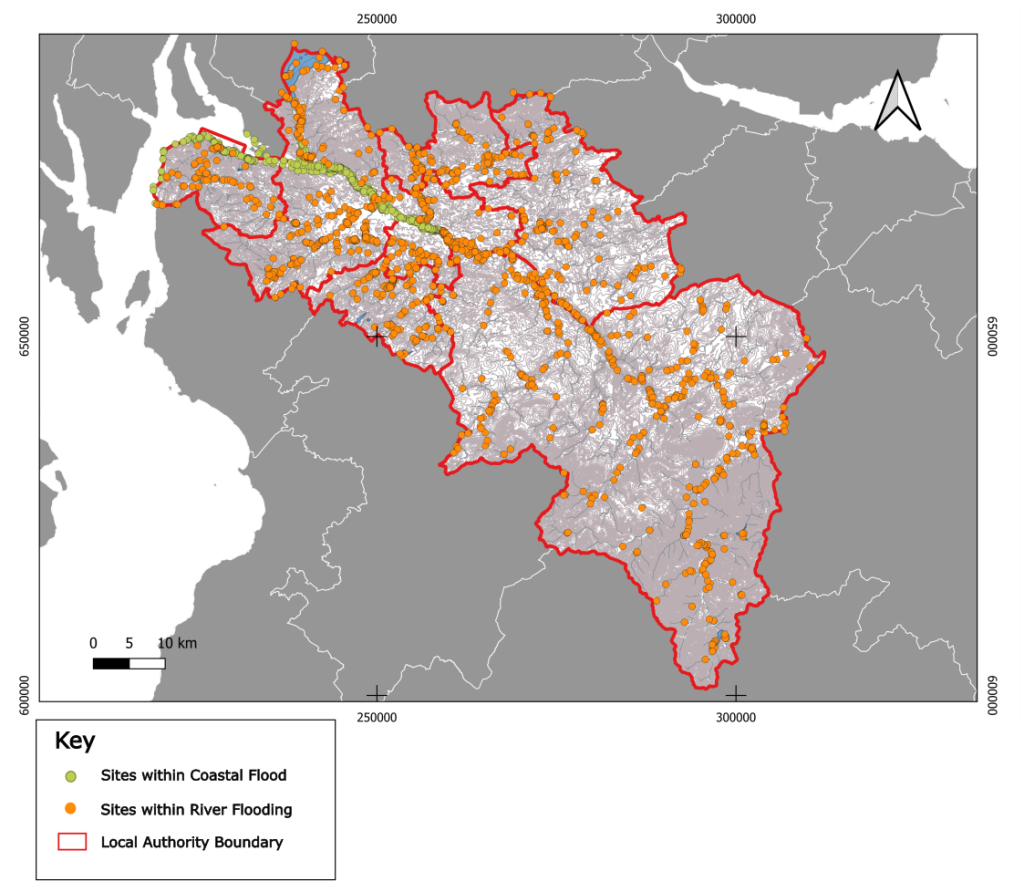
River instability is also a very likely future challenge, the potential flood risk from projections in 2080 has been mapped against heritage sites within the Clyde Valley. This will potentially impact 1816 sites within the NRHE of which 119 are Scheduled Monuments including seven breaks within the Antonine Wall. Historical modifications of rivers by deepening or straightening for the benefit of industrial and urban environments has led to the instability, rewinding rivers and removing previous modifications has been undertaken by SEPA throughout the Clyde Valley. The river restoration projects within the study area include: Garren Burn, Kilsyth; Levern Valley, Barrhead; Tollcross Burn, Glasgow; Fernegair Weir, South Lanarkshire; Stane Gardens, Shotts. With further projects of river restoration and fish passes to be carried out by the Water Environment Fund (WEF) throughout the Clyde Valley and Scotland.
The heavily modified River Clyde and tributaries can be clearly seen in one case study. The River Kelvin was heavily altered by weirs and dams to power industrial manufacturers from the 18th century (Moore et al 2017, 3). Analysis of the Kelvin and its tributaries from historic and modern mapping shows that the immense straightening and modification of the rivers has created a loss of 90.1km or 23% of the total channel length since 1750. Due to the urban nature of the River Kelvin, re-meandering of its main body is not possible, and the author argues that its tributaries may be re-meandered to lessen flow (Moore et a 2017, 10). The industrial past of Glasgow has had a direct effect on the River Kelvin, the changing economy and technologies have not maintained the need to harness water from the river. There is now an impact of potential flooding from increased flow rates from climate change as well as lessened biodiversity. The urban setting of both the Rivers Kelvin and Clyde also pushes the necessity of remeandering up to the smaller tributaries. As such, there is a growing need for the restoration of rivers and gives an opportunity to archaeologists to understand why and how people of the past straightened or altered the water courses at a local level.