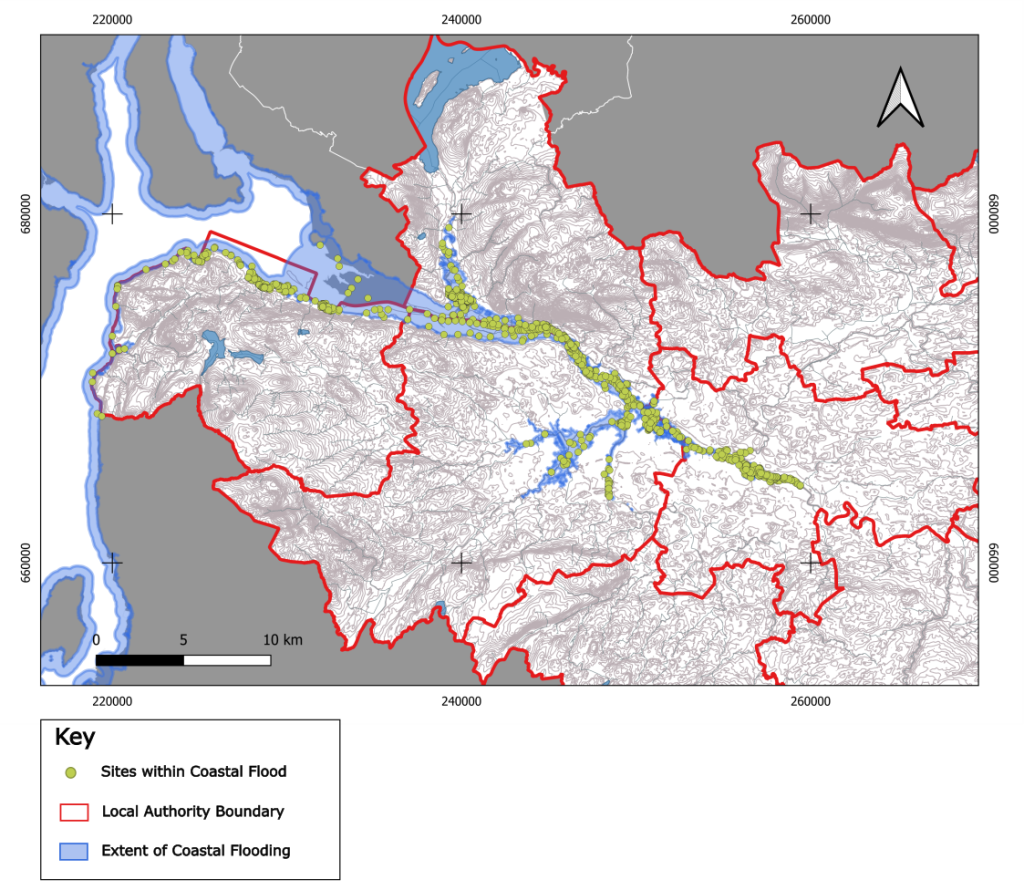
The Clyde Valley retains a variety of environments such as from urban and industrial landscapes to boggy wetlands, coastal and upland slopes. The way in which people interact with the environment around them can be interpreted archaeologically in a variety of ways, from evidence of felling trees and reforesting, straightening, channeling and canalising rivers, ecological systems have been altered continually for thousands of years.
Tipping’s essay Living with Environmental Change –Towards an Environmental History of Clydesdale firstly identifies there has not been a large scale review of climatic change within Clydesdale which is unfortunately still true as archaeological science has not utilised the study area in relation to these issues (2015, 3). Tipping discusses coastal change, climate change, vegetation and land use change and geomorphological change, this chapter will add emphasis on contemporary and future climate change and the effects on communities currently residing within the Clyde Valley. Future projections of coastal and river flooding will directly affect communities within the Clyde Valley but will also impact historic sites on land and within the Clyde Estuary which we need to address.
The new actions to adapt to future climate change gives an opportunity to archaeologists for further research from developments of new windfarms, reforestation projects and river restoration. Future environmental change will also force action on archaeological sites either sitting within the plains of future floods, upon unstable hillslopes or within changeable estuarian muds. This chapter has not been collated to cause panic about future climate scenarios but to show how archaeology can be utilised to create community resilience.