
Identifying later prehistoric field-systems and agricultural patterns is a frustrating exercise due to the Iron Age systems being multi-period but yet hard to date. Unsurprisingly, much of the information is from landscapes that survive above the zone of later agricultural destruction and numerous surveys, such as the RCAHMS Inventory of Roxburghshire and Peebleshire have demonstrated the wealth of cultivation plots, field systems and land divisions across the area (Harding 2017).
Cultivation plots
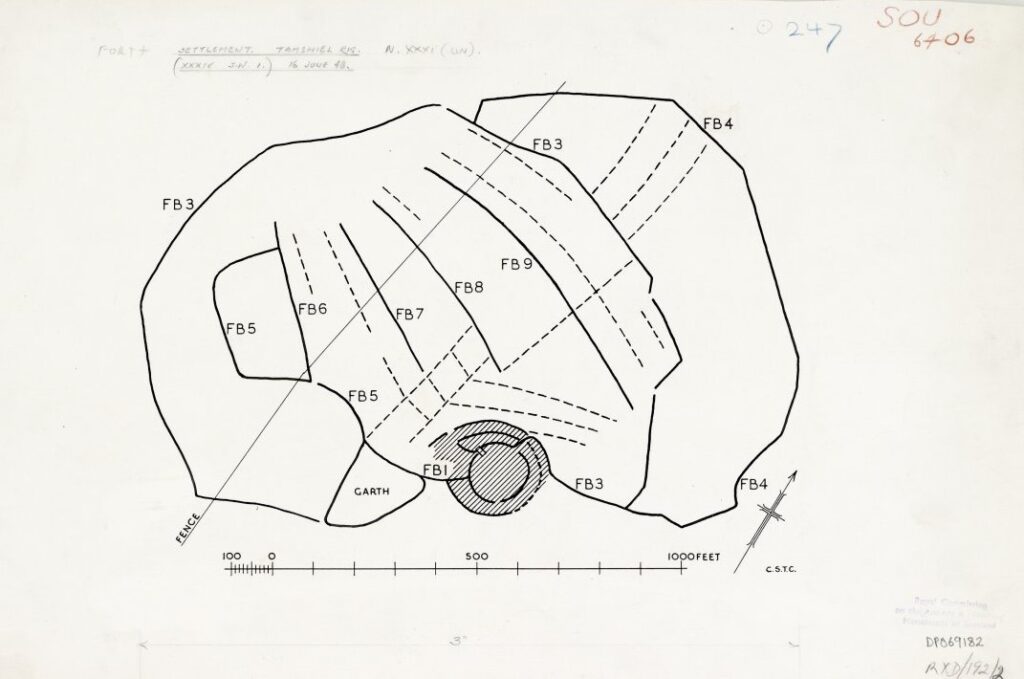
The Roxburghshire Inventory includes settlements with associated cultivation plots or lynchets that were compared to ‘Celtic’ fields found in southern Britain and assumed to be around the end of the 1st millennium BC. However, it is likely that many date to the pre-Roman Iron Age, such as at Tamshiel Rig. As suggested at the recent work at Glenrath, some may be even earlier (Halliday 1982; Cavers and Heald forthcoming).
Cord-rig
Cord-rig cultivation (narrow, parallel ridges) was a significant form of prehistoric agriculture, especially in upland areas. There is still debate as to whether cord-rig was the product of ploughing or spade cultivation – what was grown is also still subject of debate. A major breakthrough of the late 1970s and early 1980s in South East Scotland was the recognition that cord-rig, much narrower and slighter than later rig-and furrow, being less than 1.5 metres apart, could be assigned to the 1st millennium BC. Importantly, cord-rig is often found near palisaded settlements and ring-ditch houses, indicating integrated settlement-agriculture systems during the pre-Roman period. Recent research has indicated that the cord-rig, like palisades, had a much longer currency and do not just date to the early Iron Age (Harding 2017).