
These iconic sites are perhaps the best-known enclosures. Hillforts are characterised by defensive features such as ramparts, ditches, and palisades and situated on strategic locations such as hilltops or ridges; they often have complex entrances and multiple phases of construction. It is argued that these sites served as central places, for defence, elite residence, storage, status display, or community gatherings.
The SESARF region is particularly rich in hillforts. This is reflected in the online resource Atlas of Hillforts of Britain and Ireland. The recent AHRC funded project, with the University of Edinburgh as a partner, has carried out the national compilation and mapping of hillforts. The current database compiles 4,174 sites across the British Isles, including 1694 in Scotland. Almost a third of these sites (532) are in the SESARF region (East Lothian: 89; Scottish Borders: 408; Midlothian: 20 and City of Edinburgh: 15). The majority of these sites are recognised through detailed survey and there is a substantial cropmark record of forts and other enclosures, including in areas such as East Lothian, deemed as ‘honeypots’ (Cowley 2009).
Few sites have seen any excavation, although South East Scotland has many fine examples. But even then the areas of the sites examined by excavation is pitifully small – with exceptions such as Broxmouth, the sample proportion is probably substantially less than 5% (Armit and McKenize 2014). Further, most excavations have focused on the enclosing works, with less emphasis on interiors and less still exteriors.
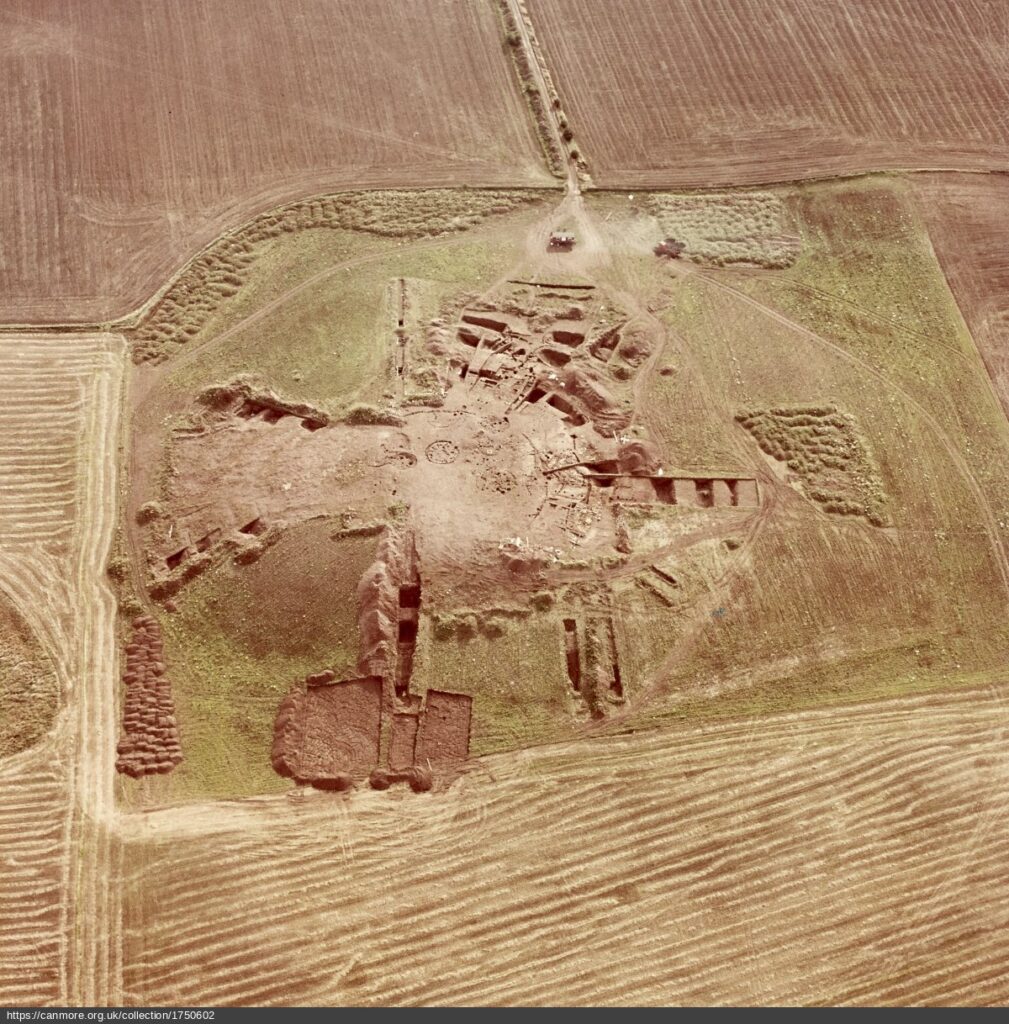
Some of these larger earthwork ‘forts’ (for example Traprain Law and Eildon Hill) either have proof, or are suggested to have been used, in the Late Bronze Age with their use continuing into the later centuries and beyond. As we move towards the end of the 1st millennium BC there appears to be less emphasis on major hillfort earthwork construction, and it is widely believed that by the end of the millennium a high proportion of forts had fallen out of use. Armit cited a 20% occupancy of forts on the eve of the Roman invasion and dating evidence from a number of excavations can be adduced to support this. For example, Broxmouth hillfort appears to have fallen out of use by the 3rd century BC (1997, 64-5).
Renewed occupation of varying scale at large forts in southern Scotland after putative periods of abandonment or a different type of use has been identified at Eildon Hill North, Roxburghshire and Traprain law, East Lothian. By the 3rd or 4th century AD, few enclosed places were still in demonstrable use Traprain Law being a notable exception as evidenced by the construction of the Cruden Wall, probably in the 4th or 5th century AD (Close-Brooks 1983).