
The South East of Scotland has long played an important role in Scottish government. Medieval parliaments and conventions often met in the South East. In the 13th century parliaments were sometimes held in the open air, and it is likely that this was the case for the parliaments held at Birgham in the Scottish Borders in the 1290s (Glendinning et al 2004). Further study of possible locations for such an assembly in the landscape around Birgham might be beneficial.
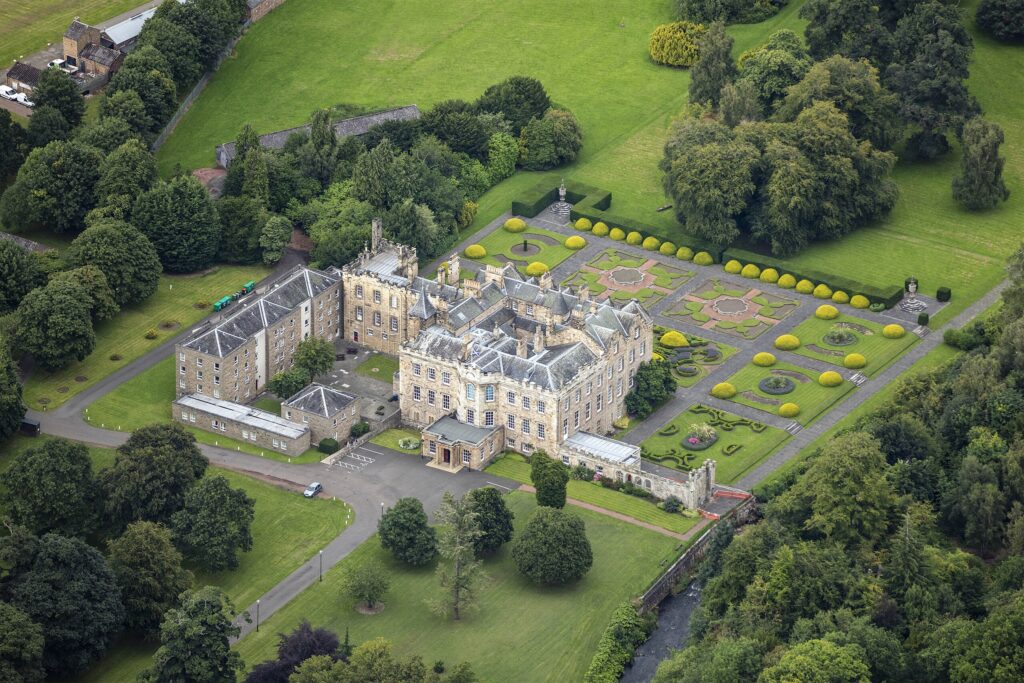
Parliaments also took place at a number of abbeys in the region, including Newbattle and Holyrood. By the late fifteenth century Edinburgh had become the preferred location for Scottish Parliaments, although conventions were held in a wider range of places, including one held by Regent Arran near Musselburgh in September 1547 just before the Battle of Pinkie (Blakeway 2022; Caldwell et al 2023). From the reign of James III until the early 17th century, parliaments were typically held in Edinburgh’s tolbooth, which formerly stood beside St Giles’ Kirk (Records of the Parliaments of Scotland). In 2006 a watching brief by AOC Archaeology recorded evidence of substantial medieval or post-medieval walls which perhaps related to the old tolbooth. More interdisciplinary study of the physical, visual, and written evidence relating to this site would be of interest – and has the potential to cast light on the evolution of national and local governance.
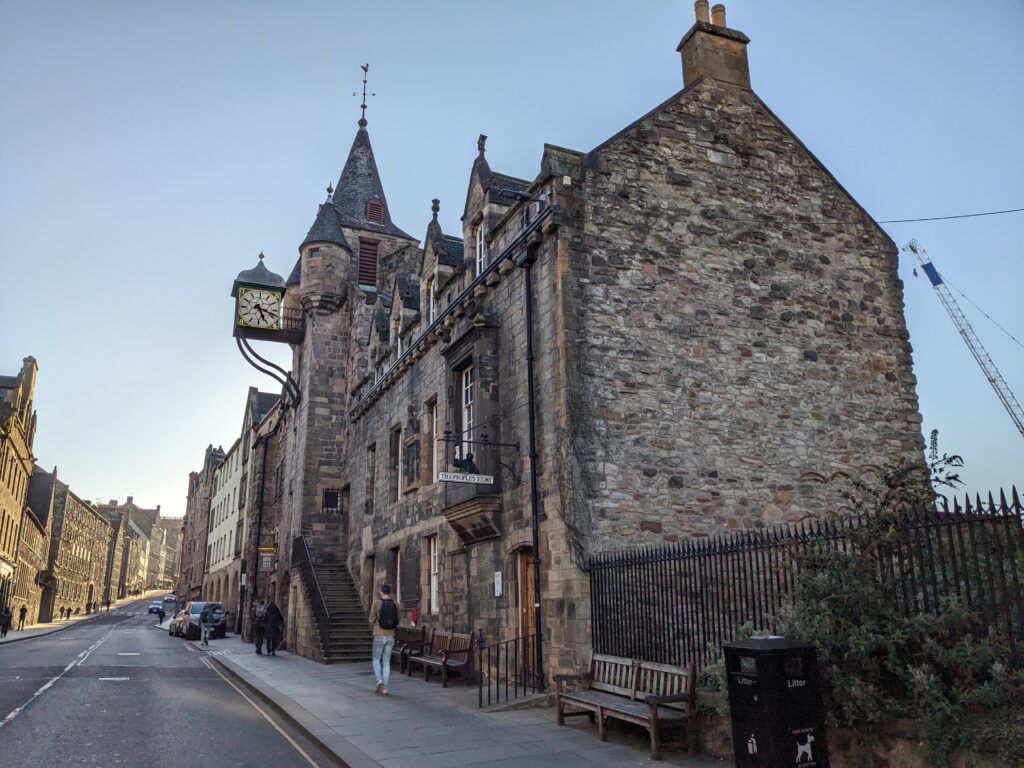
The medieval period saw the development of tolbooths as important focal points for local government and justice. Research on the architecture of tolbooths in the region was undertaken by RCAHMS in the 1990s, but understandably much of this work focused on post-medieval structures. Musselburgh Tolbooth is among the oldest surviving tolbooths in the region, with the tower perhaps dating to the 15th century whilst much of the rest of the building was probably constructed in the 1590s (RCAHMS, 1996). Further research regarding Musselburgh Tolbooth might be of interest. Meanwhile any opportunities to examine the sites of wholly or partially demolished medieval tolbooths in the region should be treated as a priority.
Tolbooths were not the only places where justice was administered. More research into the locations of sheriff and baronial courts in the region would be desirable. Initial work on outdoor judicial sites was undertaken by Oliver O’Grady in the 2010s, and this identified Cuthill near Prestonpans and Moat Knowe at Dalmeny as possible early sites of outdoor courts (O’Grady, 2014). When and where courts moved indoors, and the characteristics of the places courts used are questions which deserve further study. The integration of information from textual sources, with place-name evidence, and field survey might help to further our knowledge of these significant but poorly understood sites.
Of course punishment was a key aspect of justice. Much more research into the archaeology of crime and punishment in the region is needed. Many notable elite residences and civic buildings (eg tolbooths) on occasions served as places of imprisonment, and further study of this aspect of their past would be desirable. Archaeological investigation of sites where written records or toponymic data suggests that gallows once stood should perhaps be undertaken. Arguably, such sites hold the potential to enhance our understanding of both the public implementation of medieval justice and the experiences of people who suffered punishment.
Sites of Assemblies and Justice Research Questions
- What can we discover about the sites of outdoor parliaments and conventions?
- What more can we discover about the architecture of buildings where parliaments met?
- What can we learn about the development and design of medieval tolbooths?
- Can we find out more about the locations where sheriff and baronial courts were held and the characteristics of these sites?
- Where are gallows recorded as being located? What characteristics did these sites have? Can we find physical evidence of medieval punitive measures being implemented at these sites?
- What we find out about the places where people were imprisoned in the region?