
The South East was at the forefront of the introduction of new forms of monasticism to Scotland during the twelfth and thirteenth centuries. Scotland’s first Cistercian monastery was founded at Melrose in the 1130s, and other Cistercian houses were soon established in the region. Meanwhile, Scotland’s first Premonstratensian community was founded at Dryburgh around 1150. Several of the region’s monasteries have seen major excavations. For example there have been significant archaeological interventions at Jedburgh and Melrose. However, further work could be undertaken at many of these sites.

Recent decades have seen a growing interest in Scotland’s female religious communities (Curran 2005). Ongoing investigations at the Cistercian nunnery at Haddington have revealed the site of the convent’s church and uncovered glazed medieval floor tiles, which initial analysis suggests may have come from Amsterdam. Yet much more remains to be done. Many of the female religious houses in the region have received very little modern study. Indeed some appear to have seen significant deterioration of the remains in modern times. For example, in the nineteenth century remains of Coldstream Priory could supposedly be identified, but by 2016 no remains were visible above ground.
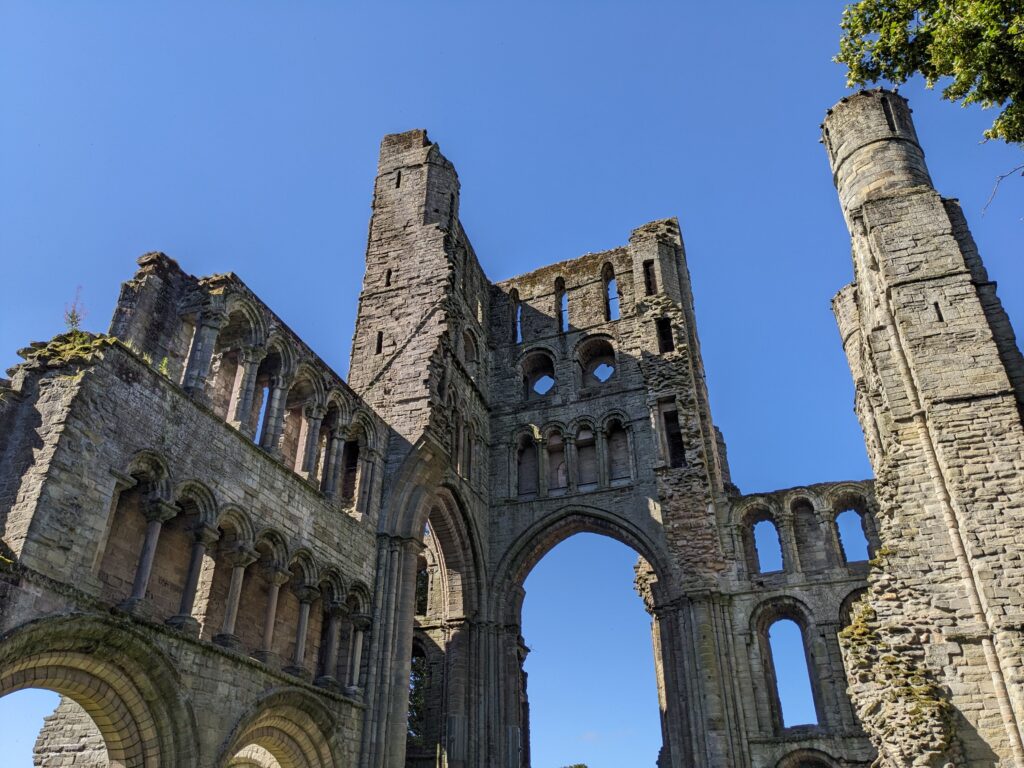
During the medieval period monastic communities profoundly influenced economic activity and administrative structures in many parts of South East Scotland. Their influence went well beyond the walls of the cloister. There is a need for greater understanding of the relationship between religious houses and surrounding communities. Derek Hall’s research has identified numerous monastic granges in the region (Hall 2006). However, the vast majority of granges are currently unexcavated.

The later history of monastic sites also deserves more research. Currently, we are unclear about questions such as the degree of disruption posed by Anglo-Scottish conflict in the 1540s, the rapidity with which the Reformation brought about an end to communal religious life, and the processes by which monastic sites were adapted to other purposes in the decades after 1560. At times, the later history of these sites has been deliberately erased by heritage organisations in an effort to create pristine ‘medieval’ visitor experiences. However, interdisciplinary approaches can often prove rewarding in uncovering the post-Reformation story of former monastic sites.
Monastic Sites Research Questions
- How did the region’s monastic sites evolve over the medieval period?
- To what extent did the arrival of new religious orders in the twelfth and thirteenth centuries change land management?
- Is there evidence for monastic change or ‘decline’ in the century preceding the Reformation?
- What evidence is there for sixteenth-century iconoclasm and destruction of monastic sites?
- How did damage from conflict in the 1540s compare to damage during the Reformation of 1560?
- Can we better understand female monastic sites? How do female religious houses compare to male houses?
- What evidence is there for industrial activity at monastic sites?
- Is there evidence of parchment production at monastic sites?
- What can we discover about monastic gardens?
- How did monastic sites affect wider landscapes (for example mills, granges, roads)?
- What evidence is there for occupation of monastic sites after 1560?