
Background
Analysis of material culture obviously has a long and deep tradition within the study of Roman sites in south east Scotland, as elsewhere. It is worth stressing that traditional typological and technological approaches will continue to form a backbone of research on material from Roman sites and these approaches will continue to be refined and develop their own research agendas. Broadly speaking, there is a well-established set of approaches, ideally backed up by clear guidelines (for example from the Roman Pottery Group). Limitations within these traditional approaches tend to be associated with issues around the excavations from which material derives, including poor and incomplete sample sizes as well as poorly stratified and dated contexts. There is no doubt that more work needs to be done, with much older excavated material poorly studied and work is also required on comparing the assemblages from different sites. Equally as material is studied, both the catalogues and interpretations need to be made available, ideally in easily accessed digital forms as well as paper format. Advancing this task would help understand many aspects of the chronology and functions of forts and associated occupations, as well as helping considerably to understand material for surveys and from non-Roman contexts. Building large, compatible datasets will be important, requiring collaboration and integration with studies carried out elsewhere.
However, in this context, it is useful to return to the call in ScARF Roman Chapter ‘More adventurous approaches are required in finds analysis, following and developing best practice elsewhere’ (ScARF 2012, 70). That quote was specifically coupled with a reference to Cool and Baxter 2002, which draws attention to the need for more sophisticated quantification of assemblages. The dense material culture associated with the Roman presence in south east Scotland lends itself to these approaches. Quantitative analysis can and should be scaled to address individual assemblages and to make comparisons between wide sets of data at different sites (for example Clifford 2023).
It is useful to take the call for adventurous approaches in finds analysis in other directions as well. Many scientific analyses have been possible for several decades but have had limited take-up within south east Scotland. The routine use of these approaches has the potential to move the focus of study from typological analysis towards understandings of function, technology, source and distribution — areas in which answers to key questions may be found.
The pattern of the use, import, manufacture, reuse and discard of objects at Roman sites in south east Scotland is likely to be complex and changing. Even in military supplies, different methods were used and these changed through time. The army provided some items, but the individual soldier might provide other types of equipment. The balance between supply mechanisms changed through time, with a trend from army supply to civilian supply. This was probably paralleled with greater reliance on local manufacture over time.
Understanding supply systems and their development is complex and wide-ranging, although as ScARF Roman Chapter indicates, more plentiful, mundane materials can act as a proxy for rarer materials, potentially including organic materials which have not survived (ScARF 2012, 45).
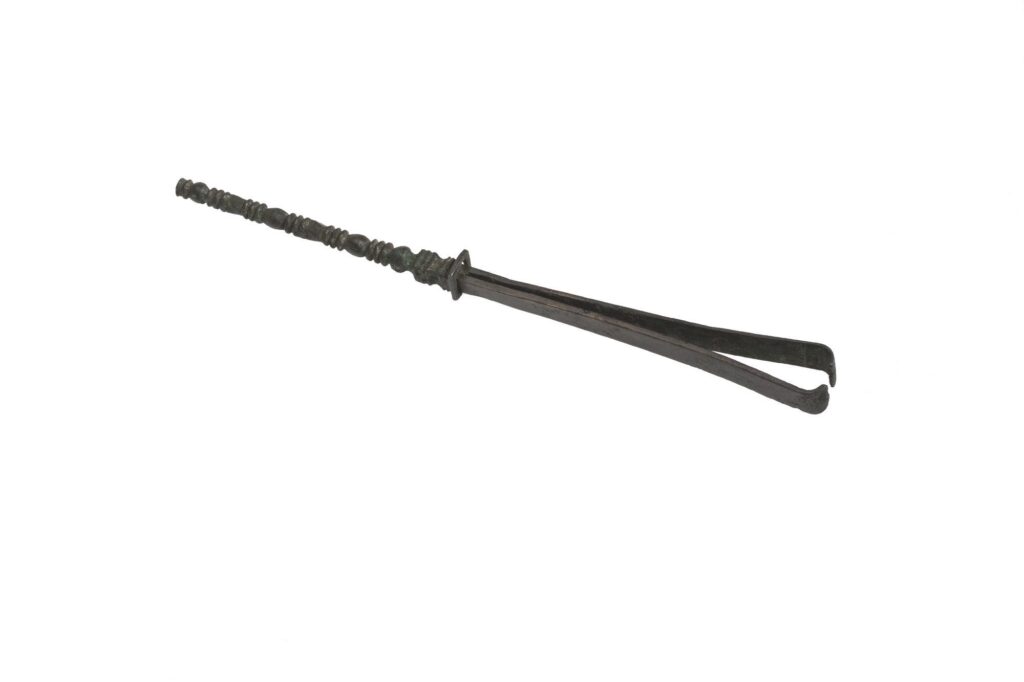
There is considerable evidence of manufacture occurring at Roman sites in south east Scotland. The balance between manufacture, repair and reuse of materials is harder to disentangle. Metal working is probably best attested, with both iron, copper alloys and lead being worked, but the scale is hard to determine. Local pottery manufacture was almost certainly extensive (e.g. at Elginhaugh, Cramond, Inveresk and Newstead), although probably underestimated in older assemblages. There are important questions around the possible expedient nature of pottery production or whether larger workshops were present, and approaches to skill in pottery manufacture that have been used elsewhere may help (Budden 2008). The movement of pottery within south east Scotland and to or from neighbouring areas is also very poorly understood. There is a lot of potential in both chemical and petrographic analysis to determine provenance. Kiln sites could be targeted for investigation through geophysics. Studies of craft production with organic materials such as leather, basketry, textiles, bone and antler are very dependent on exceptional preservation.
The production of rarer materials and objects, such as glass or carved stone, are very unclear. The Cramond Lioness is made of an unusual, possibly imported, stone (Hunter and Collard 1997) and the Ingliston milestone also seems to be made from imported stone (Maxwell 1984). Glass beads and bangles may well have been produced locally by remelting and recycling imported glass, but, again, distribution between Roman sites and into Iron Age settlements is poorly understood.
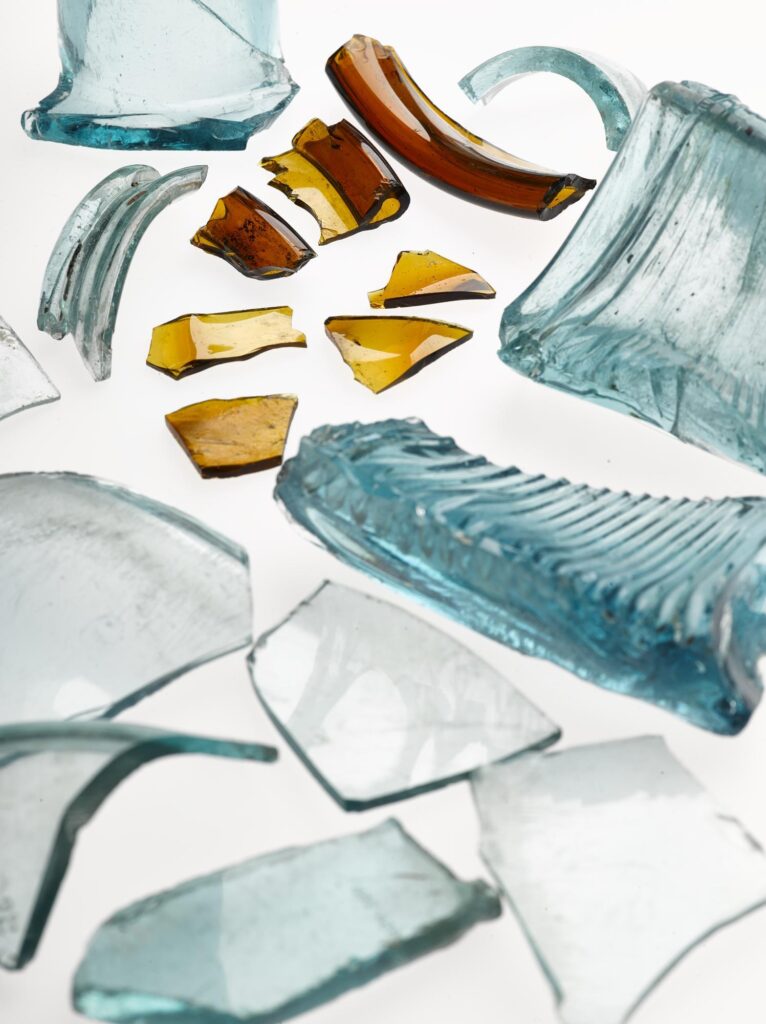
It is harder to identify the extraction of resources in the landscape. For many materials, for example wood, leather and bone, resources would be largely obtained as part of wider subsistence activities. Most stone would have been obtained relatively locally but quarries are generally not known. For some purposes, such as querns, importation of stone was more routine (notably from the Rhineland) but there is a lack of detailed study. The possible association between the Stonypath temporary camp with the known silver mines nearby at Siller Holes (ScARF 2012, 49) and proximity to the road network is one of the few pieces of circumstantial evidence. More extensive analysis of slags may be helpful to understand local processing of materials.