
The Reformation is widely assumed to have changed Scottish funerary practices. Certainly, customs such as requiem masses and burial inside churches became discouraged by Protestant writers and religious authorities (Raeburn 2016). However, the extent to which South East Scotland’s post-medieval burials actually followed Calvinist theory is less clear.
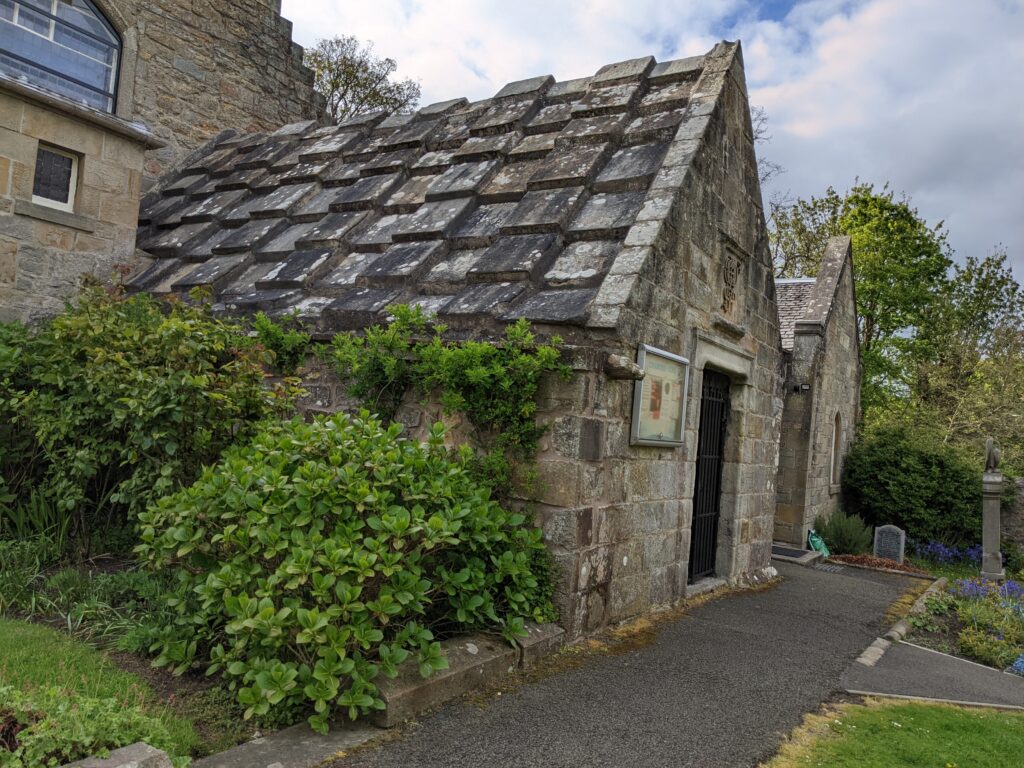
During the post-medieval period many aristocratic families sought to continue burial within or immediately beside church buildings. To this end a number of burial aisles were constructed for elite families. Burial aisles were often attached to the church building, but were not usually part of the main space for worship – a layout which sought to bring about a compromise between the Calvinist rejection of intra-mural burials and aristocratic families’ desire to be interred in a place of religious and social significance. Burial aisles were added to a large number of churches in South East Scotland during the 17th and 18th centuries – with the Scottish Borders having a particularly large proportion of the nation’s post-medieval burial aisles, although they were also popular across the Lothians. Burial aisles have sometimes been preserved even when the wider structure of the church has been remodelled or demolished. For example, the Craigie Halkett Inglis family’s memorial aisle at Cramond Kirk is one of the few parts of the 1650s church still standing. Meanwhile, the Homes of Billie’s burial aisle at Bonkyl, which was located in an adapted Norman apse, is the only part of the pre-1800 parish church to survive. As Bonkyl demonstrates, post-medieval burial aisles could sometimes incorporate earlier architectural elements and usually related to places of existing religious significance. Indeed, excavations at Auldhame revealed that the Otterburn family’s 17th-century burial aisle was located on a site which had over a thousand years of burial activity (Crone and Hindmarch 2016). Meanwhile, study of Cockpen Parish Church in Midlothian indicates that the Dalhousie burial aisle was adapted from a (probably) sixteenth-century extension which then underwent successive phases of post-medieval renovation and alteration (O’Sullivan 1993). Further research regarding the ways in which post-medieval burials and funerary monuments interacted with earlier structures could be of interest.
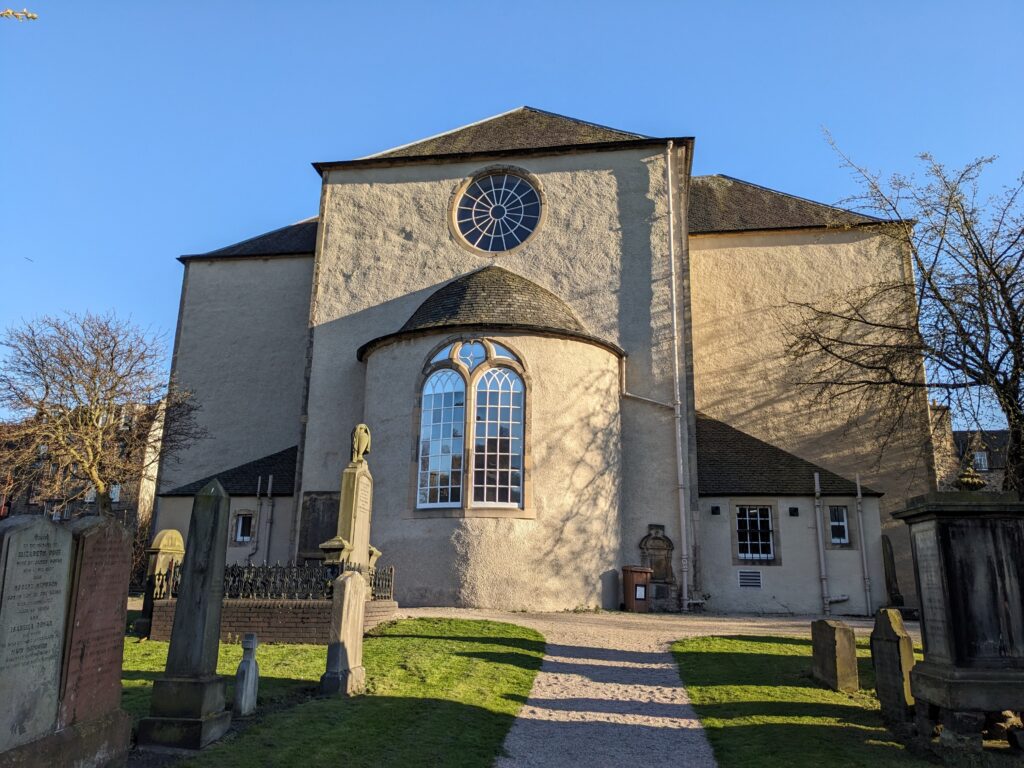
There is also a need for research into funerary monuments beyond burial aisles. Indeed, these individual memorials have often received less attention from scholars than burial aisles, despite providing a remarkable window onto the identities and visual culture of post-medieval Scots. A combination of church closures, challenges in graveyard management (exacerbated by constraints on local government spending), and the impacts of climate change, mean that tombstones and other funerary monuments are facing a precarious future. Investigations in the years around 2020 at the old kirk at Hume noted substantial weathering and erosion on post-medieval tombstones, including several with inscriptions which had become unreadable since 1994 when a previous graveyard survey was undertaken (Hill and Gamble 2023, 9). Surveys of poorly recorded graveyards should be a priority.
The people who had funerary monuments were a limited (and usually privileged) section of Scottish society. Most post-medieval Scots probably had no long-term memorial. This may have been particularly the case in times of crisis, such as warfare and epidemics. That being said, certain funerary customs were followed even in difficult circumstance. The 2010s saw the excavation of a remarkable set of burials from the Links in Leith, which post-excavation analysis identified as associated with the plague of 1645 (Stoakley et al 2019). Whilst some bodies from the Leith plague epidemic had been placed in burial pits, there were also a significant number of individual shrouded burials and of coffin burials. The vast majority of the Leith burials, whether individual burials or in mass graves, were placed on an east-west alignment. Further comparison of burials from times of crisis with typical burial patterns could perhaps be helpful.
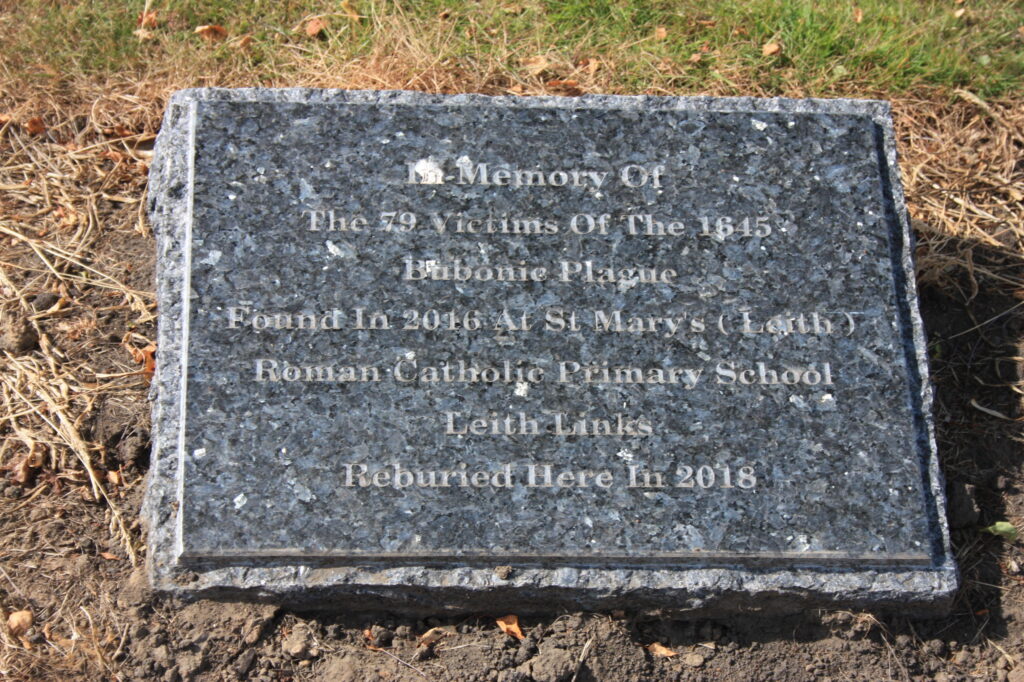
The Leith excavations included a number of burials of children – all of whom were in coffins. Burials of children and infants could benefit from more comparative study. In particular study of the burial practices surrounding still-born babies and neo-natal infants should perhaps be undertaken. Although the fragility of infant bones poses challenges for preservation and excavation, work in other parts of the United Kingdom has shown that more remains of neo-natal babies survive than was traditionally assumed (Lewis 2006). Evidence of burials of still-born or neo-natal babies are of particular interest given our limited understanding of post-medieval Scottish practices surrounding stillbirths and the burial of unbaptised infants.