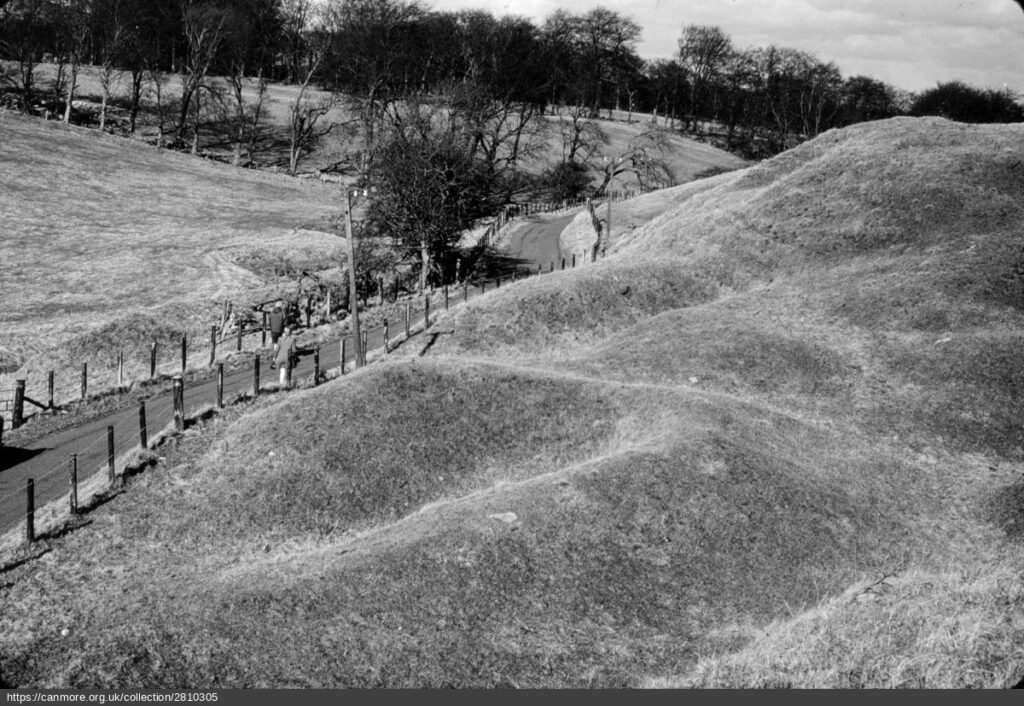
The South East of Scotland had extensive post-medieval mining, quarrying, and lime production. The region was at the forefront of the development of coal mining in Scotland. Coal extraction was already well-established in the 16th century in places such as Wallyford in East Lothian (Caldwell et al 2023, 152). Mining activity appears to have grown further during the post-medieval period, as coal became increasingly popular both for domestic use and to fuel industrial activity. The extractive nature of mining means that in many places evidence of older mining activity has probably been destroyed by later working of the coal seams. Nevertheless, some significant post-medieval coal extraction sites have had informative archaeological interventions. In the 2010s a number of post-medieval coal pits were excavated in the area around Newcraighall. Most of these pits were quite small, though a few were larger oval diggings (Hunter Blair and Cross 2018, 35-36). Geotechnical ground investigations at Newcraighall also indicated further voids underground, including one at a depth of about 10-14 metres. The wider post-medieval infrastructure associated with coal mining has also left its mark on the landscape of South East Scotland. Notably, there have been productive excavations associated with the 18th-century Tranent-Cockenzie waggonway – an early form of timber and stone railway which transported coal from the mines at Tranent down to the saltpans at Cockenzie (Dawson 2025).
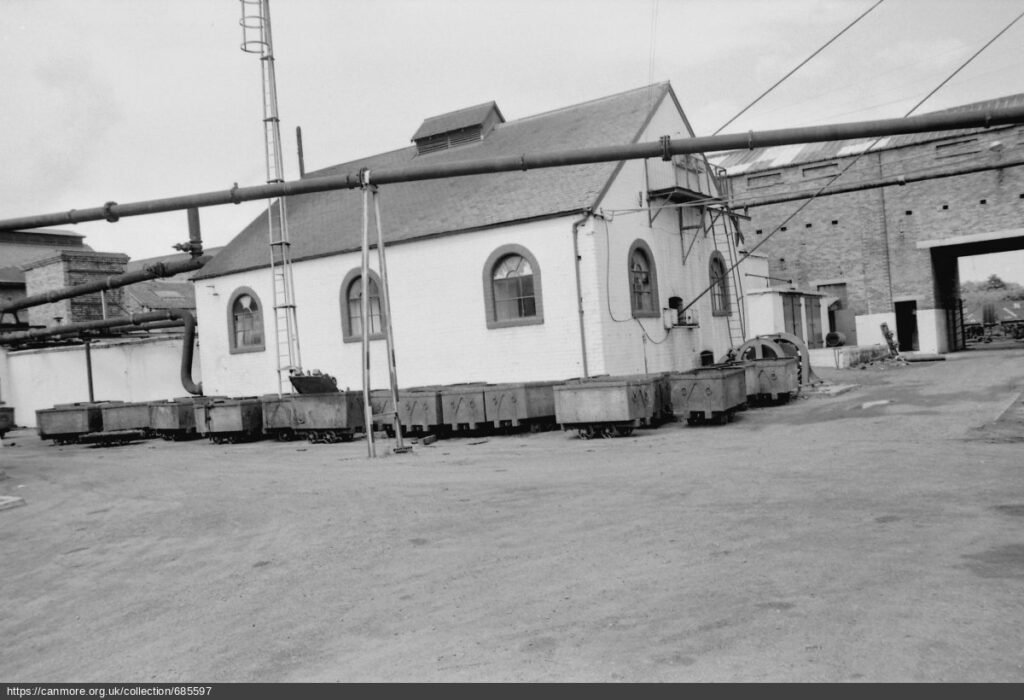
As well as coal mining, the South East of Scotland had a large number of post-medieval stone quarries which supplied building materials within the region and for export. In particular, there was notable sandstone quarrying on the outskirts of Edinburgh, at Craigleith, Ravelston, Redhall, and Hailes, which enabled the capital’s 18th-century expansion (McMillan 2012, 131). Craigleith was operational from at least the 1610s until the mid-20th century (Lothian and Borders RIGS 2005). Much of the quarry was then in-filled in the late 20th century, and now has a retail park built upon it. Unfortunately, the date at which Craigleith was redeveloped, means that there was little archaeological recording of this site. The Scottish Borders have an exceptional number of quarries, with over 900 quarries recorded in this council area – a significant proportion of which were operational during the post-medieval period. Further research into the region’s quarries, including survey of quarry sites and study of stone buildings would be desirable. Indeed, the archaeology of post-medieval quarrying is a topic which has traditionally had insufficient attention, both within South East Scotland and across much of the wider British Isles (Crossley 1990, 211).
Considerable lime production took place in South East Scotland during the post-medieval period – with recent research suggesting that it was already a major industry in the early 17th century (A. Macdonald pers comm). Lime was essential for building work and for industries such as tanning, as well as being widely used to dress acidic soils. A combination of major building projects and a drive for agricultural improvement seems to have driven an even greater demand for lime during the post-medieval period. Significant remains from the post-medieval lime industry can be found in many parts of South East Scotland. Traditionally, lime was burnt in turf clamp kilns. The remains of large numbers of clamp kilns exist in Lothian and the Borders. Clamp kilns were typically worked for a short period, leading to considerable concentrations of these structures in one area – for example a group of about 30 clamp kilns can be found on a small section of the moors near Carlops (Skinner 1975, 225). The 18th century saw a shift to larger stone lime kilns, which continued in use over longer periods. These stone draw kilns are often assumed to be more efficient, although recent research has highlighted the effectiveness of traditional clamp kilns (Bishop et al 2017). Several of the region’s stone lime kilns are relatively well-preserved. For example, there are significant standing remains from the kilns at Burdiehouse and Skateraw. The archaeology of the Scottish lime industry has attracted a degree of scholarly interest from the 1960s onwards. However, there is potential for much more research in this area.