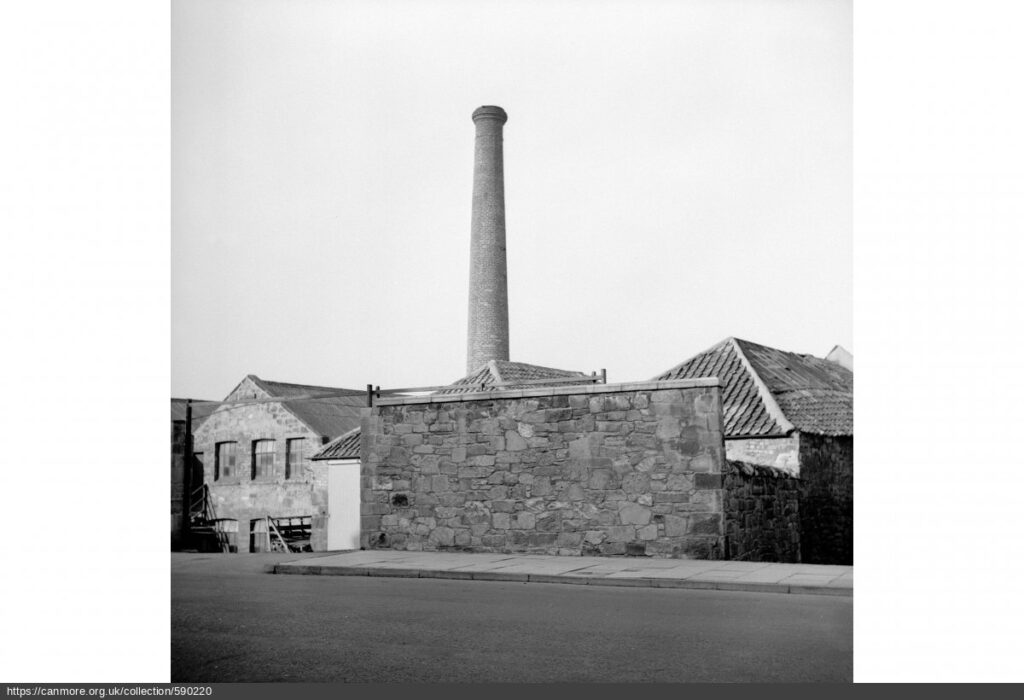
Many ingredients used by post-medieval cooks had to undergo complex processes before they were made into meals. During the 17th and 18th centuries this processing took place both in private households and at specialized sites such as shambles and mills. South East Scotland has a vast range of 17th and 18th-century sites associated with the processing of food, in both urban and rural settings.
Grains (notably oats, barley, and wheat) were a staple in post-medieval Scotland, and all required significant processing to make them suitable for human consumption. After harvesting, the edible grain was separated from the husks and straw by threshing. For much of the post-medieval period threshing was undertaken by people beating the harvested grain with flails. However, around the 1780s the East Linton millwright Andrew Meikle developed what is widely regarded as the first threshing machine. These machines appear to have spread rapidly in South East Scotland. However, more research into the processes by which this technology was adopted and the impact on farms and rural communities would be desirable. It should perhaps be noted that Meikle’s patented design seems to have been one of several possible strategies for mechanised threshing that was being explored in the region in the late 18th century. Indeed, the clergyman and factor John Fleming (who was minister of Carrington and then Colinton) claimed in the 1790s that there was an excessive focus on large threshing machines, when smaller and cheaper machines would be more desirable and that ‘every model of those machines, which can be constructed at a small expense, merits the publick attention’ (Fleming 1795, 443-444). This wider story of experimentation with a range of different types of threshing machine deserves more study.
Once threshed, much of the grain required grinding into meal or flour. There were already significant numbers of watermills in South East Scotland at the beginning of the 17th century. However, the post-medieval period seems to have seen many of these mills undergo expansion and redevelopment, as well as in some cases the establishment of new mills. There has been a degree of research into Scottish watermills, including a recent mapping project by the National Library of Scotland and the University of Glasgow. Yet much of this work has focused on the 19th century, and more research to better understand the story of watermills during the 17th and early 18th centuries would be desirable. Indeed, study of 17th-century maps suggests that the records on watermills compiled by RCAHMS during the 20th century probably omit a number of post-medieval mill sites.
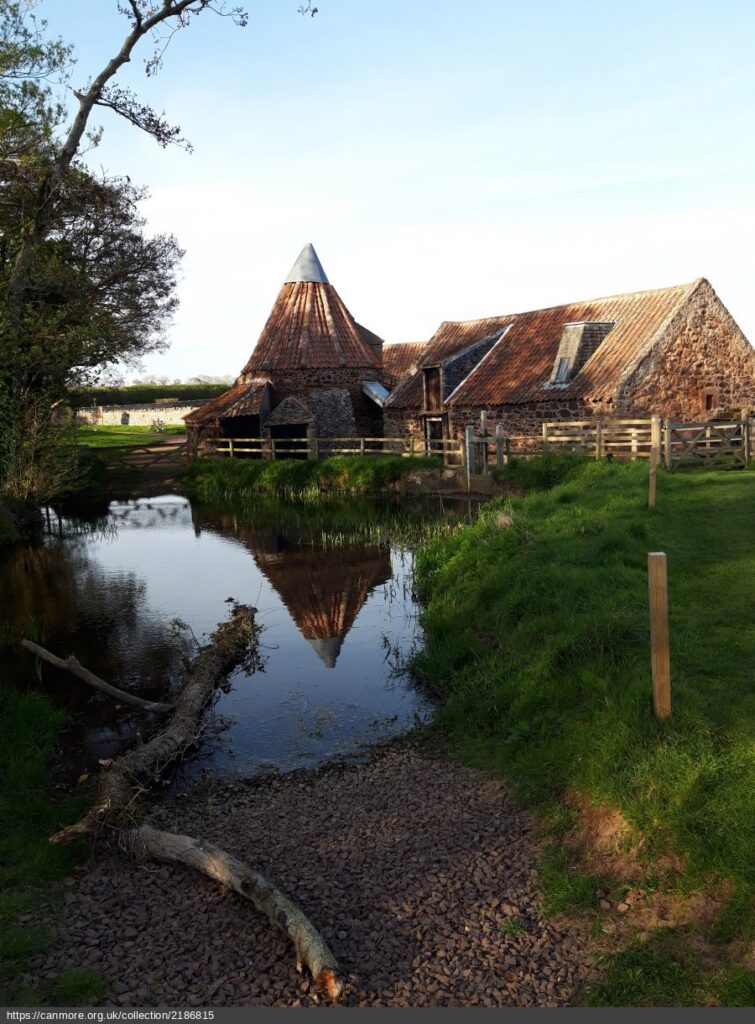
Watermills were far more common than windmills. Nevertheless, in comparison to other parts of Scotland, the South East had a relatively large number of windmills – many of them constructed during the 17th and 18th centuries (Donnachie and Stewart 1966). The region’s windmills were chiefly grain mills. However, it should also be noted that windmills were constructed for other purposes in the region, including pumping water. An initial survey of windmill sites in Scotland was completed in the mid-20th century (Donnachie and Stewart 1966). However, much more research could be undertaken regarding these structures and the role they played within communities.
After milling, grain could be made into various breads and cakes. There is evidence for the use of ovens and for cooking on girdles or griddles (often used for oatcakes and bannocks) during the post-medieval period. Urban communities typically had multiple bakehouses. Work with written records suggests that many bakehouses were located on secondary closes and wynds off the main streets – a reminder of the significance of lesser wynds and backlands for understanding the region’s industrial past (Allen 2006, 271-272).
A proportion of grain was malted, typically with the aim of making ale or beer. Malt kilns and associated cobles (the stone vats where malt was steeped) can leave significant archaeological remains. Further research into malting in the region in the 17th and 18th centuries would be of interest. The post-medieval period appears to have seen significant change in how brewing was conducted in the region. In the early 17th century most brewing seems to have been done on a relatively small-scale and was often regarded as women’s work. In contrast, by the end of 18th century larger commercial breweries were developing and brewing was increasingly perceived as a male occupation. The South East was at the forefront of this trend. Indeed, Belhaven Brewery in Dunbar was founded in 1719 and is today Scotland’s oldest surviving brewery. The post-medieval period also saw a rise in distilling in South East Scotland and the beginnings of a commercial whisky industry. During the late 18th century there appears to have been extensive illicit distilling in the region – reputedly in the 1770s Edinburgh had 8 licensed stills and around 400 unlicensed stills (Bremner 1869, 448).

Dairy products, including butter and cheese, played a significant role in the diet of late medieval Scots. Many great estates had their own dairies – and these elite structures form a large proportion of the recorded post-medieval dairies for the region. Yet smaller farms and urban sites were also involved in processing milk. There is written evidence for dairy production in the region increasing during the late 18th century (Findlater 1791, 149-150). Further research into all levels of the dairy industry in the region would be helpful.
Fresh and preserved meats were regularly consumed in post-medieval Scotland. Fleshers or butchers were a significant presence in urban areas – and animal bones with marks from the butchery process are regularly found in urban middens. The 17th and 18th centuries saw increasing efforts to regulate the slaughter of animals and to restrict the killing and processing of carcasses to specific areas. In the 1620s the Edinburgh fleshers were banned from slaughtering animals within the main burgh, and instead were relocated to slaughter houses beside the Nor Loch, an area which is now largely covered by Waverley Station and the Princes Street Gardens (MacLachlan 2005, 59). In the late 18th century a large purpose-built shambles was constructed beside the Nor Loch – this was part of an effort to clear individual slaughter houses that had arisen over the 17th and 18th centuries. The Nor Loch shambles was destroyed in the 1840s when Waverley Station was constructed. It was a major centre for the butchery trade in Edinburgh – although despite considerable investment in the site it appears that the local authorities were never able to ensure that it contained all of the slaughtering activity in the burgh. Butchery of course also took place in smaller towns and in rural areas. More research into slaughtering practices across the region would be helpful.
A proportion of meat would have been eaten fresh. However, significant efforts were made to keep meat for later use. Ice houses were sometimes used to preserve game and other meats, as well as to provide ice for confectionery (Robertson 1953). During the 18th century many of the great houses in the region constructed ice houses. But in the main post-medieval Scots were reliant on techniques such as salting and smoking to preserve meat – activities which could be undertaken commercially and in a domestic setting. Further consideration of ways in which domestic interiors were adapted to enable the preservation of meat would perhaps be of interest.

Throughout the post-medieval period fishing was a significant element of the economy of South-East Scotland. Salted fish were consumed locally and also prepared for export. There is evidence for post-medieval fish salting and packing at smaller ports such as Prestonpans and Dunbar. Salt was of course central to many 17th and 18th-century strategies for preserving food. The South East of Scotland had a long-established salt industry, with salt pans at a number of locations on the coast, notably Musselburgh, Prestonpans, and Cockenzie. Part of the salt pans at Joppa (between Portobello and Musselburgh) were excavated in 2010 following collapse of the adjacent sea wall. Although this site is believed to have had salt production in the 17th century, the remains which the excavation identified mostly appeared to date from after 1800 (Wilson et al 2011).
There is some evidence that the region’s export trade in salt declined over the course of the 17th and 18th centuries. However, local demand, including for the fish packing industry appears to have propped up the Scottish salt pans for much of the post-medieval period.
Whilst salt making was long-established in the region, the 18th-century saw the introduction of sugar refining to South East Scotland. A ‘house for baking of sugars’ was established in Edinburgh in 1751 and another sugar house was founded in Leith in 1757 (Bremner 1869, 461). The 18th century also saw a rise in confectionery as shopkeepers and cooks crafted a growing range of sugar-based foods, enabling the residents of South East Scotland to indulge new tastes and to display their wealth by spectacular sweets and puddings.