
The South East of Scotland has a long tradition of metalworking. Throughout the 17th and 18th centuries, hammermen (a term which covered a wide range of occupations, usually including trades such as blacksmiths, cutlers, armourers, lorimers or harness makers, goldsmiths, and silversmiths) were among the most important crafts in many of the region’s towns and villages. Indeed, at the end of the 18th century, the hammermen were recorded as the largest craft in the parish of Dalkeith (Scott 1794, 21). Large quantities of post-medieval metal artefacts survive from South East Scotland. We also have some sites where waste associated with the smelting and working of metals has been discovered. However, there is still uncertainty about a number of aspects of metal processing in South East Scotland during the post-medieval period.
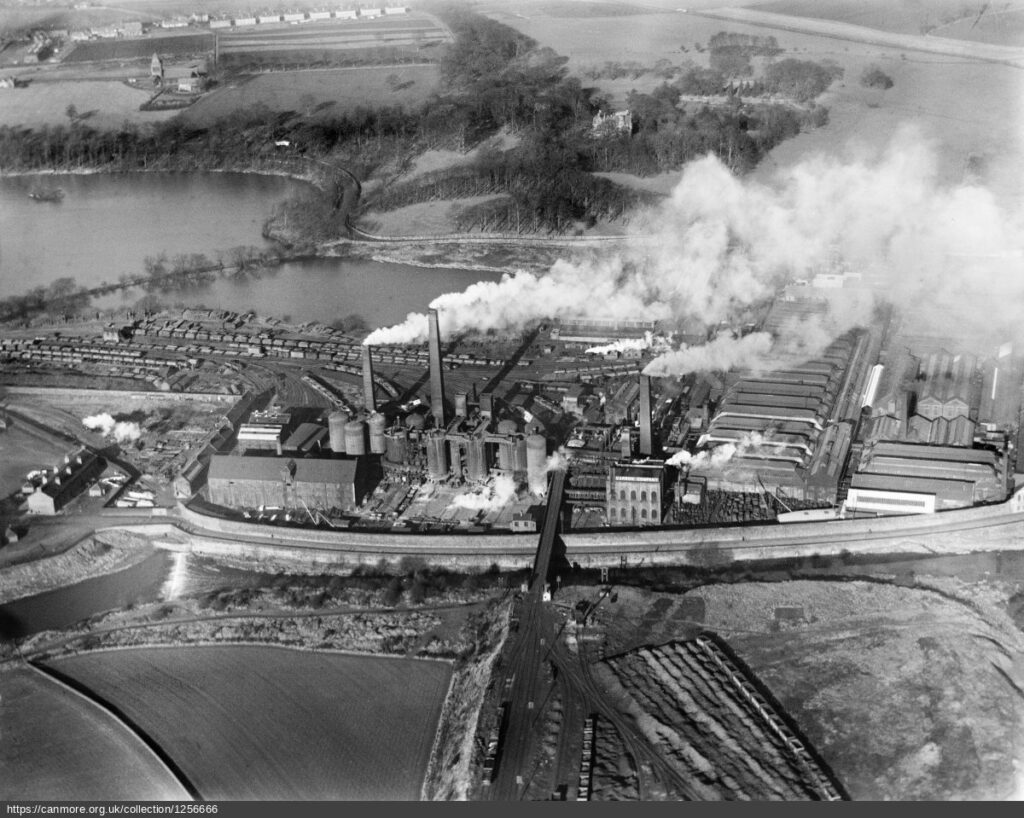
It has sometimes been assumed that iron making in post-medieval Scotland was focused on the Carron iron works near Falkirk (officially established in 1759), and that the country’s wider iron industry was largely a creation of the 19th century (Swailes 2006, 3). However, the archaeological evidence from South East Scotland hints at a more complex story. Excavation prior to the building of the Holyrood Parliament uncovered waste associated with medieval and post-medieval iron making – although it is possible that this waste had been brought from workshops nearby, rather than demonstrating on-site iron production (Holyrood Archaeology Project Team 2010, 36-37). The medieval and post-medieval slag found at Holyrood differed significantly, with the later waste being mainly ‘porous and dense slag with large inclusions of coal, and patches of yellow mineralisation’ (Holyrood Archaeology Project Team 2010, 30). Much of the post-medieval slag had similarities to waste from 19th-century blast furnaces, yet it was discovered in contexts dated to the 16th and 17th centuries – suggesting that the region’s post-medieval iron industry was more developed than has sometimes been assumed.
Throughout the post-medieval period small-scale iron working took place in urban and rural areas. A large number of post-medieval smithies are recorded in South East Scotland – although it is likely that these are just a proportion of the smithies that once existed. Standing buildings associated with smithies were photographed during survey projects in the mid and late 20th century. Some of these sites continued to operate as forges into recent times. Notably, the smithy at the Clappers near Mordington retained its forge and blacksmith’s house into the twenty-first century, and was worked by the same family from the early 1700s until 2019 (Cruft, Dunbar and Fawcett 2006, 84; Scottish Borders Memory Bank, SBA158/112). Most of the region’s smithies have had little archaeological investigation. Further interdisciplinary research into blacksmiths and their work would be desirable.
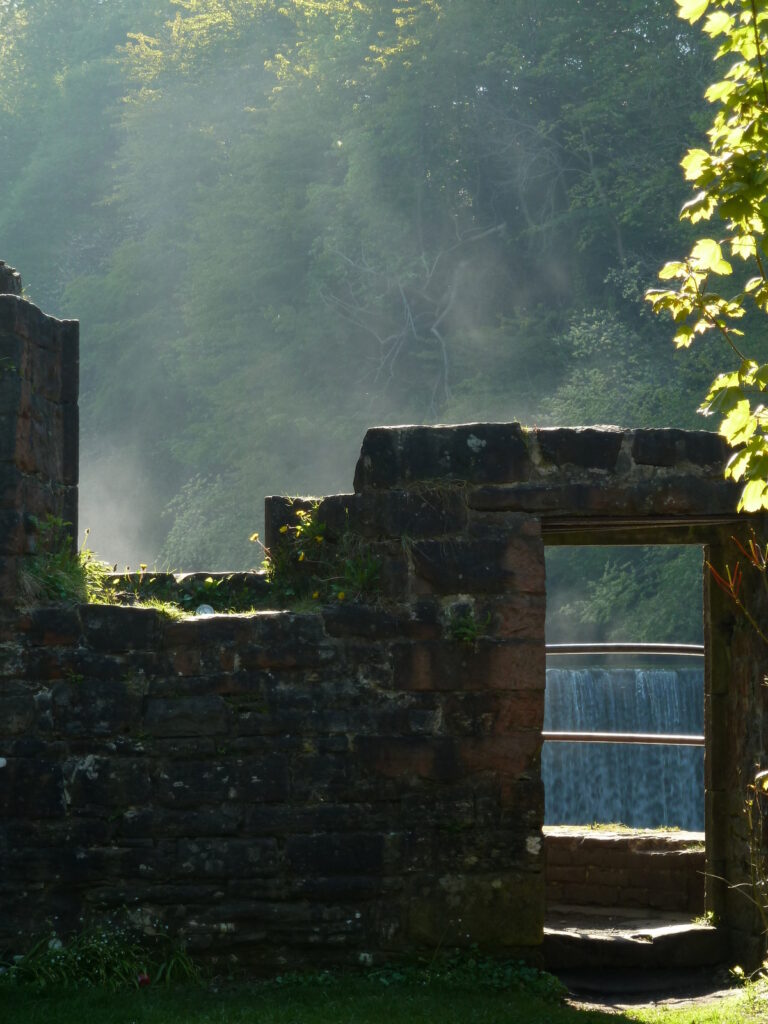
The 18th century appears to have seen the development of larger scale iron working in South East Scotland, and a shift towards the use of water power in making ferrous products. During the mid and late 18th century several iron working mills were established at Cramond along the banks of the River Almond (Cadell 1973). A watching brief at Cockle Mill at Cramond in 2002 revealed the remains of a furnace and other structures associated with the 18th-century iron rolling and slitting mill which stood on this site. Meanwhile, in the 2010s part of the weir associated with the 18th-century forge at Fair-a-Far Mill was investigated (McKinstry and Rees 2018). Further research into these mills and neighbouring sites could be beneficial, especially as it is alleged that iron working waste was routinely dumped in the River Almond near Cockle Mill.
During the post-medieval period there was significant working of non-ferrous metals in South East Scotland. Leith played a significant role in the lead industry (Smout 1967). Galena (lead sulphide) was both processed in Leith and exported (Bassett 2019, 144). Indeed, there appears to have been a windmill in Leith for refining lead ore, which was constructed by the family of the Earls of Hopetoun in the late 17th century, and then renovated around 1704 (Donachie and Stewart 1967, 295). The region had a long-standing tradition of lead mining around West Linton, and this appears to have continued until the 1750s (Dean 2019, 8).
Precious metals were worked in the region during the 17th and 18th centuries, with Edinburgh in particular having a strong tradition of working gold and silver. The Edinburgh goldsmiths often had their workshops in or around Parliament Square (Fortescue 2017, 12). There were also goldsmiths based in the Canongate during the post-medieval period (Fortescue 2017, 12). Further research into the sites used by goldsmiths, and the extent to which these changed over the course of the post-medieval period could be helpful. Large numbers of items produced by Edinburgh’s post-medieval goldsmiths survive in public and private collections. These have attracted significant interest from researchers and from auction houses and collectors. However, there is still potential for more research in this area. In particular, the collections held in private hands and by smaller institutions are often less well recorded, and may cover aspects of the region’s goldsmiths’ work which are insufficiently represented by our major national collections.