
There was extensive leatherworking in South East Scotland throughout the 17th and 18th centuries. Edinburgh was a major centre for leather production, with the skinners and the cordiners (shoemakers) being established as incorporated trades during the medieval period. By the 18th century Edinburgh was not only producing leather goods for the local area, but was also exporting shoes to the Caribbean (Bremner 1869, 352).
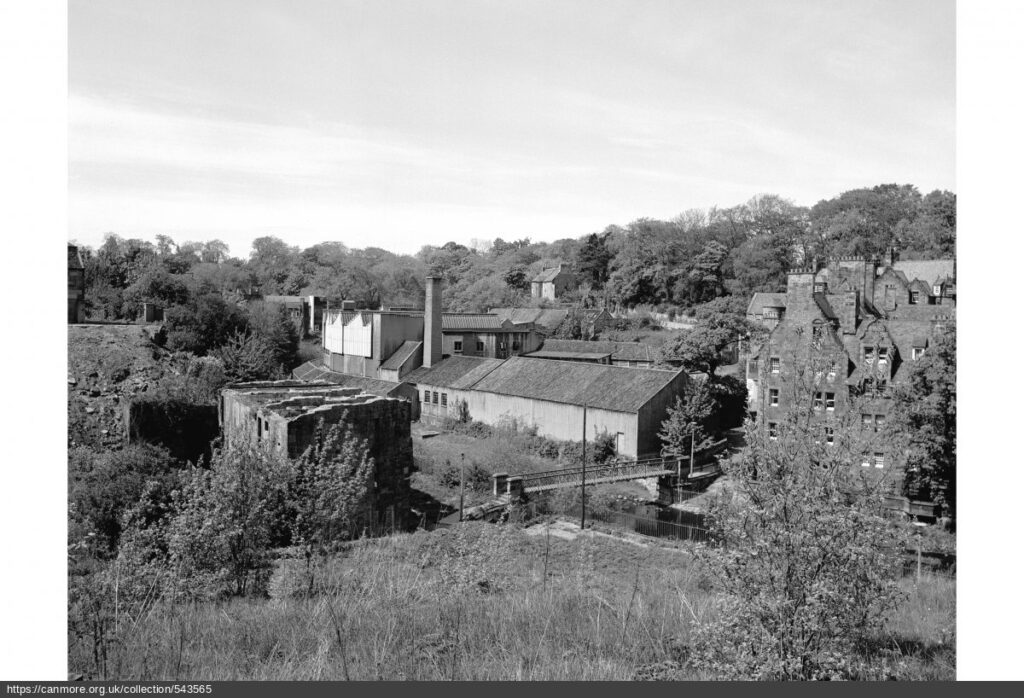
A number of tanneries were located around the edges of Edinburgh’s Old Town. Late 18th century maps indicate that there were tanneries to the south of Edinburgh Castle around King’s Stables Road. Excavations in this area have produced large quantities of horn and some leather waste. There was also an 18th-century tannery on the south side of the Nor Loch. In addition, the post-medieval period saw the establishment of tanneries at sites such as Damside in what is now the Dean village area of Edinburgh. The Dean Tannery at Damside was photographed prior to a number of the former industrial buildings being demolished in the 1960s.
Many burghs outside of Edinburgh were also involved in making leather goods. In particular, Kelso had substantial leather industry. According to the Statistical Account of the 1790s the skinners of Kelso dressed between 70,000 and 80,000 sheep and lamb skins per year (Douglas 1794, 590). Meanwhile, the shoemakers made around 30,000 pairs of shoes and 400 pairs of boots a year. These were sold locally and sent down into Northumberland.