
Survey has a long history of profitable use in the investigation of the Roman presence in south east Scotland and this will continue to be an important contributor to future research. Aerial photography will remain significant for identification of cropmark sites, although it is possible that in some parts at least of south east Scotland the potential for new discoveries are diminishing due to intensity of past work and loss of archaeological deposits due to ploughing (Cowley 2016, 67). Multi-spectral imaging, probably through a combination of frequent high-resolution satellite coverage and drone mounted sensors may offer an increasingly important approach. Topographic survey will also offer new possibilities, whether through large-scale LiDAR coverage (eg Tibbs 2022; Fernández-Götz 2022) or through drone photogrammetry. Large publicly accessible data sets for the former and relatively inexpensive access to the latter open up this research to larger numbers of organisations and individuals. Geophysics will certainly continue to be an important methodology, although the soils of south east Scotland are not ideal for all methods. There is potential to carry out landscape-scale geophysics to reveal larger scale patterns and move away from a simple site-based focus.
Survey and mapping demands adequate mechanisms for data archiving and access. While in some areas this is excellent, especially access to LiDAR imagery, there are also considerable challenges. To quote from ScARF Roman Chapter ’The Antonine Wall event mapping programme and Inveresk event mapping … have highlighted the benefits of such an approach, yet these databases need to be constantly updated rather than become relics of when they were created‘ (ScARF 2012).
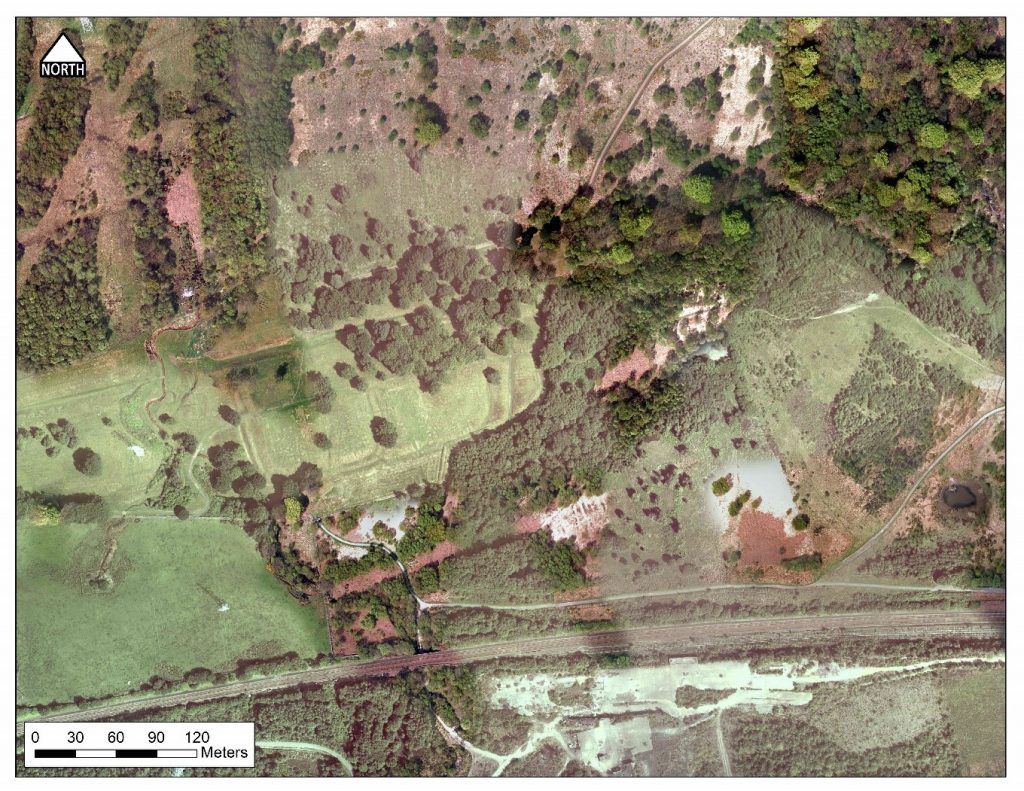
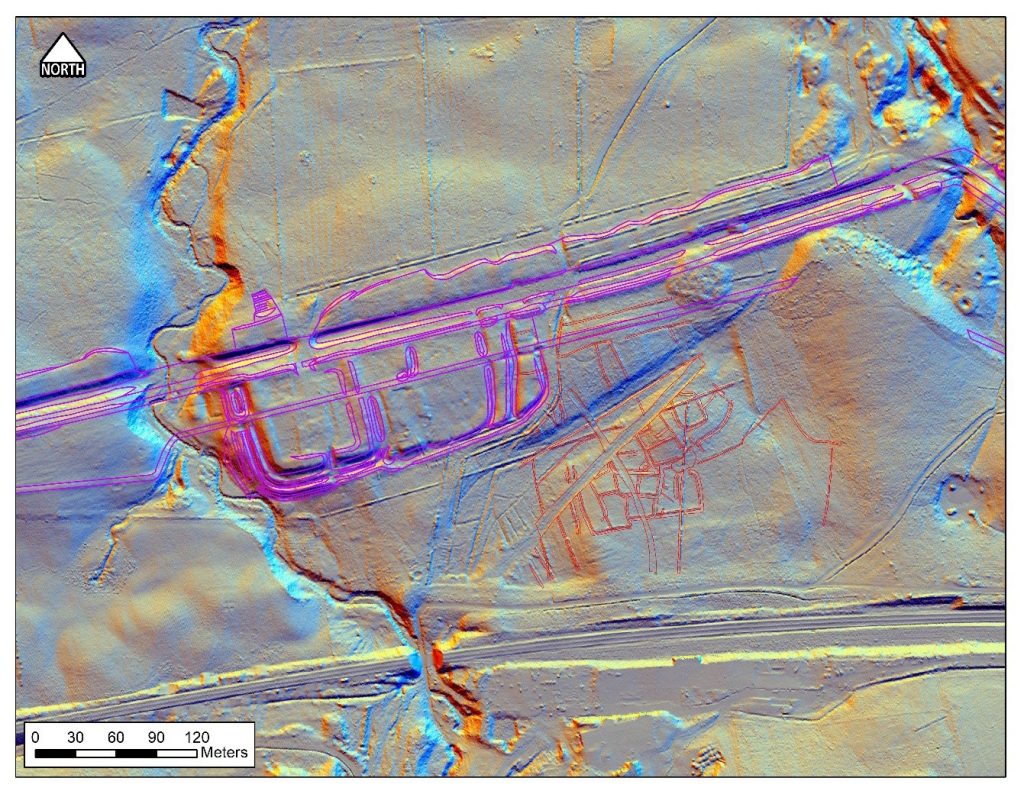
Integration of survey data into spatial databases is important and has not been done on any sort of systematic basis. Geophysics is probably particularly poorly served, with many surveys carried out through commercial archaeology only contained in difficult to access grey literature and lacking any access to the primary data itself.
Targeted small-scale excavation will remain an important facet of the investigation of the Roman Period in south east Scotland. However, it is notable that even this has been very limited in recent years, mainly confined to developer-driven excavation and primarily in the Lothians. This has arguably created a fragmentary record of both analysis and publication. Research in the region would benefit from a greater degree of carefully targetted research-driven excavation to address specific questions. There is also a strong argument that research of the Roman presence would benefit from at least one ambitious, large-area excavation to understand the complexities of site evolution over a long period. This has not been done at Roman sites in south east Scotland since the excavations at Elginhaugh in 1986–1989 and new work could exploit the huge increase in the range of scientific analysis that has emerged in the last 35 years.
While any interventions will be informed by individual research questions, it should also be informed by the need to facilitate the investigation of a wider set of questions. It should be carried out using a full range of contemporary techniques, including collection and curation of samples for future analysis. These include but are not limited to:
- Systematic and documented retrieval techniques of macro-remains, through sampling, floatation, sieving.
- Retrieval of phytoliths and other micro-remains through targeted, selective sampling.
- Archaeoentomology.
- Collection of in situ soil blocks to allow micromorphology and soil thin section analysis.
- Analysis of cultural soilscapes within sites, including approaches such as chemical analysis (e.g. Williams at al 2021) and environmental DNA (e.g. Hebsgaard 2009).
- Use of portable analytical instrument in the field to allow large-scale of analysis at or close to the time of excavation (e.g. using portable XRF).
- Three-dimensional recording, through DGPS, photogrammetry and laser-scanning.
- Although preservation of human remains is poor and funerary areas rarely investigated, high priority to take any opportunities that do arise so low sample size is not in itself a reason to deprioritise. Bioarchaeology approaches are vital, including the full range of isotope analysis, aDNA (the COMMIOS project is laying some of the groundwork in previously excavated material alongside work such as Morex et al. 2023), biomechanical analysis, proteomics etc.
- Post excavation conservation, interpretation and display needs to draw on and develop best practice.