
This section covers the period of intermittent Roman occupation from AD 77–AD 211 (Breeze 1982; Hanson and Maxwell 1986; Maxwell 1989; Tibbs 2019; Reid 2023), while acknowledging possible earlier Roman influence, and active military intervention.
There were periods of direct Roman occupation of south east Scotland during the Flavian invasions (AD 77–AD 90), the garrisoning of the Antonine Wall (AD 142–AD 165) and the re-occupation during the rule of Septimius Severus (AD 208 to at least AD 211), as well as the longer period of Roman interaction and influence within the area between these campaigns. Subsequent to this, there was ongoing influence, several major late Roman interventions and continued potential for further periodic occupation afterwards up to AD 410, as suggested in Hodgson (2014).
The three periods of direct Roman rule obviously see a concentration of military construction, with roads, temporary camps, fortlets and forts appearing within the landscape, as well as the associated structures and settlements during the historically attested periods of occupation. However, there remain many chronological uncertainties, even where there has been considerable excavation (Tibbs 2022, 134). Furthermore, the chronology of interactions between these periods is poorly understood, and more so for the period after AD 211. There is considerable archaeological evidence for later occupation of some of these locations, through isolated finds of pottery and coins at Cramond, Inveresk, Newstead and Springwood (Wallace 2008; Robertson 1983; Bateson and Holmes 2006, 162; Bateson and Holmes 2004). Marching camps, or campaign camps, are much less extensively studied. Most dating comes from size and typology which has been used to assign them to well attested campaigns — but this is often conjectural, and heavily influenced by known textual sources. Pre-Agricolan and post-Severan activity needs serious and detailed consideration. The influence of the Roman world would have been constant throughout south east Scotland and the relationship with evidence from Iron Age settlements needs chronological clarification.
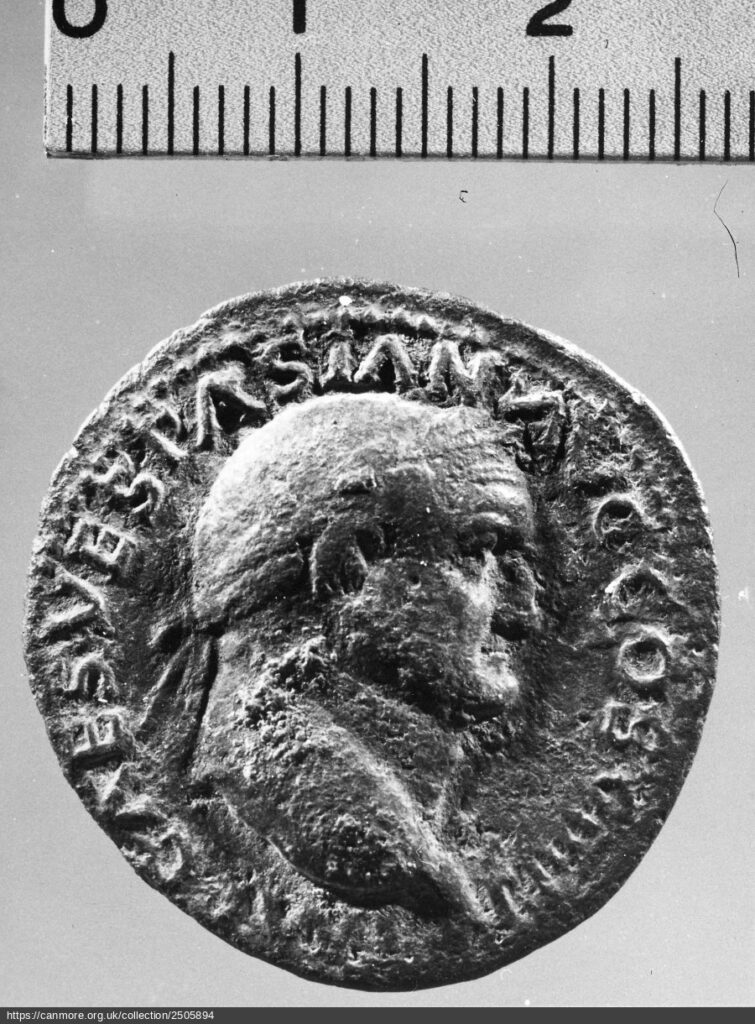
Although, it was written over 30 years ago, it remains true that ’One of the consistent problems in establishing foundation dates for Flavian forts in the north has been the emphasis on the primacy of the literary sources’. For a recent critical review, see Hoffman (2004) and Woolliscroft and Hoffmann (2006, 190–202). Because their historical context is supposedly known from Tacitus’ Agricola, the archaeological evidence has rarely been assessed in its own right.’ (Hanson 2007, 646). This could be counter-balanced by a focus on high-resolution radiocarbon dating, with multiple samples and tight stratigraphic control, supplemented by dendrochronology wherever preservation conditions allow. Optical Stimulated Luminescence (OSL) profiling and dating could also be used (Vervust et al 2020). Any dating program of Roman sites should be integrated with dating of contemporary Iron Age settlements and landscapes. The benefit of tightly controlled sequences of dates can be seen at Broxmouth (Armit and McKenzie 2013) and, while there are current dating programmes at Eildon North and through the Beyond Walls project (Fernández-Götz 2022), further dating will be useful.