
The 19th century saw much greater use of ceramics as large-scale pottery production, both within South East Scotland and further afield, enabled almost all sections of society to have access to affordable wares. Pottery from England, and in particular Staffordshire, can be found in large quantities in the region. However, the South East of Scotland also had its own potteries, with the 19th and early 20th centuries arguably seeing the peak of ceramic production in this area.
The potteries of South East Scotland were particularly concentrated along the line of the Forth, with Prestonpans, Musselburgh, and Portobello all having substantial ceramic production. In the 19th century Prestonpans had a large number of pottery firms. One of the most successful was Belfield’s Pottery, which ran from the 1830s until around 1940. This pottery produced a wide range of goods, including drainage pipes, sanitary ware, and a wide variety of ceramic tableware, with a particular speciality in tea-pots. Around 1800 Prestonpans also had brick and tile works, one beside the old church and known as Old Kirk, and the other near the shore and known as Ravenscroft.
Musselburgh’s 19th-century pottery tradition was linked to that of Prestonpans. Around 1800 William Reid (who came from Prestonpans and had started his career potting at West Pans) founded Newbigging Pottery, just off Musselburgh High Street (Haggarty and McIntyre 1996, 945-946). Excavation in the 1980s revealed that Reid did not only make creamwares and earthenwares, but also produced good quality china (Haggarty and McIntyre 1996, 958). The excavation uncovered extensive remains from the pottery, including the foundations of several kilns of varying 19th century dates.
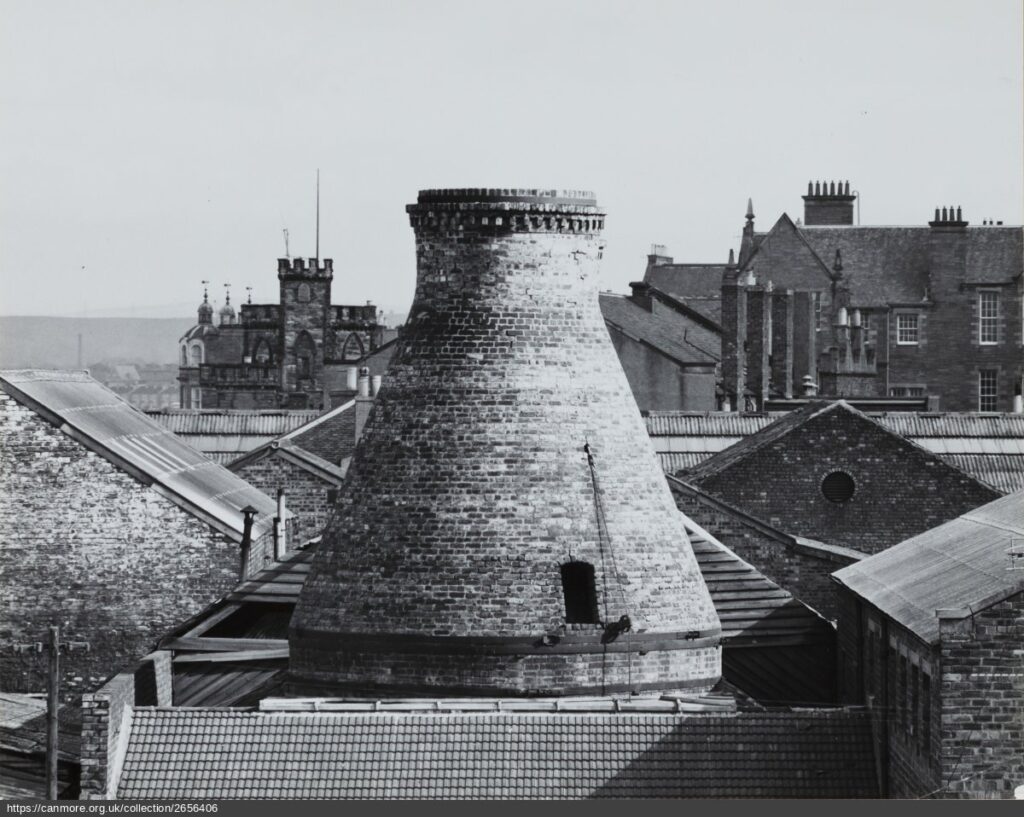
A little closer to Edinburgh, the former Buchan Pottery on Pipe Street in Portobello has seen a series of archaeological interventions. This site appears to have been used from at least the 19th century through to the mid-20th century. In 2005 an evaluation found substantial dumped 19th century pottery waste. A remarkable features of the Buchan Pottery site is the upstanding early 20th century kilns – the last surviving upstanding pottery kilns in Scotland. One of the kilns partially collapsed in 2006, and a lengthy project was undertaken to restore them and to record the structures. It is likely that further remains associated with the ceramic industry could be found below ground in Portobello.
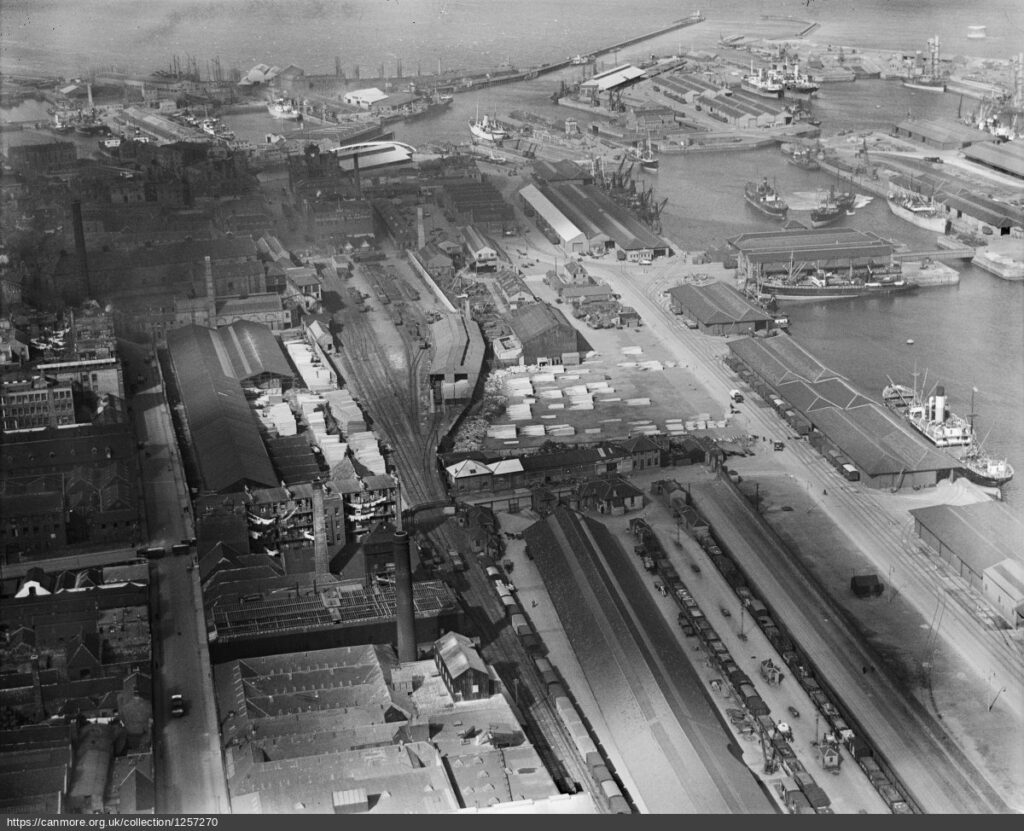
The South East of Scotland also had a glass-making tradition. By the early 1800s a series of substantial glass cones stood along the line of Salamander Street in Leith. The Salamander Street glass works have recently been excavated by AOC Archaeology, who found the foundations of two glass cones and significant glass deposits. Further glass making sites are known to have existed in the Edinburgh area, including the Holyrood Glassworks, which was located off the Canongate (Bremner 1869, 377). Further research into the South East of Scotland’s glass making industry would be helpful.
Ceramics and Glass Research Questions
- How extensive was ceramic production in South East Scotland? Which places were making ceramics? What types of products were being made?
- In what ways did ceramic production in Eastern Scotland differ from the pottery tradition in Glasgow and the West?
- What proportion of ceramics used in the region were made locally? Were there particular types of objects which tended to be made locally? What other regions and countries were ceramics being sourced from?
- What factors led to the collapse of ceramic production in South East Scotland?
- What can we discover about the rise and decline of glass production in South East Scotland?