In May 2023, INCA Scot held a residential event in Elgin, Moray, in order to discuss the possibility of creating a Research Framework for contemporary archaeology in Scotland. The 4-day event involved interactive activities, open discussions and reflections focussing on the diversity and value of contemporary archaeology as a discipline, and its place in Scottish archaeology as a whole.
QUESTIONS WE CONSIDERED:
- How should we approach a Contemporary Archaeology ScARF?
- How do we as a network enable and develop Contemporary Archaeological practices in a disrupted Scotland?
- What are the contributions Contemporary Archaeology can bring to Scotland?
THINKING ABOUT RESEARCH FRAMEWORKS:
Many of us have been involved with regional or thematic research frameworks over the last few years, in Scotland and elsewhere.
- What worked? What didn’t?
- Was contemporary archaeology addressed at all, and if so, how?
- What are the gaps/ questions/urgencies?
- What can we learn from these other frameworks?
Throughout this project we have been aiming to do something different in recognition of the fact that contemporary archaeology isn’t the same as other archaeologies.
The challenge is how to balance the tension between the need for a Contemporary ScARF with doing something less traditional and restrictive, as we recognise the inadequate format of the research framework when dealing with the contemporary.
- How can we embrace radical modes of practice whilst still creating an effective foundation for archaeologists and other practitioners to work from?
AIM OF EXERCISE:
This is based on a session that Katy Whitaker (Historic England) is going to be leading at this year’s Theoretical Archaeology group conference in December and also takes inspiration from the activities undertaken as part of the MA Contemporary Art & Archaeology at UHI.
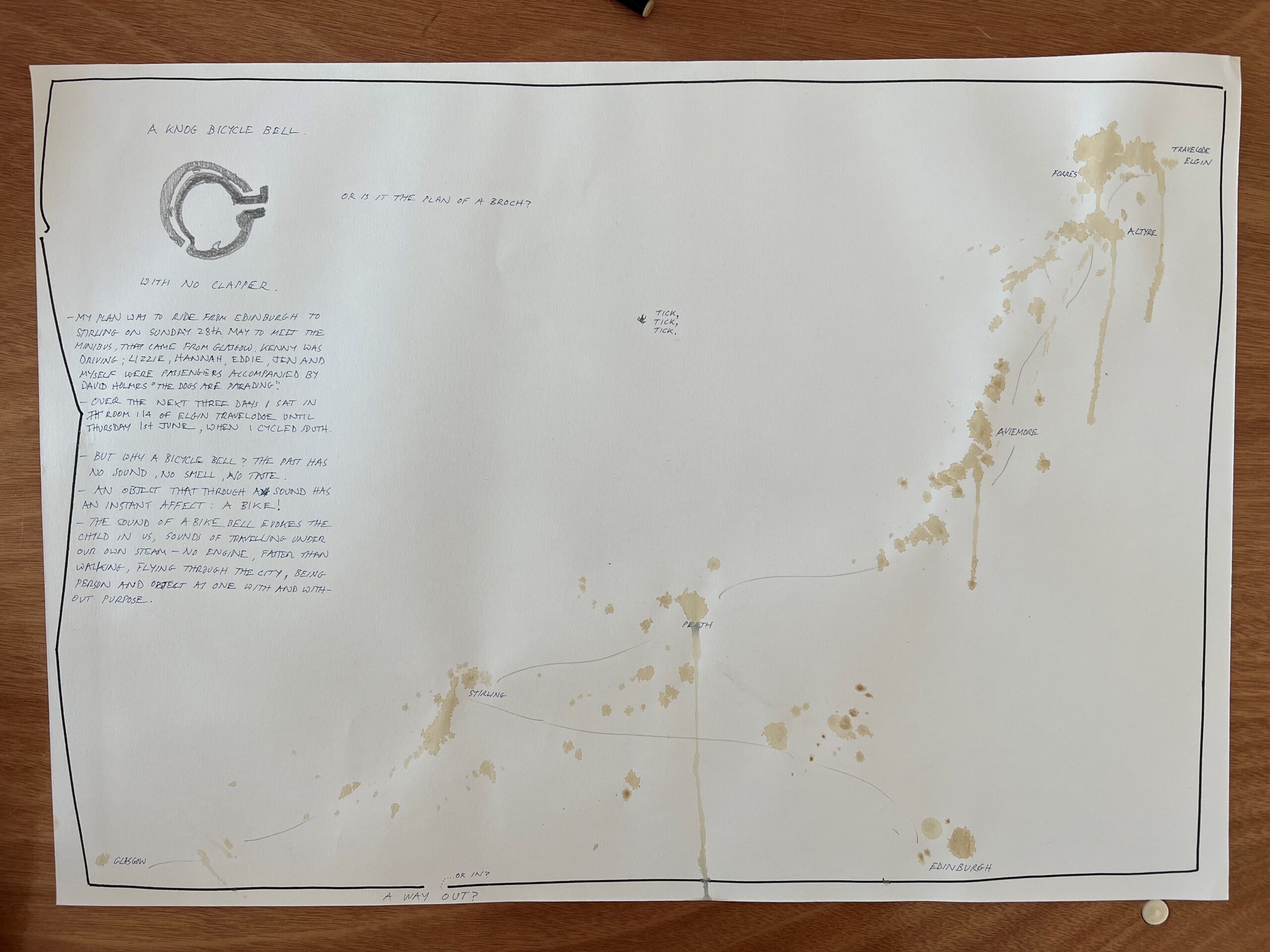
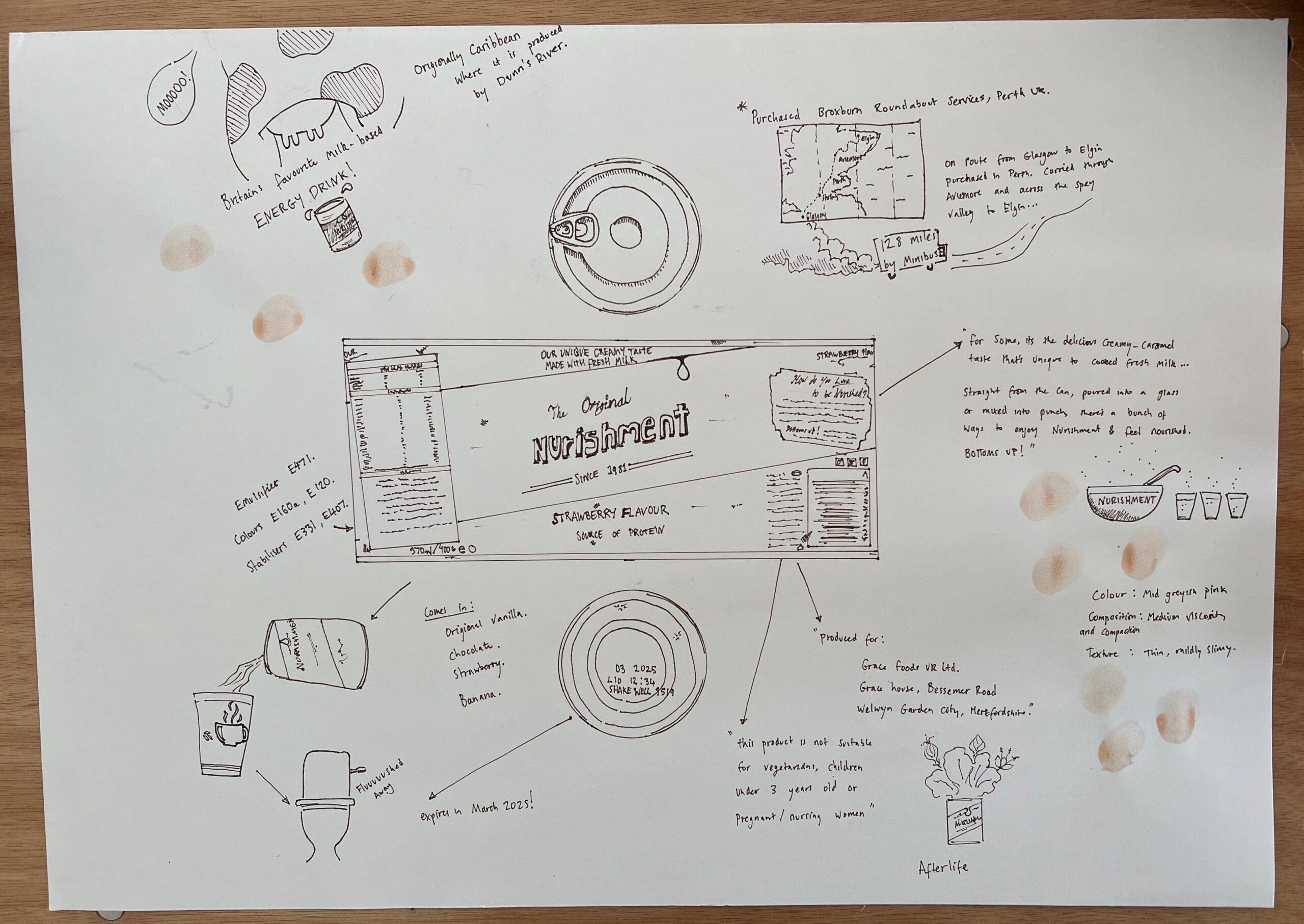
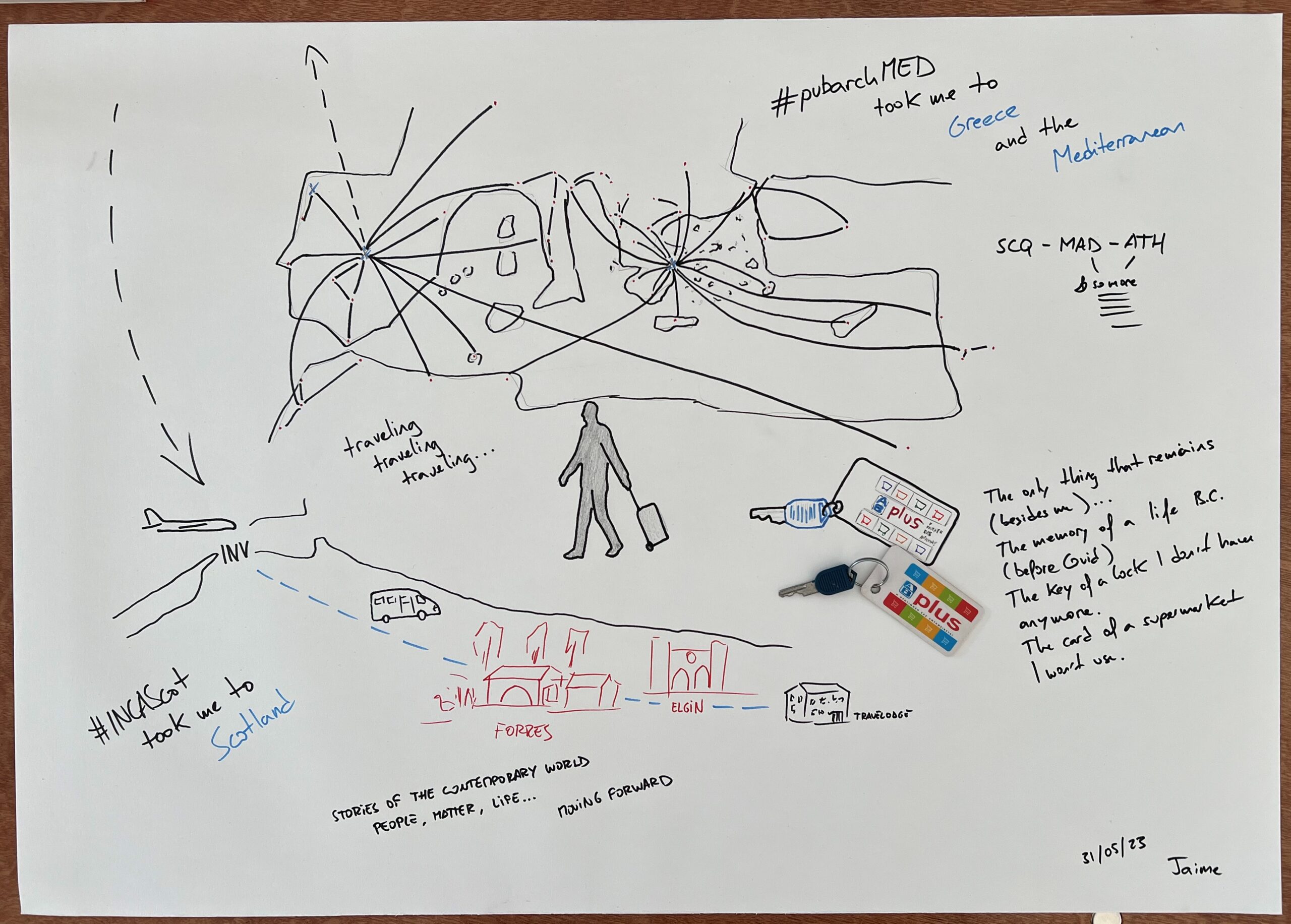
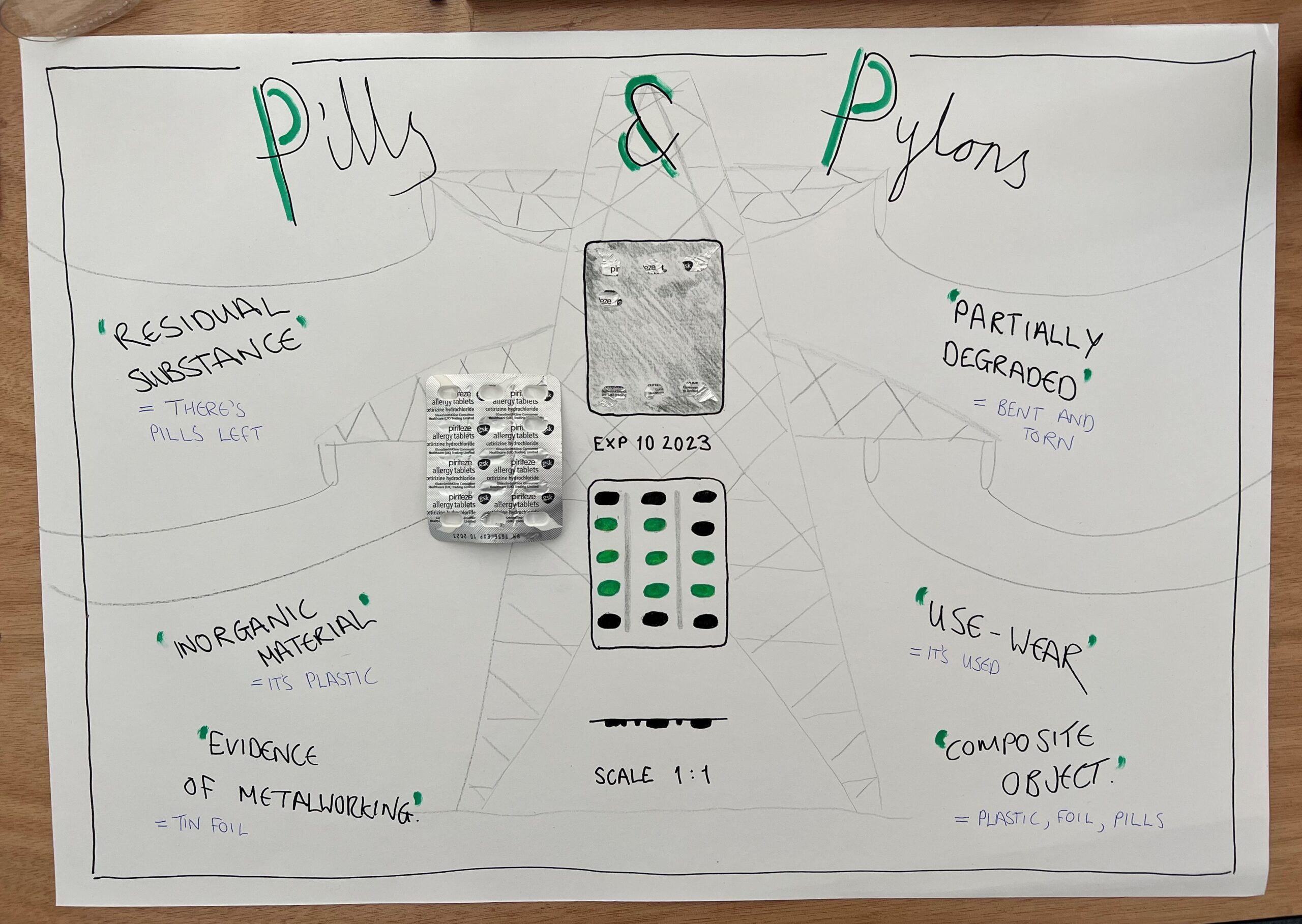
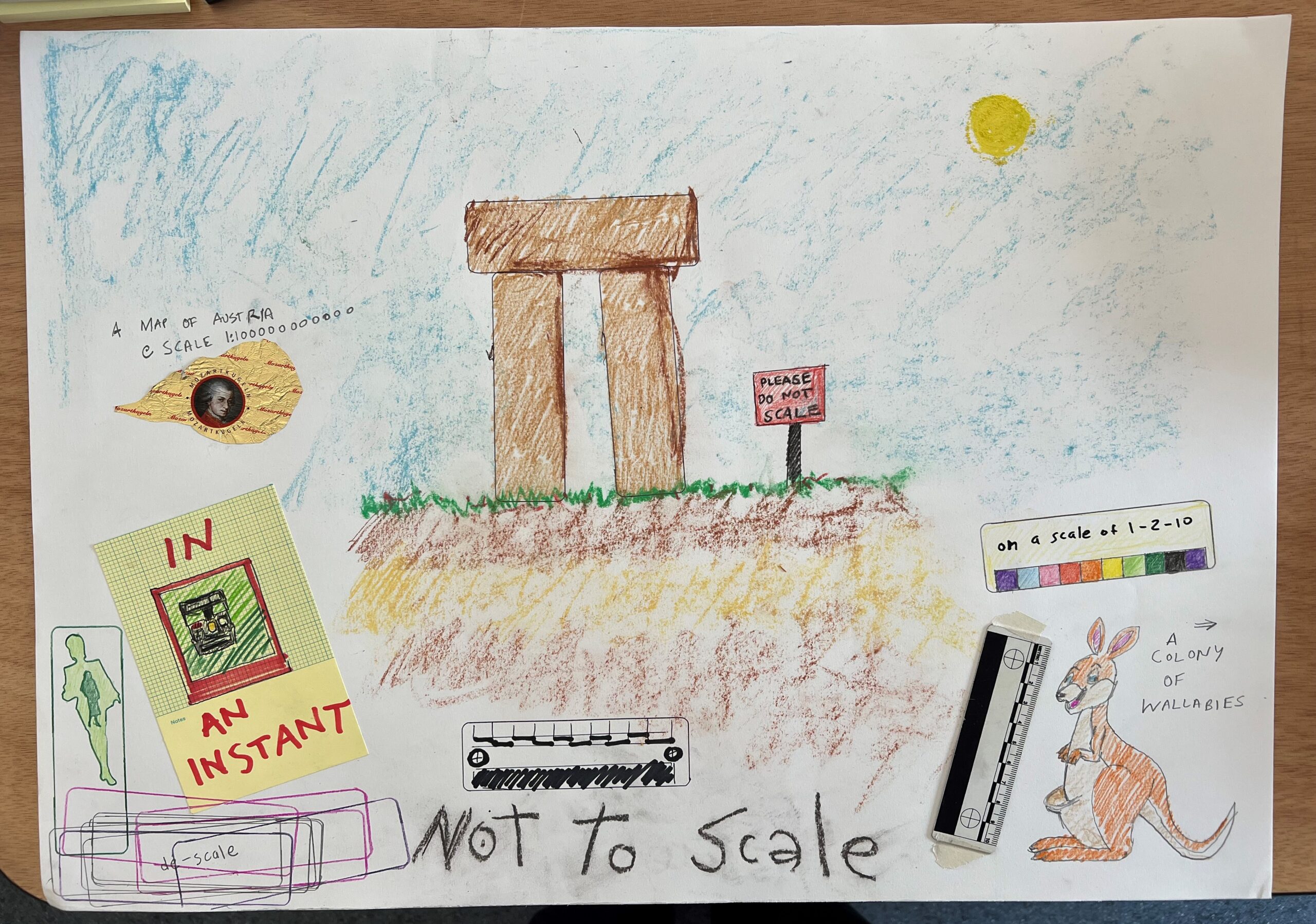
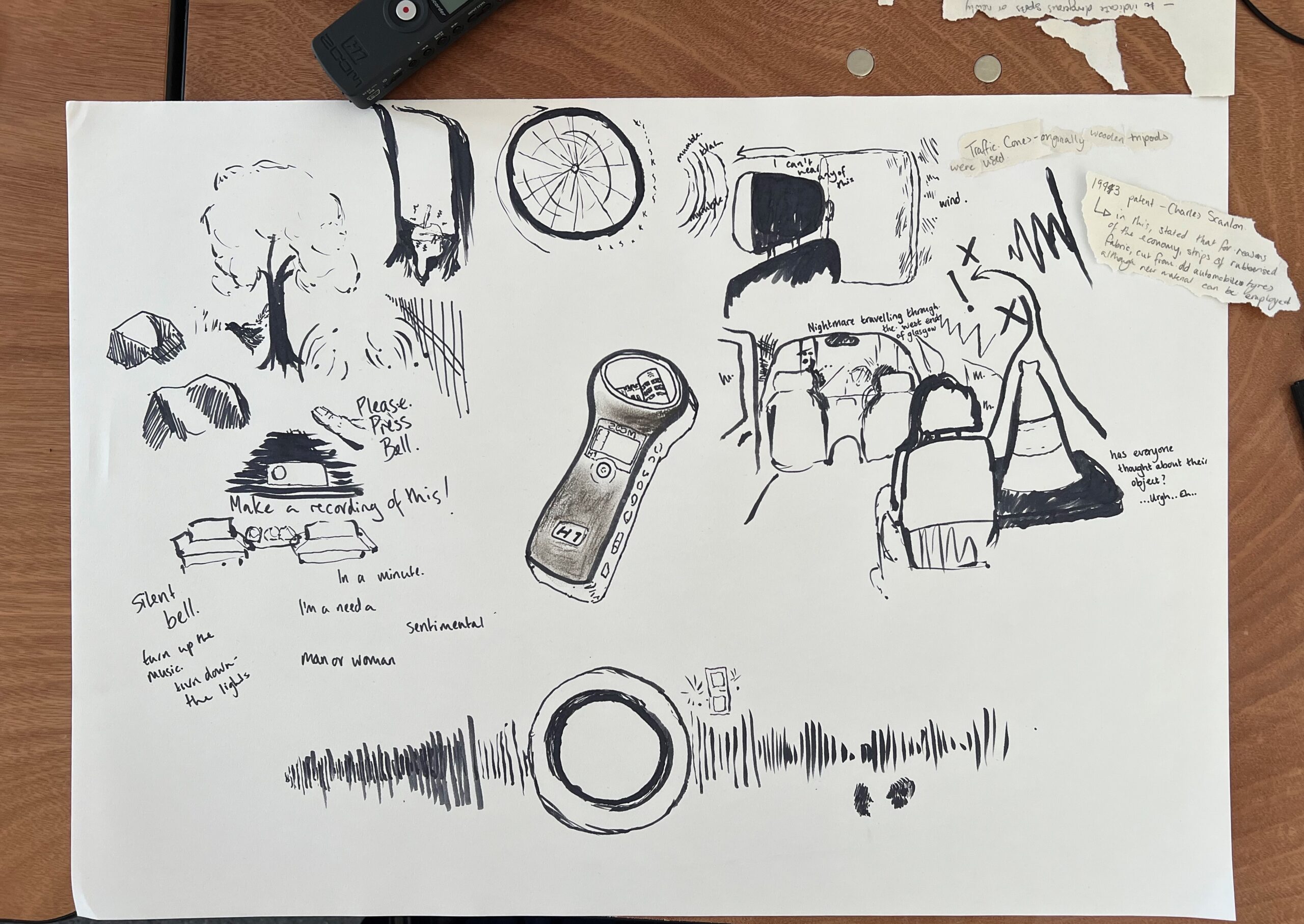
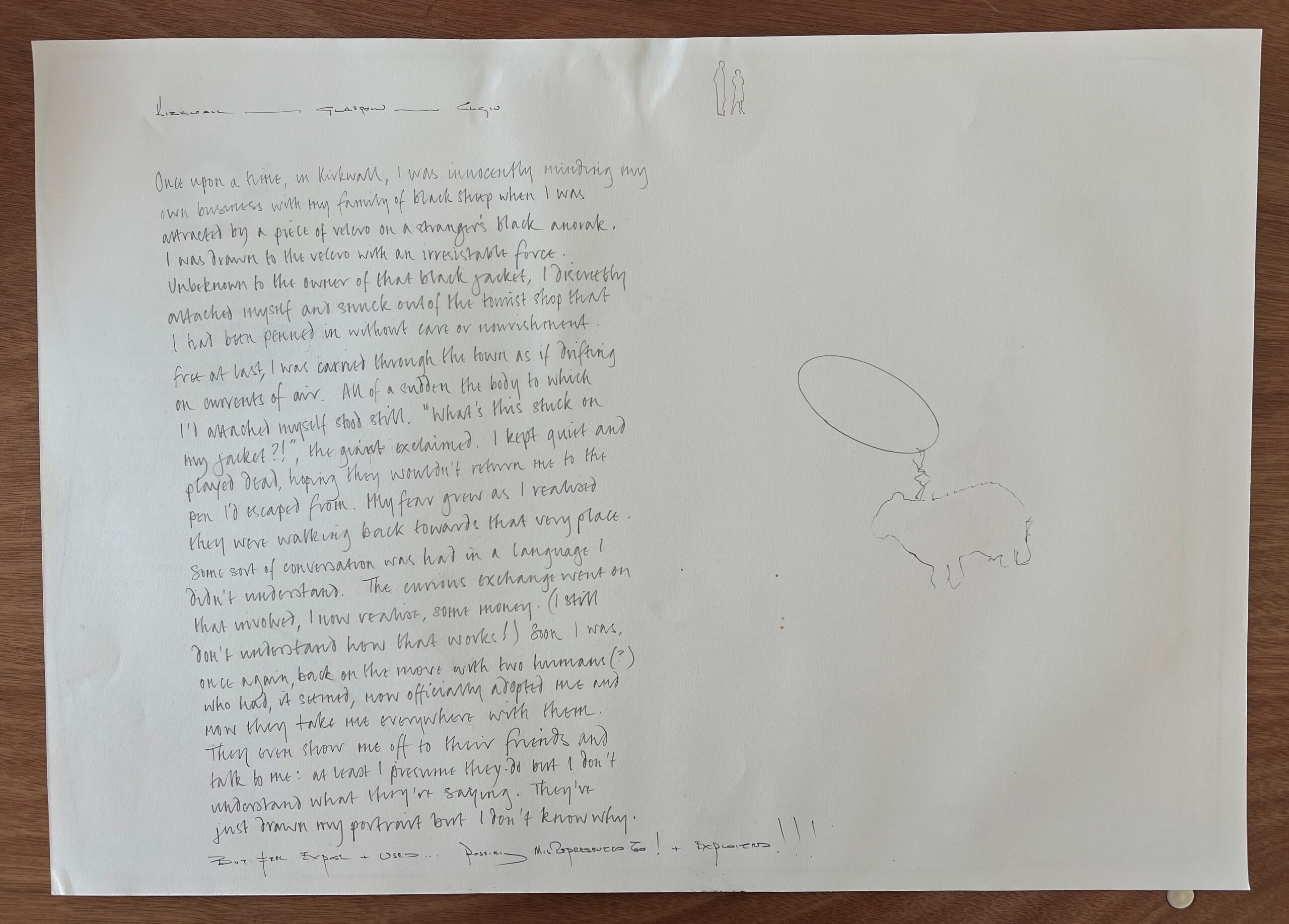
We aimed to activate research into objects and materials, creating an event-specific artwork that reveals relationships between humans, non-humans, things and the planet. In doing so, participants applied archaeological research methods to address and communicate aspects of the materiality of the climate and ecological emergencies and think about some of the themes that have been explored through INCAScot.
Through this exercise, we explored issues including (but not limited to) consumption, interconnectedness, conservation, extractive colonialism, mutual reliance, Anthropocene assemblages, and more. We used this first day as a way for INCAScot members to tell stories about their work in different ways (and get to know each other a bit more!) ‘How did we get here?’
Ahead of the Elgin event, participants were asked to think about the nature, origin and manufacturing story of one object, material/substance that was essential to their journey to attend the meeting, such as a car key, railway track steel, breakfast cereal, bicycle wheel, aircraft wing, walking boot sole.
We also thought about our individual journeys to Elgin, and even documented elements of it – as short sound files, digital images, GPS plots, short videos etc.
- What does all of this tell you about what is important to you on local and global scales?
Using these items, we co-created an artwork that is a snapshot of contemporary archaeology in Scotland now, from our perspectives, to create a dynamic artwork for the INCAScot website as a snapshot of contemporary archaeology in Scotland. Aesthetically, we might think about this as something similar to the Real Rights Manifesto created by Laurie Brown for Timespan Museum and Gallery in Helmsdale, Sutherland.